In this week’s episode, both of our storytellers look back on moments that might have deserved a little more drama than they got at the time.
Part 1: When Jess Nurse feels a throbbing pain in her gut, she chalks it up to heartbreak.
Jess Nurse is a Boston born, NYU graduate and Los Angeles transplant. Her writing career began at the tender age of eight when she wrote a play about a horse, hosted a play reading and no one came. Devastating. She's still working through it. An actor as well, she has guest starred on several TV shows (Quantum Leap, The Resident, Danger Force) and regularly pops up on the commercials of those shows. Very meta. Very multiverse. Jess wants to thank her superhero friends, her Mom and Dad, her sisters Lizzy and Becky and her sweet niece Feather who is already cuter than the cutest Pixar baby. For more of her face and funnies: @jessisnotanurse.
Part 2: When Maryam Zaringhalam’s physician mother goes in for brain surgery, everyone insists there’s nothing to worry about.
Maryam Zaringhalam is a molecular biologist by training who traded in her pipettes for the world of science policy and advocacy. She’s on a mission to make science more open and inclusive through her work both as a science communicator and policymaker. She’s a Senior Producer for the Story Collider in DC and previously served as the Assistant Director for Public Access and Research Policy at the White House Office of Science and Technology Policy from 2023 to 2024. She has a cat named Tesla, named after the scientist and not the car. You can learn more about her at https://webmz.nyc.
EPISODE TRANSCRIPT
PART 1
Hi. My name is Jess Nurse, like hospital nurse. The irony of my last name is that my mom was a doctor. She kept her maiden name, don't worry. Can you imagine? “Paging Dr. Nurse.” Chaos.
I grew up the daughter of Dr. Gibbes. She's retired now but she was adored at her pediatric clinic. The kind of doctor who always took the time, always made sure to figure out what was wrong, made sure it was okay, which is amazing when there's a medical problem. Not so amazing when you're a teenage girl and there's an emotional problem.
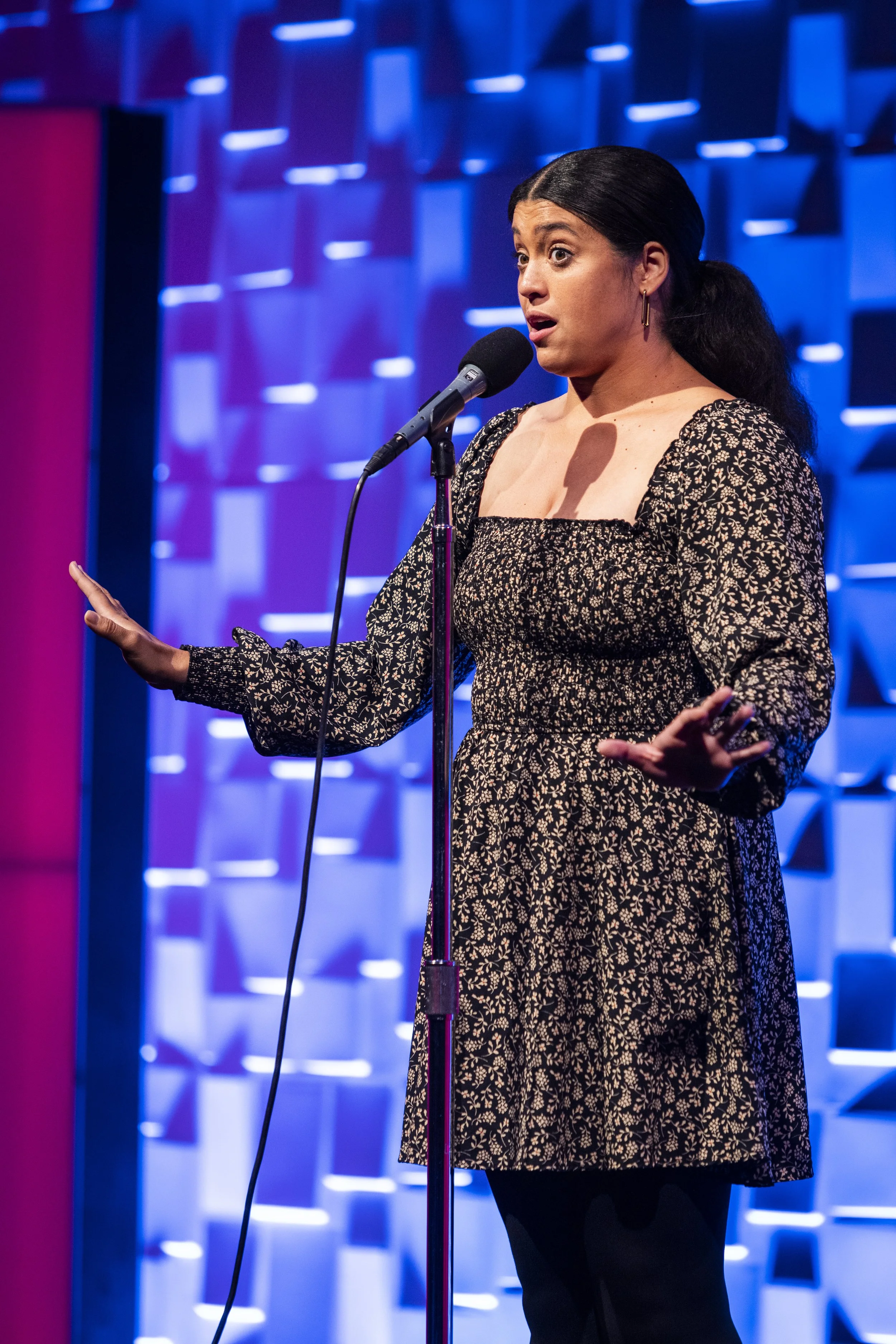
Jess Nurse shares her story at Crawford Family Forum in Los Angeles, CA at a show sponsored by LAist in July 2025. Photo by Unique Nicole.
I would be telling her about some friendship fight I had at school and she would interrupt me and say, “There's a little discoloration on your left eyelid. How long has that been there?”
Then she would say, “That's not a good friend. You shouldn't be her friend.” Period.
I would tell her that I didn't get the part in the school musical and she would deconstruct my audition. Then she would say, “There's so much rejection in acting. You shouldn't be an actor.”
I just wanted her to understand that friends are cruel to you because they love you. And acting is soul‑crushing, because it's a noble pursuit. It felt like she couldn't acknowledge my pain, couldn't see it for what it was. She couldn't understand my heartbreaks, could only treat them like bone breaks, things to be diagnosed and biopsied.
So I decided early on, my mom was not the one to go to with matters of the heart, which is difficult whenever I'm in like rocky relationship terrain. I will go to everyone else besides her, because I will assume her analytical doctor brain response. I'll kind of disappear.
She'll send me an article like, “This type of lettuce will kill you,” and I won't respond with the adequate, "Oh, my God. Oh, no." And she'll deduce that I've been kidnapped. But, really, I'm just in my feelings.
This happened in college. I had a fight with my college boyfriend and I said "Well, maybe we should end things."
And he said, "Maybe we should," which was not the correct answer.
And I said, "Well, if it's over, maybe you should take your toothbrush." It was like this Western standoff with him hovering by my bathroom door and looking between the toothbrush and me and the toothbrush and me, and then he took the toothbrush. It was over.
I was devastated. I was sobbing every day. I was having a hard time falling asleep. I was having a hard time eating. I was feeling awful. I was feeling more and more awful. I attributed this feeling, feeling the worst I had ever felt, to how great our love was. And I would tell people how much it hurt, that it was physically painful.
My friends were like, “What do you mean physically painful?”
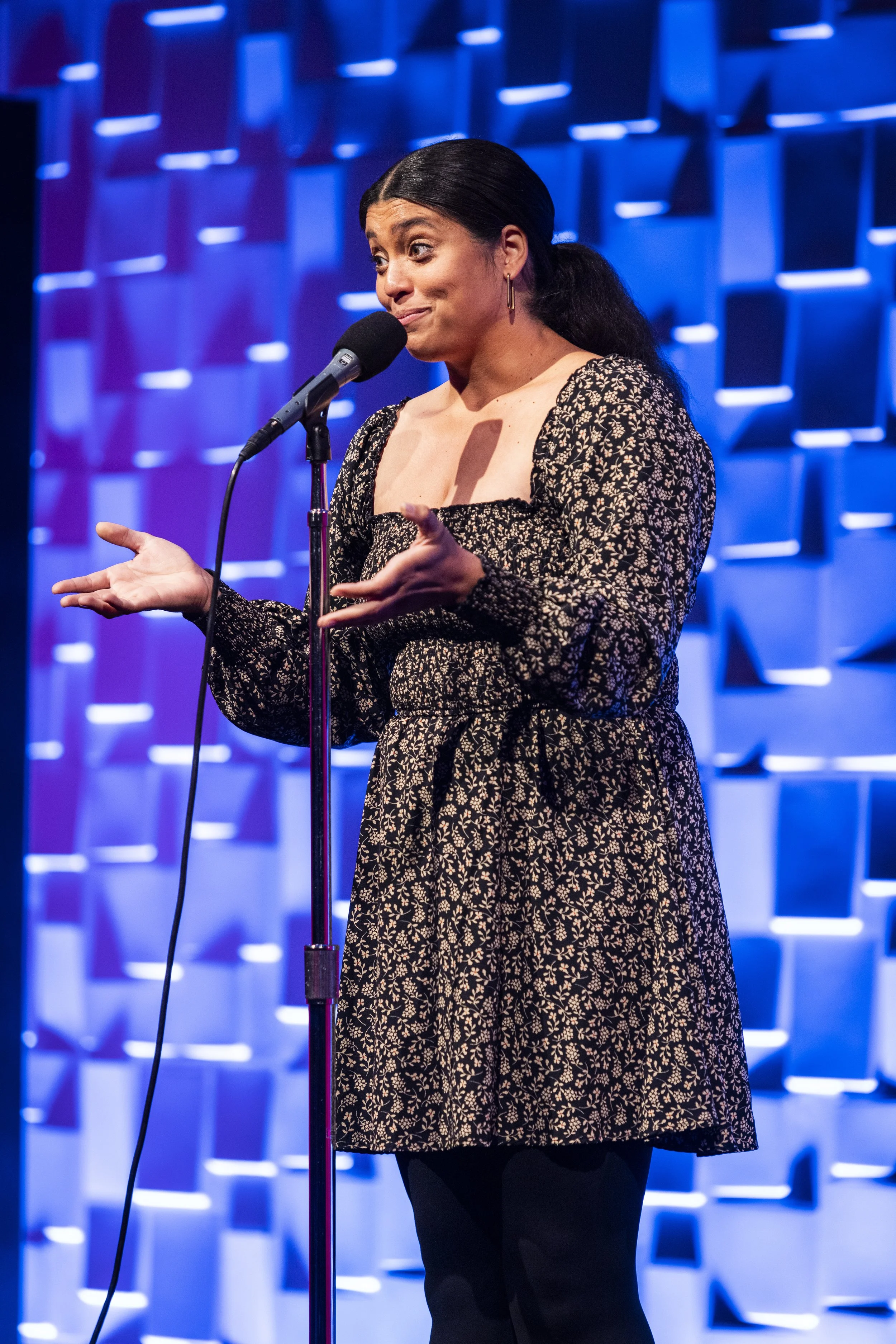
Jess Nurse shares her story at Crawford Family Forum in Los Angeles, CA at a show sponsored by LAist in July 2025. Photo by Unique Nicole.
I said, “Yeah, it's like this pain in my gut. It's like this throbbing pain. It's like right under my rib cage and right above my bladder.”
My friends thought I was being uncharacteristically dramatic. I thought this was the appropriate gravity of true love lost. And to any medical professional, it would sound like I should go to the hospital.
My mom, the medical professional, would have told me this immediately if I hadn't been, historically speaking, avoiding her analytical doctor brain response, but after several unanswered articles with titles like, "If you cook these beans too long, they will poison you," she finally calls me and I fess up about the pain.
She tells me right away to go to the hospital and she says, "You have to take someone with you."
My mom doesn't know this, but me and college boyfriend are in a kind of, "Will they/won't they get back together” thing, because college.
I think, “Okay, he's the one to ask. Maybe this will make us a “will they” instead of a “won't they”.”
So he meets me at the hospital emergency room. The intake staff asks me what my pain level is on a scale of one to ten. This all already feels so dramatic, like it's clearly just heartbreak. I say seven, even though it would be more accurate to say ten.
Hour one goes by, hour two goes by, and I can tell college boyfriend doesn't want to be here anymore. I'm bummed because he's been saying that he wants this and it feels like this is the moment to show it, that he cares. This is the grand gesture. He messed up with the toothbrush, and now he can chase me through an airport. That's what happens in the movies. Okay, different public building, but same premise.
Instead, he leaves, and I am left alone, scared, in a hospital waiting room, disappointed and my heart a little more broken.
They finally bring me in. They do some tests leisurely. Again, I said seven. The results come back. Eight doctors rush into my hospital room. They say, “You had appendicitis. You waited too long to be seen. The inflammation caused your appendix to rupture and burst. We need to bring you into surgery now.”
I am terrified. I need an analytical doctor brain response. I call my mom.
She says, "Don't let them put you in surgery." Which is confusing because they said the word “burst”, but she knows I'm at a teaching hospital and that they will let Chad, who just graduated, put a knife in my abdomen. Sorry, Chad.
I actually hear her start the car over the phone. I feel this swell of assurance.

Jess Nurse shares her story at Crawford Family Forum in Los Angeles, CA at a show sponsored by LAist in July 2025. Photo by Unique Nicole.
She says, “Hold tight. I'll be there.” And she drives the four hours from Boston to New York in three hours and 12 minutes. And on the way, she arranges for me to be transferred to a different hospital, a top surgeon. She lets our whole family know. And before I know it, she's squeezing my hand and I'm being rolled into surgery.
I was scared, but I somehow knew that it would be okay, because my mom was the kind of doctor who made sure it was.
I made it out of surgery, but it was pretty touch and go afterwards. I was going in and out of consciousness. I was having a hard time keeping food down and facts straight. I was shivering one minute, boiling up the next, but eventually I was out of the woods. And my mom was there the full three weeks in the hospital. College boyfriend came in three times.
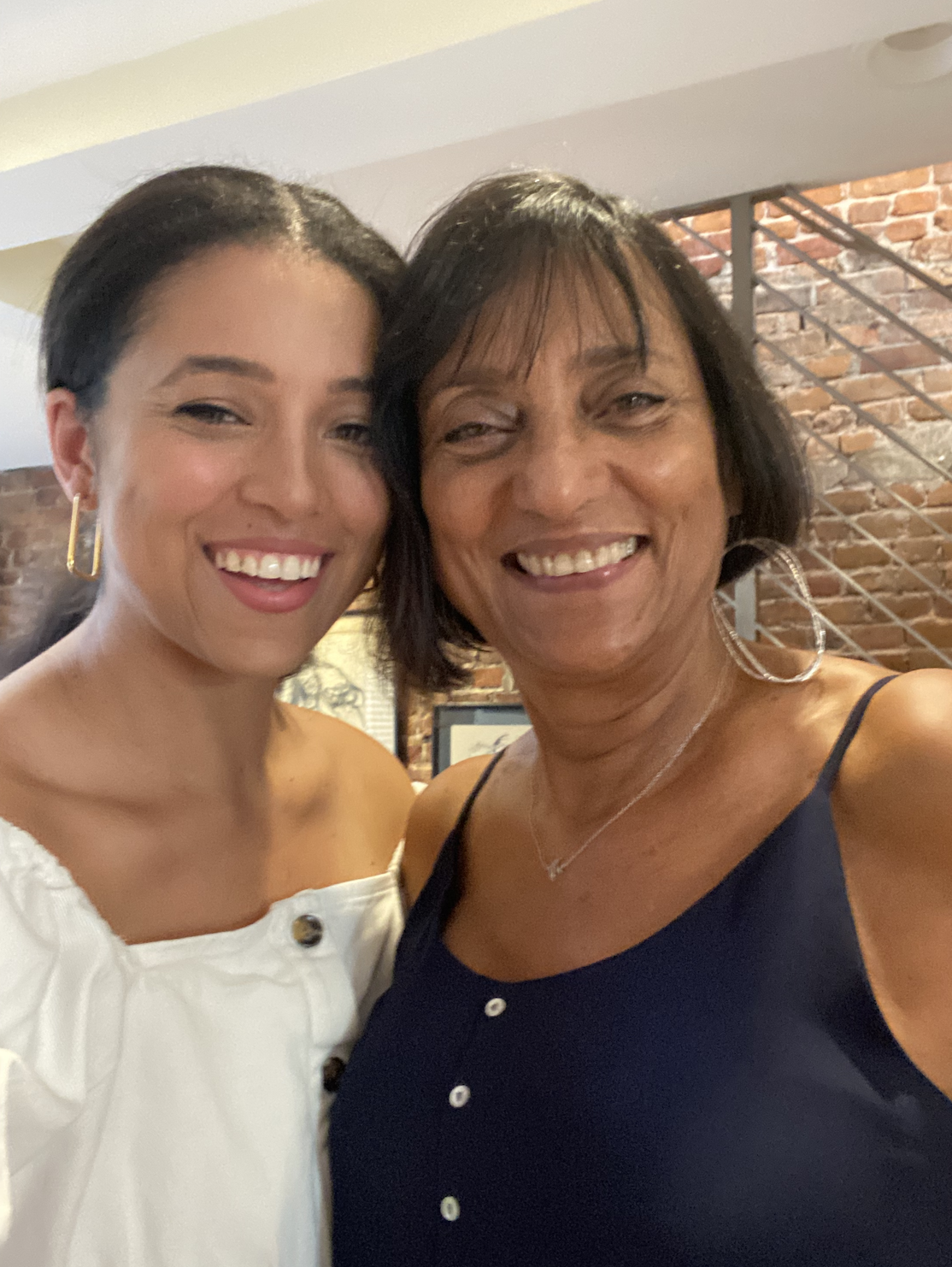
A photo of Jess and her mom. Photo courtesy of Jess Nurse.
Okay, okay, okay. It's not a fair comparison, a mother's undying love and a college boyfriend's, but it was this clear contrast. The person who left me alone, scared in a hospital waiting room, and the person who made sure I didn't face a second of it alone. You know, it's not fair. Okay. He was young, we had finals, subways are hard. But Looking at it, it's so strange to think that I dismissed my pain because I thought that love was supposed to be painful. That when it hurts, that's a sign that it's real.
We get all these stories about how it is, how like the worst that you've ever felt is a sign that it's real. That epic love can feel like dying. But the truest love I have ever known has been my mom's. A love that checked my hospital chart every night for mistakes. A love that brushed my hair when I had visitors. Got to stay cute. A love that was brainy and analytical and doctory in all the best ways. A love that understood that love is not pain. If it's painful, then something is wrong. The truest love I have ever known saved my life and pointed out a lot of new moles on my neck in the process.
Thank you.
PART 2
I am, as you can see, a fully grown adult lady, but I am not too proud to admit that I call my mom every day. She is like my very own personal, on‑call, very affordable talk therapist. Anytime that I am feeling angsty or frustrated, agitated, nervous, whatever, I just pick up the phone and just vent it all out. Out of me it flows and into her patient, loving, and sometimes only half‑listening ears.
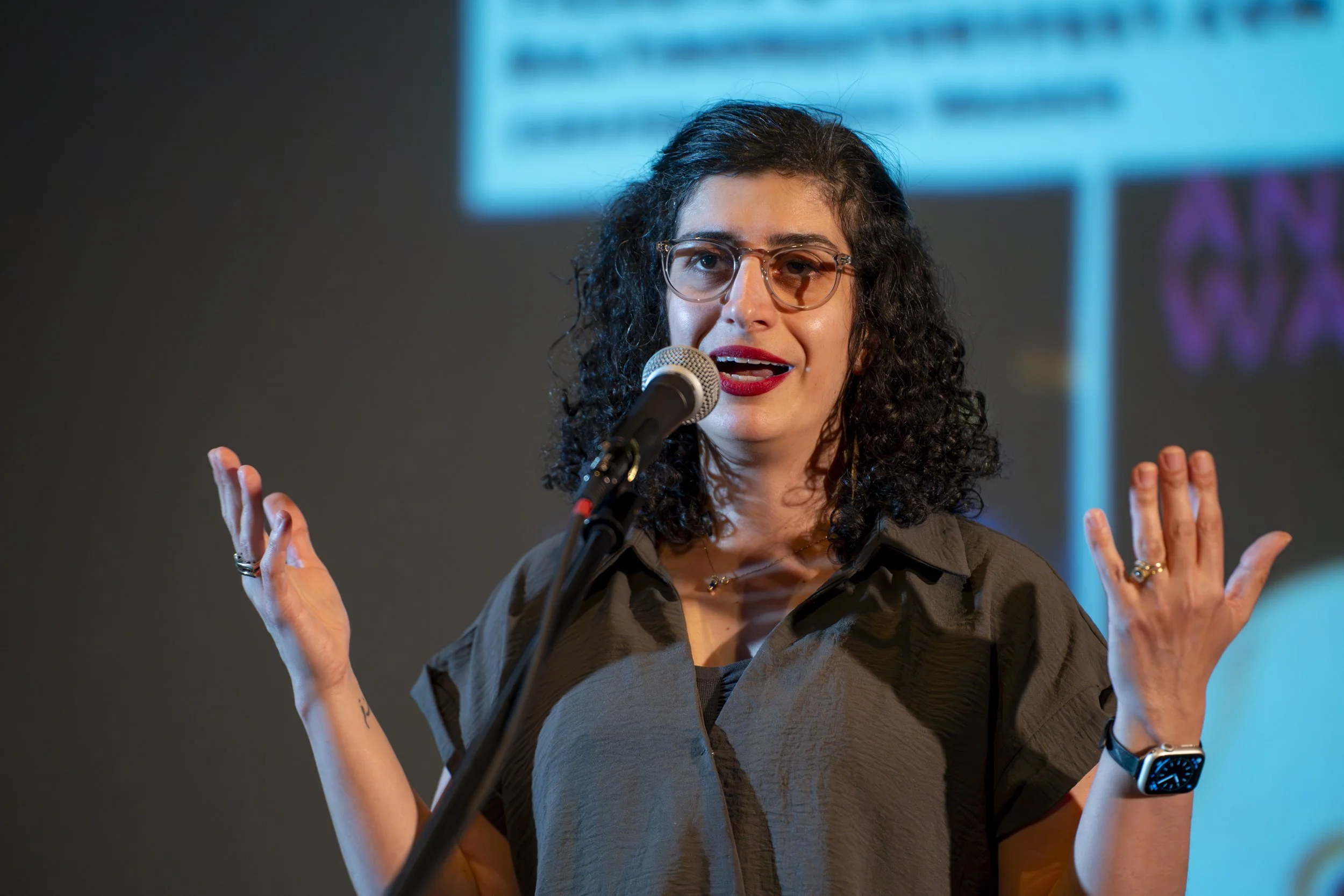
Maryam Zaringhalam shares her story at the Baltimore Theatre Project in Baltimore, MD in May 2025. Photo by Laurie DeWitt .
Once I'm done, she always says, "Maryam a man, azizam a man," which is Persian for, “My Maryam, my darling, everything's going to be okay.” And just like that, I can move through the rest of my day feeling lighter.
But one afternoon, I'm talking to her and she lets, just sort of drops casually that she, in a couple of weeks, is going to be admitted to Columbia Presbyterian Hospital to get a brain aneurysm clipped.
I'm just like, “Yeah, what a cool, calm, casual way to drop the news that you're getting brain surgery. That's totally fine and normal.”
And she's like, “No, no, no. it's like a pretty standard procedure. Nothing to worry about. Everything's going to be okay.”
So I'm like, “Okay. I believe you.” She's a physician. She knows this stuff, so okay. Fine.
But then it occurs to me, wait a second. Between the surgery and her recovery time, that's three days, 72‑ish hours that my therapist will be off call. Well, that sucks. But I'm a big girl, so I'm going to pull on my big‑girl pants and deal with it.
And so the Tuesday of her surgery rolls around and I just launch into constant text communication with my dad and my brother asking for updates. I set a timer to go off once an hour, because I figure like that's a reasonable amount of time for updates. And by hour four, my dad sends a text saying, "Mom did great. She's out of surgery recovering." And then he sends a picture.
I open it and, in the picture, she doesn't look great. She is totally out of it, passed out. Her face is swollen and puffy and her head is wrapped in bandages. She looks more like a mummy than my mom, but I'm just, “Okay, recovery takes time, so just stick tight, hold tight, it'll be okay.”
Hour five, text. You know, “How is she doing?” Hour six, “Is she talking yet?” Hour seven, “When are you going to go back to the hospital to check in on her?” By hour eight, I get off the metro to walk back home from work and I instinctively pull out my phone to call my mom and tell her how stressed I am. Until I remember, wait a second, I'm super stressed because I can't talk to my mom because she's in the hospital.
So that's kind of how the time passes. I start taking notes, like mental notes about all of the things that I want to say to my mom when we're finally able to connect. Until finally, around hour 60, my dad texts that my mom is ready to be discharged in a few hours and I can talk to her tomorrow. I'm just like, “Yes! Finally, we'll get that chance to fill her in on everything that's happened.”
Then at hour 64, I start getting antsy. I'm like, “Ah, fuck it. I can just call her and talk to her now.”
So I call and my dad is like, “She's really tired.”
I'm just like, “No, I just want to hear the sound of her voice.”
So he puts her on and I just hear her moan, “Maryamam. I'm okay.”
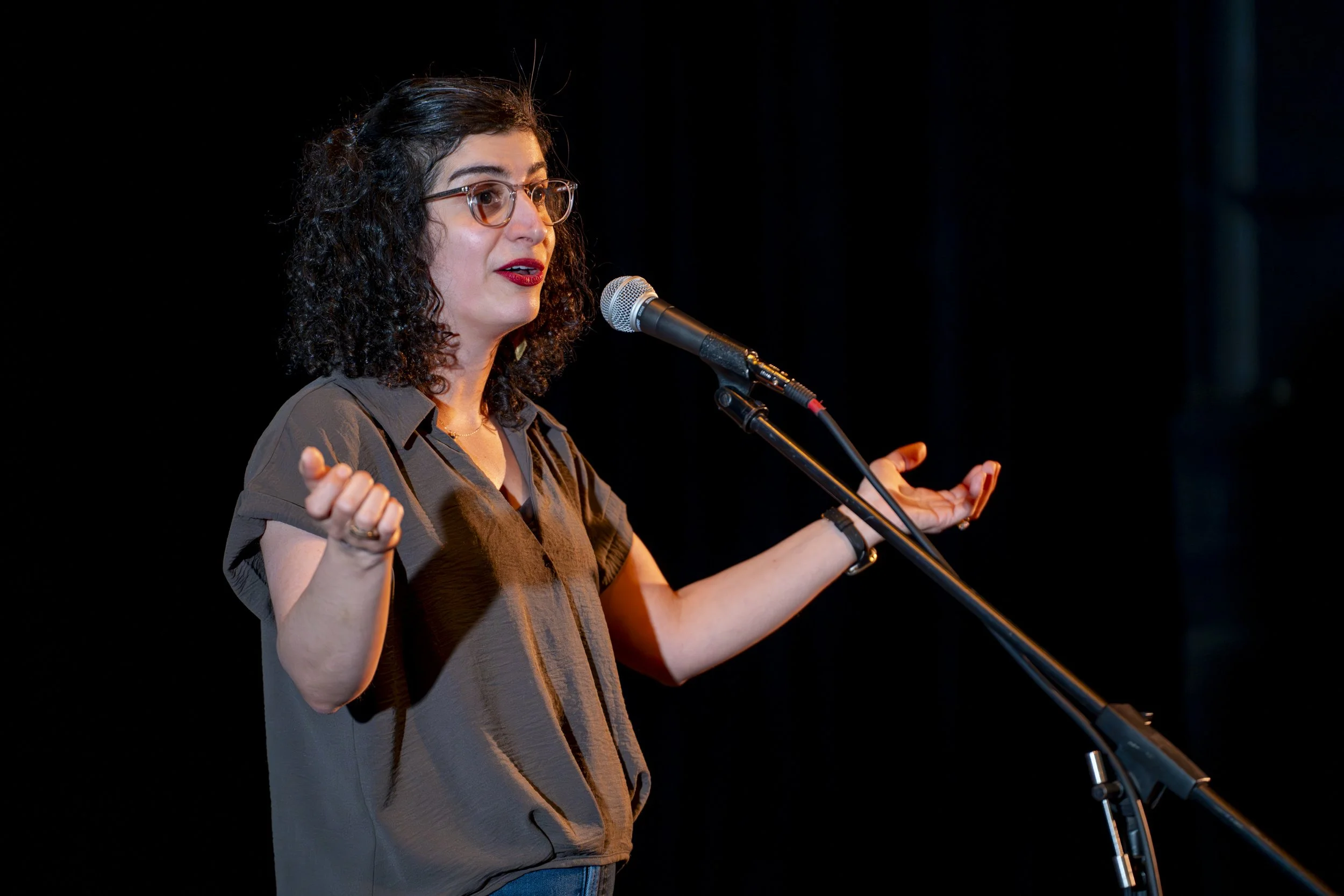
Maryam Zaringhalam shares her story at the Baltimore Theatre Project in Baltimore, MD in May 2025. Photo by Laurie DeWitt .
immediately, I'm just regretting that I made my dad put her on the phone. And so I think, “Okay, I can wait it out. I'll wait for her to call me.”
So 64 hours turns to 72, turns to 96. Finally, at around hour 103, I get a text. I'm sitting, it's Saturday morning, in front of my TV just trying to distract myself. I open up the text and it's from my mom and it says, "Watching Gossip Girl. So funny, XOXO."
I'm just like, "What the fuck? We haven't talked in days, and this is how you greet me?"
A second later, I get a phone call, and it's her. I just brush back tears of relief knowing that I'm about to talk to her again. She just immediately launches in with, “Serena is so silly. What a bimbo.”
I just like, “Queen B, Blair, she's so classy. You should dress more like her.”
And I'm like, “Okay, well, I'm not a millionaire daughter, but sure. Also, what meds do they have you on?”
She just kind of laughs like, “Heh, the good stuff, Maryamam, the good stuff. Got to go, XOXO,” and then she hangs up on me.
I'm just like, “Okay. Well, that was weird.”
But before I think about it for too long, a second later, she calls and she says, “Okay, so I'm going to go to bed at 8:00 PM. Don't call me past 8:00 PM, okay? Got to go. XOXO.” Hangs up again.
We're close, but we're not coordinating bedtimes close. But again, a minute later, calls me, “Actually 7:30 PM. Don't call me after 7:30 PM.”
“Okay, Mom.”
You know, our communication kind of continues like that, mostly text messages, kind of weird, unhinged, but she's on meds. She tells me at one point that tomorrow she has to go to a funeral and she's not looking forward to it because it's going to be super boring. The next day, she confirms that the funeral is in fact super boring.
I'm just like, “Okay. Well, I guess meds make my mom rude, but here we are.”
Then things get kind of more normal over the course of the next days. We just fall into our natural rhythm of me calling her and her comforting me from afar.
A month later, I go back home, back to New Jersey and then New York. We go out for my birthday to brunch at a fancy restaurant in New York City. And as we all pile in and settle into our booth at the restaurant, my mom says, "Maryam, do you remember when I called you, kept calling you, kept texting you after my surgery?"
I said, "Yeah. How could I forget? It was pretty unhinged."
And she says, "Well, that next morning after I was discharged, I didn't wake up. Your dad found me.” She was slipping in and out of consciousness and she totally lost the ability to speak English. She just kept saying, "Pishi, pishi,” which is Persian for, “Kitty, kitty,” because, for some reason, she was calling out for our family cat.
Then they took her back to the hospital and they couldn't quite figure out what was wrong, so they thought maybe it was inflammation in the brain. They give her a really, really high dose of steroids.
And then she says, "Maryamam, when they gave me those drugs, I went psycho."
So at hour 82, she starts telling all of the nurses, "Don't tell Maryam I'm here." And they're just like, "Not a problem. We have no idea who Maryam is."
By hour 96, she's going through all of her contacts in her phone texting them, "Don't tell Maryam I'm in the hospital," and they're just like, "You're in the hospital? Are you okay? What's going on?"
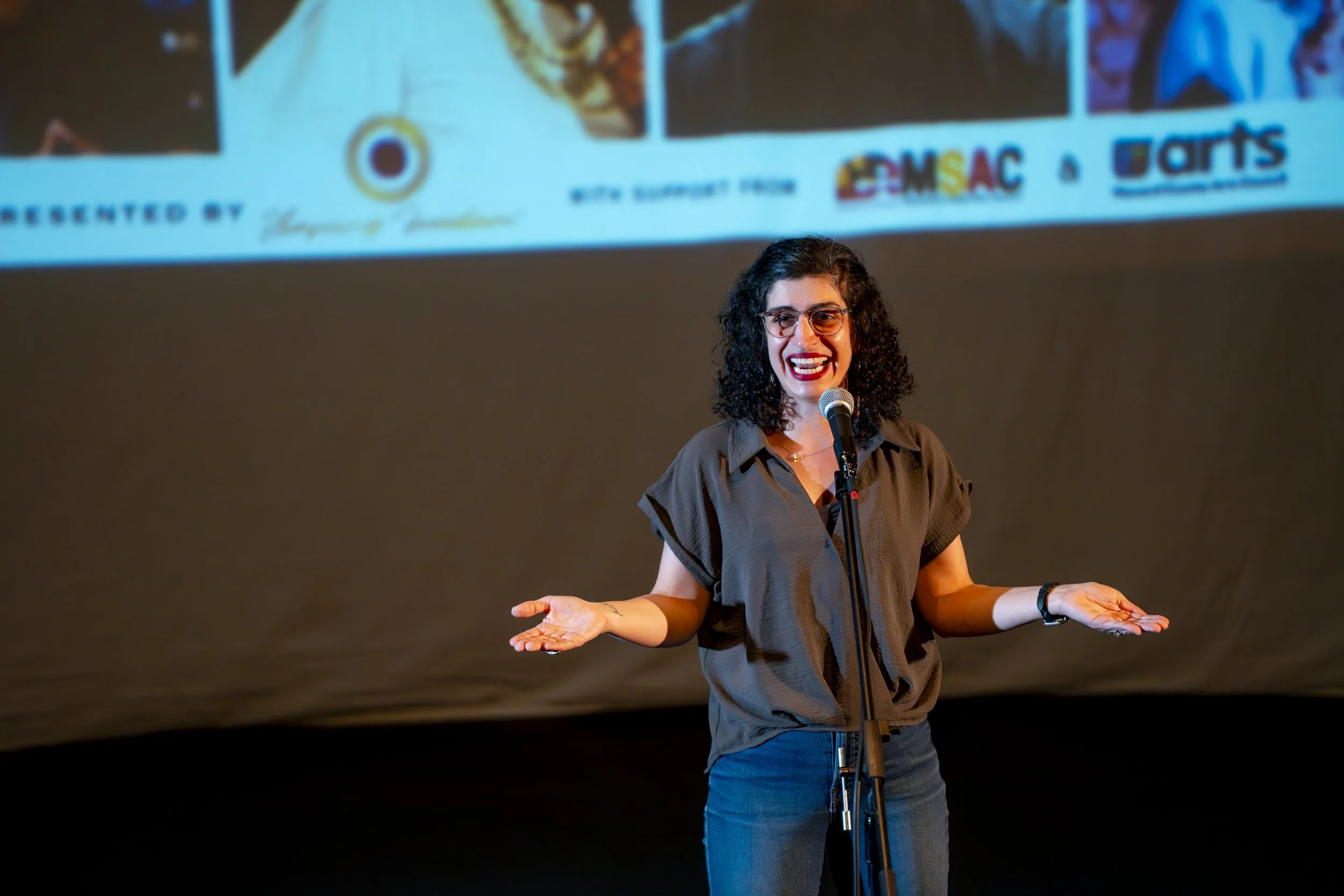
Maryam Zaringhalam shares her story at the Baltimore Theatre Project in Baltimore, MD in May 2025. Photo by Laurie DeWitt .
By hour 106, all of the nurses had seen her texting and calling her daughter like a crazy person, and so they confiscated her phone. So she decides, "I'm going to break out of my hospital bed." And because she's a doctor, she knows how to take out all of the IVs. She might have succeeded had she not tripped some alarm.
By hour 120, she's making up a funeral that she's at that's super boring, because despite being medically psychotic, she's very committed to this bit and thinks, for whatever reason, that her daughter is more likely to believe that she's at a boring funeral than having a perfectly pleasant Sunday recovering.
By the time I get back home to DC after hearing about all of my mom's shenanigans, I'm just thinking how hilarious it is that my mom totally lost her fucking mind. Until I realized my mom lost her mind and I had no idea. Even in the middle of a psychotic break, my mom's first thought was me, my comfort, my safety.
And I start thinking back to how much I wish I could have been there with her that day that she didn't wake up. I think about my dad trying to wrestle her awake. I think about him trying not to panic as he dials 911. I think about how much I wish I could have been with her at hour 81 when they administered the steroids and at hour 82 to be the face that she saw when she woke up. How at hour 106, she wouldn't have needed to break out of her hospital room in order to get to me and tell me she was okay.
And I think about how much I wish through all those hours and in the hours to come, she'd let me be there with her, whispering, "Maman a man, azizam a man.” “My Maman, my darling, everything's going to be okay."