Attitude is everything—and this week’s storytellers prove it. Even when life throws challenges their way, they show how perspective and perseverance can make all the difference.
Part 1: Paralyzed but undeterred, Scott Imbrie is on a mission to regain movement.
Scott Imbrie, BCI Pioneer, Scott is an incomplete quadriplegic with fine motor skill limitations. His spinal cord injury (C4 through C6) happened from a car accident in 1985 when the seat belt failed. Today Scott is a participant in spinal cord injury research at the University of Chicago where he controls a robotic arm and hand with sensory feed-back. The goal of this study is to restore independents to people with spinal cord injuries. His story is about hope and determination.
Part 2: After an accident leaves them with severe burns on over a third of their body, Emily Hespeler works to find their way back to themselves.
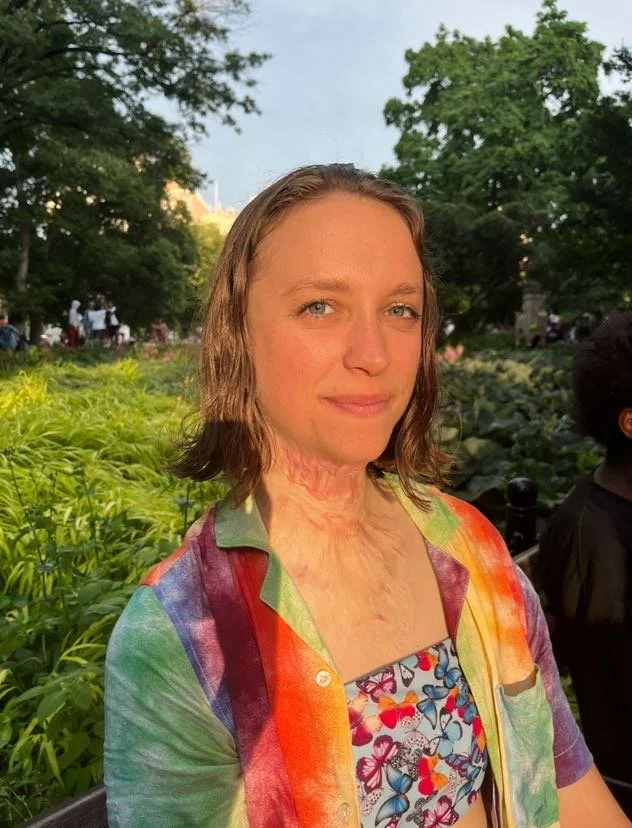
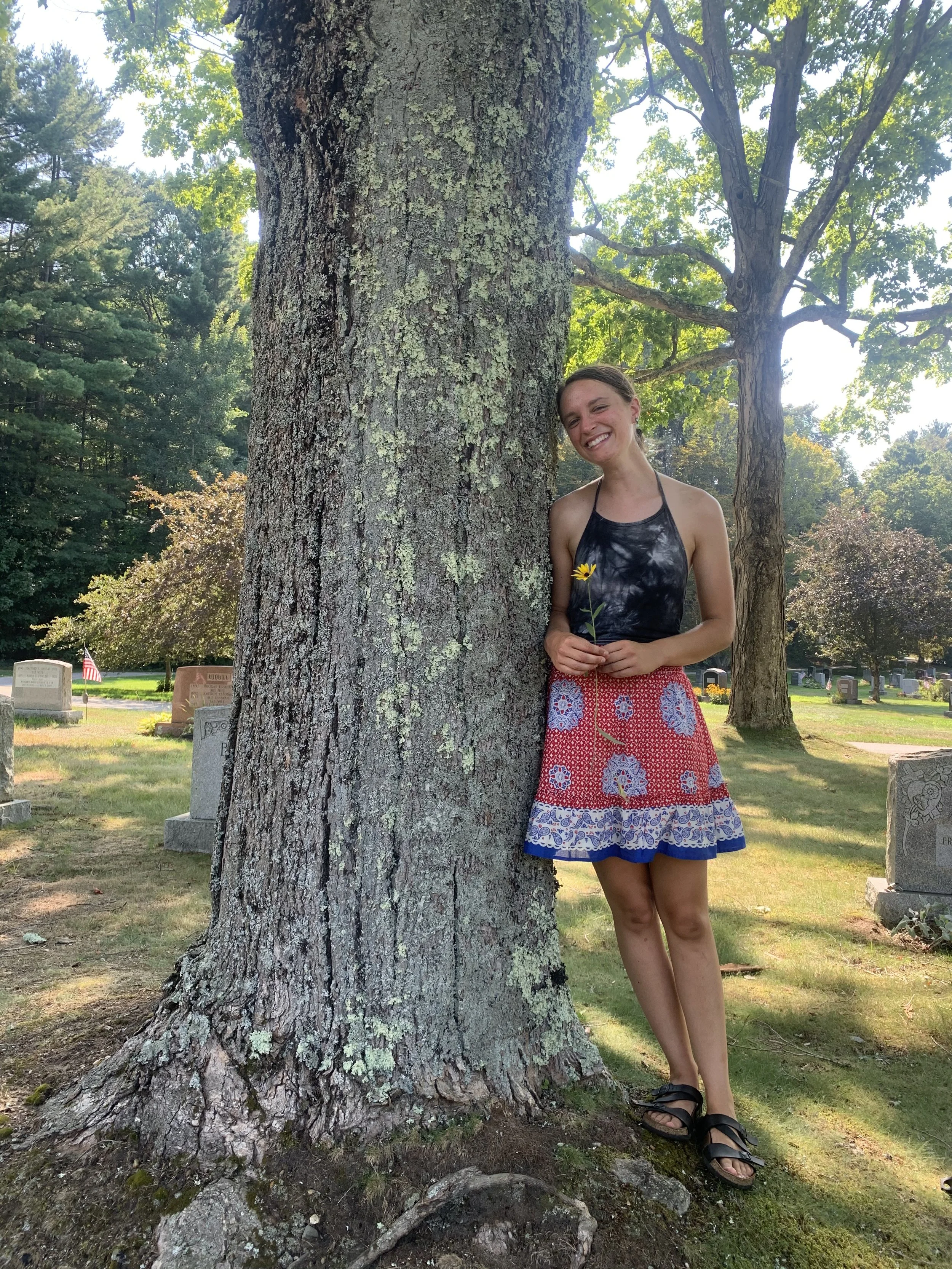
Emily Hespeler is a certified therapeutic recreation specialist (CTRS), burn survivor, speaker, and storyteller based in New York City. Drawing from their experiences after a major burn injury, Emily combines professional expertise in recreation therapy with powerful storytelling to inspire others to embrace their inner strengths. In their everyday life, Emily finds joy in simple routines: daily walks, spontaneous conversations with strangers, and their weekly jar of peanut butter.
EPISODE TRANSCRIPT
PART 1
It was May 4, 1985. I was lying in bed with my eyes closed and I was hearing very unusual sounds that I wasn't familiar with at all. I'm opening up my eyes and I'm looking up at the ceiling and, when I looked out the window, I could see the sun was just about to break the horizon.
As I'm looking around, nothing looked familiar to me. It was very confusing. But I really wasn't scared. Then all of a sudden, there was a man standing at the end of the bed. He grabbed a clipboard that was hanging there. He's looking down at it. He looked up at me and it was my doctor. He was there to tell me about my injuries.
He told me I was unconscious for five days, and they were waiting for me to gain consciousness. He said I was a quadriplegic. He said I'd never again be able to use my hands or my arms.
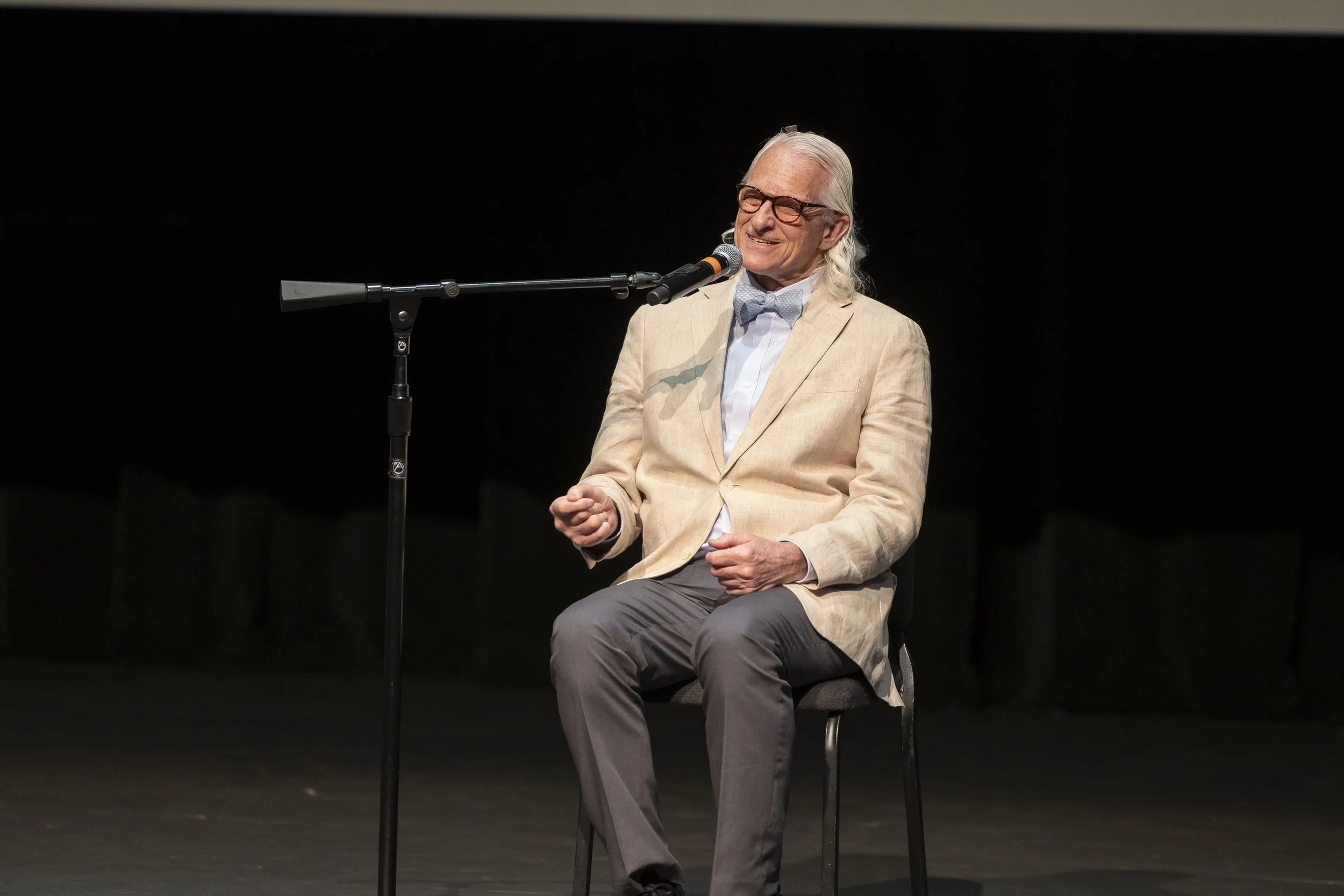
Scott Imbrie shares his story at Ferst Center For The Arts in Atlanta, GA in May 2025. Photo by Christopher McKenney.
I didn't believe him. I was in denial. I was going to prove him wrong. I was in a fight‑for‑my‑life mode.
This doctor, he had no bedside manner. He walked out of the room and I thought to myself, "Good. I got rid of that asshole."
A little while later, a nurse walks in carrying a tray of food. This woman just had the best warmest eyes. You can tell she was a really caring person. She sets the tray down next to me in the bed.
As I go to reach for the tray, because I was really hungry, so I go to reach for the tray and I'm like, “Why can't I move? What's going on?” I was really super confused.
She looks over at me and she says, "Here, Scott, let me help you," and she starts to feed me.
But no one is telling me what's going on. She's just feeding me. Then all of a sudden, there's my girlfriend come walking into the room, my girlfriend Patty. I'm like, “Finally, someone I could trust.”
She's got this look on her face, like trying to be happy and self‑assured, but she had that look of like something's going on and she wasn't telling me.
I asked her. I'm like, “Patty, where am I? What's going on?”
And she said to me, "Well, you got hurt and you're in the hospital."
Now, she's being very vague with me, but that was okay because I trusted her.
I was 22 years old and I had just bought a brand new Camaro. It was a beautiful, blue IROC‑Z28. I was really proud of myself because I had just graduated from a technical school where I took computer electronics and I had graduated from the top of my class. I had the most beautiful girlfriend. She was like the love of my life. We always hung out together and never missed a day or a night being with each other.
I was like, “Why is no one telling me what's going on or what happened?” Finally, I convinced Patty to tell me what happened.
She said, “Well, you wrecked your car. You left work and you were in an accident.”
And I'm like, “Oh, so what? I'll fix it.” It wasn't going to be that easy, because my life was forever changed. That car would never be fixed. I'm lucky I'm alive.
Now, this doctor, the one I didn't like, the one I didn't trust, this neurologist, he wants to do surgery on my neck. He wants to fuse C4, C5, and C6 together because he said there was no hope for me to recover from my spinal cord injury. In my case, what was so bad about having this surgery was that my vertebrae were so crushed and my spinal cord was so swollen that the chance of doing unintended damage was very high.
But I didn't care. I just wanted to get out of the hospital and that was my goal. My goal to get out of the hospital faster was to have the surgery.
My mom and my family, the nurses, they were all really concerned about me having surgery. My mom brought in one of the most prominent neurologists in the country at the time. Between all these people, they were all pleading with me and the doctor not to do the surgery. But I wasn't going to listen to them. I was 22 years old. I knew better. I just wanted to get out of the hospital.
So the morning that the surgery was scheduled for, the doctor's partner comes in because he needs to get my final consent and permission to do the surgery. He comes in and this man had really super kind eyes. I felt like I could trust him for whatever reason. I don't know. He just seemed like this wasn't the right decision to be making.
So I said to him, I'm like, "Sir, if I were your son, what would you have me do?"
He looked down at me and he said, "Well, I would send you down to Northwestern Memorial Hospital for the best medical care."
I'm like, "What? Can you tell me that again?" I heard him as plain as day.
And he's like, "No, I won't say it again because I could get fired.”
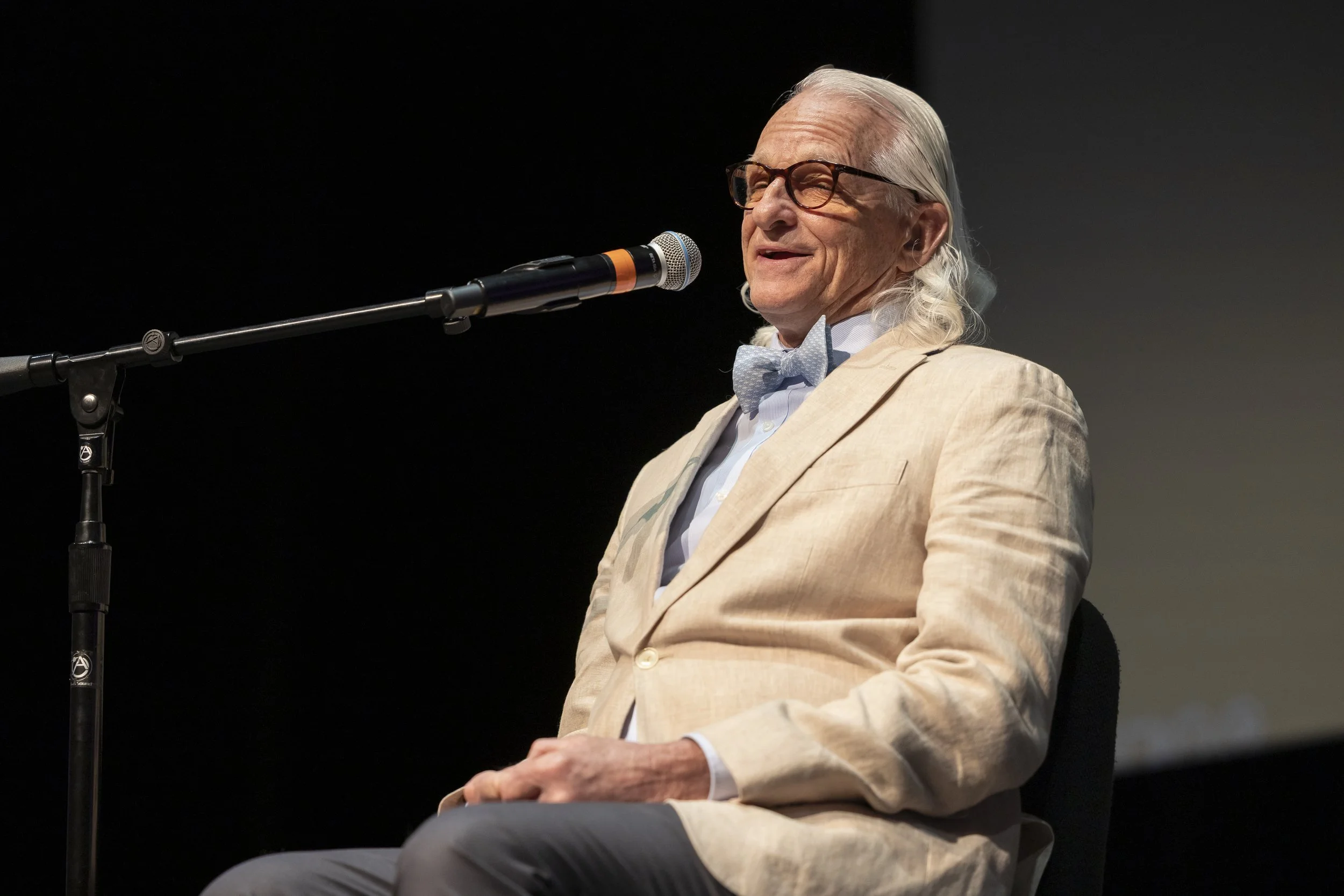
Scott Imbrie shares his story at Ferst Center For The Arts in Atlanta, GA in May 2025. Photo by Christopher McKenney.
Thank God for angels. I didn't end up having that surgery. I never needed it. The next day, I was transferred down to Northwestern Memorial Hospital and I laid in a Stryker bed in traction for the next eight weeks. They had a 15‑pound weight hanging from my head, which kept the bones in my neck separated so the vertebrae could heal all on their own. Thank God.
Anyways, about four weeks after my accident, I'm laying there flat on my back in the bed at Northwest Memorial, and I'm trying to figure out how to do things for myself. Obviously, I'm a quadriplegic so I can't move, or not very well anyways. But I'm trying to figure out how to change the channel on the TV without a remote control.
Now, you see the nurses, they consistently offered to change the channel for me. As usual, I would refuse their help, hence they love me. They love my smile. They love my positive attitude. I just needed to figure out how to change the channel for myself.
So I started out by figuring out how to pull my arms up to my chest, sort of like the fetal position when you're lying flat on your back. My fist would be up underneath my chin. This would also help keep me warm.
Then I started figuring out how to pull my left knee up in the air. What I would do, I would slide my foot and bring my heel to my butt. Since I couldn't do that with my right knee, I would hook my left foot underneath my right foot and pull that knee up so both my knees were like up in the air.
Still determined to do more, I finally figured out how to wiggle my toes and point my toes on my left foot up towards my head. I'm like, "I'm going to figure this out how to change this channel.”
So then I started reaching for the dial on the TV. Now, the TV hung right above me and the bed. And so day by day I would get a little closer to the dial on the TV. Then I finally got my fingers on the dial, but they kept slipping off and I didn't have the strength to do it. But finally, I changed the channel. I did it.
I reached for the call button. I was yelling, "Nurse! Nurse! Nurse!"
She comes running in, "What, Scott? What happened?"
"Look, I changed the channel. I finally did it."
She looks at me with such excitement. And the look in her eyes gave me the reassurance I needed. This was the day I decided and I figured I'm walking out of this hospital before too long. Boy, how exciting.
All right. So, the thing that's so funny about it is none of this was easy. I just need to figure out how to do everything for myself. You know, we all struggle. I'm no better or no worse than any of us, but I stayed determined. I was really pigheaded. Being pigheaded was a great tool to have. And I was self‑assured, which gave me the determination that I could do anything. Anything was possible in this world as long as I stayed determined.
A while later, they finally took me out of traction. They put me in a halo. Now, a halo is it's like a vest that's strapped on your chest. Off of each shoulder, there's two bars going up to this ring that's around your head. Now, imagine, if you look in the biblical tense, they'll have an angel or a saint and they have a halo floating above a person's head. Well, my halo was this ring that was actually bolted to my head with four bolts. What this did was it stabilized my head and my neck so I couldn't move it and it also gave me mobility so I could start my therapy.
They transferred me to RIC, which is Rehabilitation Institute of Chicago, to start my therapy. Now, this was both really exciting and really scary at the same time. I was excited because I'm like, “Finally, I'm getting out of this hospital.” But then I was thinking, “What if I fail? What if I don't get any better? What if I can't walk again?”
Well, good thing for denial because, once again, it gave me the strength just to ignore all that and I knew I would get better. Denial is a great tool for me.
Now, when I went to RIC, I see I made new friends. My one friend, Dave, he was also a quadriplegic. He and I, when we'd finish therapy every day, we would love to race each other up and down the halls in our wheelchairs. Somehow, we would convince a nurse to sit in each of our laps while we raced down the halls. I don't know how we did it, but we all laughed all the way down the hall. It was the best thing. This also showed me to always live life to the fullest and be grateful for the small things.
Then, one day, I finished therapy and it was like a lull day for me. I was feeling a little sad. I rolled into my room on the 7th floor at RIC and it was the first time ever that I cried about my situation since my accident happened. I was thinking to myself, “Why do bad things happen? What if I end up in this wheelchair for the rest of my life? Fuck it. I'm just going to figure out a new way to do everything I love,” and I wiped the tears from my eyes.
You see, I chose then, right at that very moment, to not be a victim. Never, ever will I be a victim. You see, when I was growing up, my family and my society, they taught us to take ownership of everything that happens to us in our life and live life proudly and just figure out how to tough through all these hard situations. Well, that was a good lesson when I was young.
Now, I'm finishing up my therapy and everything. Today, I get to help many, many, many people. I am blessed, forever blessed because I get to help people. You see, in the United States, there are 180,000 people with tetraplegia. There are 58,000 people with major arm amputations. Four‑and‑a‑half years ago, I joined a study to help people with spinal cord injuries.
The researchers at The University of Chicago used this device called Brain‑Computer Interface Technology. To enhance their research, they collaborate with the universities of Pittsburgh and Northwestern University. Now, the goal of this study is to restore motor control and sensory feedback to people who have lost function of a hand or a limb.
Now, I get to control a robotic arm or hand with a device called a Utah Array that's implanted on my brain. This device is made by Blackrock Neurotech technology. So now the hope of this study is to restore independence.
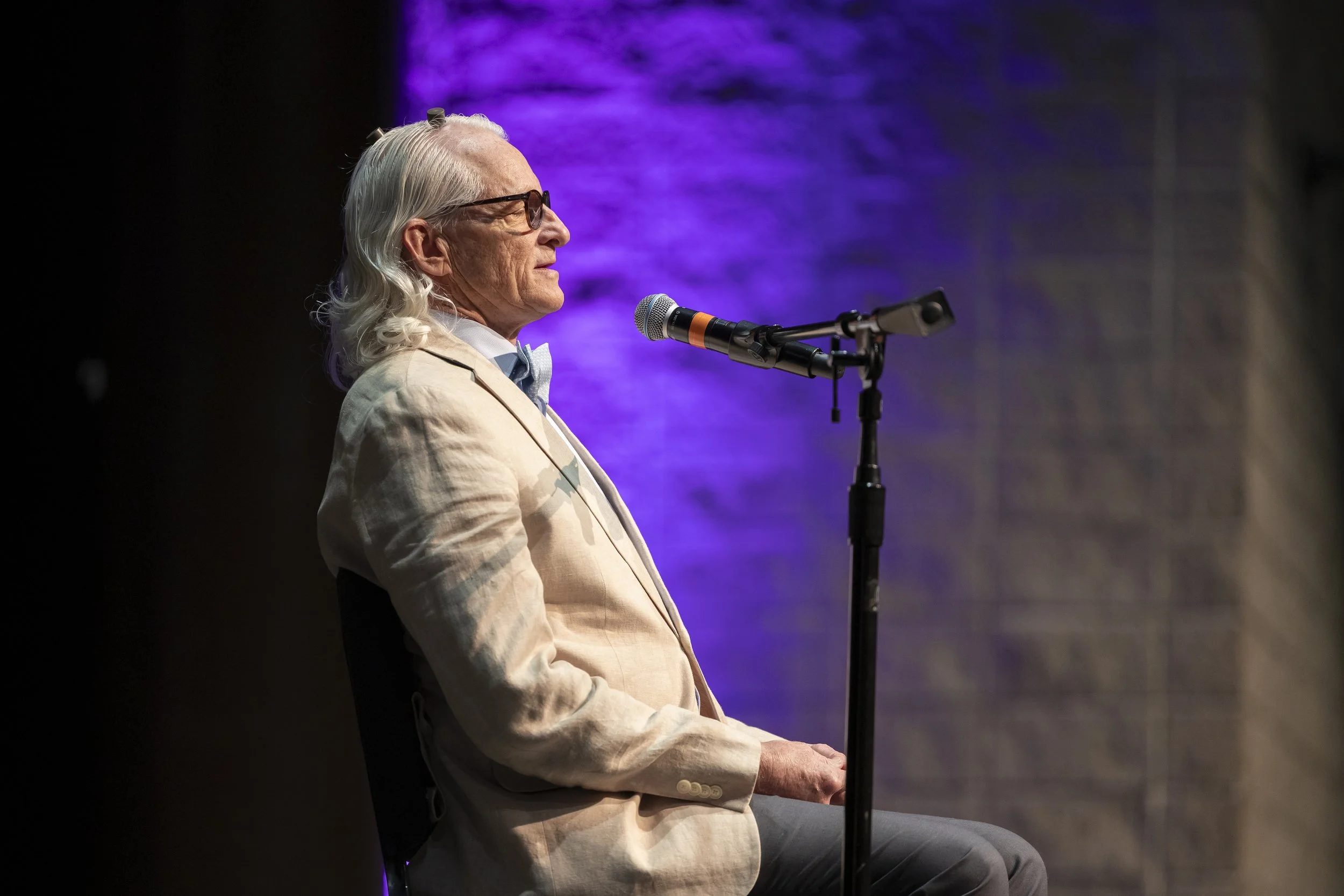
Scott Imbrie shares his story at Ferst Center For The Arts in Atlanta, GA in May 2025. Photo by Christopher McKenney.
Now, people who use this technology, they can control 2D control. Imagine controlling your mouse or mouse pad, that's 2D control. Now, think about all the things that we get to control using our phones and computers. So now a person using this technology, they can have a purpose in their life to be independent by using this technology.
Think about how many things we use controlling our phones and computers. You can do just about anything in life. This makes their world with unlimited opportunities.
Thank you. Sorry about that.
When I joined this study, it has no physical benefit to me, but that's not why I joined it. That's not why I decided to have invasive brain surgery, having four electrodes implanted on my brain. I did this to help other people because we all have to return the blessings that we received, or otherwise we can't keep it.
Today, I still wonder why bad things happen. And today, I often wonder, “Is this the reason why? Is this why my neck was broken?”
Thank you, The Story Collider, and thanks to all of you.
PART 2
Who's a baddie? I'm a baddie. Who's a baddie? I'm a baddie. I'm just repeating this little mantra that my roommate, Emmy, taught me back in Harlem around four years ago. You see, Emmy would ask me the same thing. She'd be like, “Emily, who's a baddie?” I always kind of laugh when she asks me. Eventually, though, she would always get me to scream, “I'm a baddie.”
I knew the term “baddie” from African‑American women using it as a term of self‑esteem, self‑confidence, just looking good and feeling good about yourself. But when I asked Emmy, "Where did you get this idea to ask me who's a baddie?" She's like, "Dude, I don't really know. Maybe from a song or something."
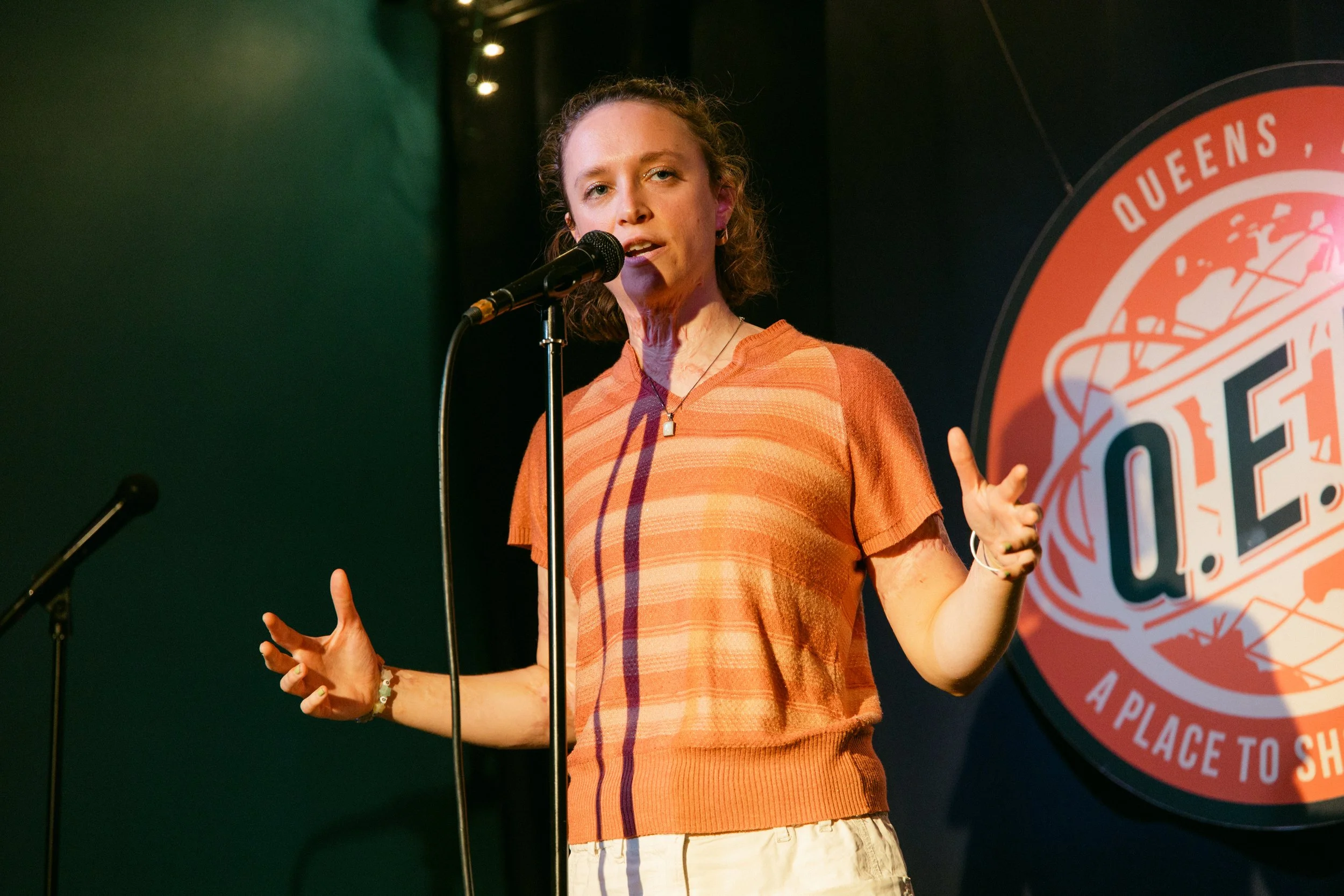
Emily Hespeler shares their story in May 2025 at QED Astoria in Queens, NY. Photo by Arin Sang-Urai.
But wherever she got it from, I decided to really use it. So every day, those four years ago, I've had one hand on the door and I'm about to leave my apartment, and the other part of my body was looking at the mirror directly across from the door. I would say aloud, “Who's a baddie?” And I'd repeat back, “I'm a baddie,” before turning and walking out the door onto the streets of New York City with my head held just a little bit higher.
But you see, this mantra came at a crucial point in my life. You see these scars I have on my body, I didn't have for the first 23 years of my life. I had a burn accident around four‑and‑a‑half years ago. I was cooking on my gas stove. I reached above my gas stove to grab something out of the microwave above it and my flowy shirt caught the flame below.
I ended up getting burns on more than 30% of my body, spending around two‑and‑a-half months in the hospital, enduring these daily, painful bandage changes, multiple skin graft surgeries, and tons of occupational and physical therapy.
When I left the hospital and was finally able to return back to my apartment in Harlem, I feel like it was the first time I really got to look at myself. I feel like I had to get to know this new vessel I was in, if you will.
See, around this time, I remember talking to friends and family. At moments I couldn't control, I would feel these sensations. I would feel this uneasiness in my stomach, this tension in my throat, this kind of buzzing in my head, and this glazed‑over look in my eyes. As this was happening, I would feel like my soul would start to drift out of my physical body. It was like I was looking at myself from above.
And these same out‑of‑body sensations would occur when I look at photos of myself from the first 23 years of my life and I saw the physical differences in the photos. I didn't have scars on my body before. It was something else that was causing these feelings for me. It was the fact that, in my mind, there was now two Emily's. There's Emily before my accident and the Emily after my accident. I didn't know how to connect the two Emily's. I didn't know who I was in those moments.
I tried to reflect back on who I was before my accident. I was a 23‑year‑old. I had just moved to New York City a year prior. I was doing this volunteer program, trying to live an intentional life, but at the same time I didn't know what I wanted to do.
Then halfway through my first year in New York City, COVID hit. And then I really didn't know what my future looked like. Then my accident happened. Again, I didn't know who this new Emily would be or how to connect back to who I was before my accident.
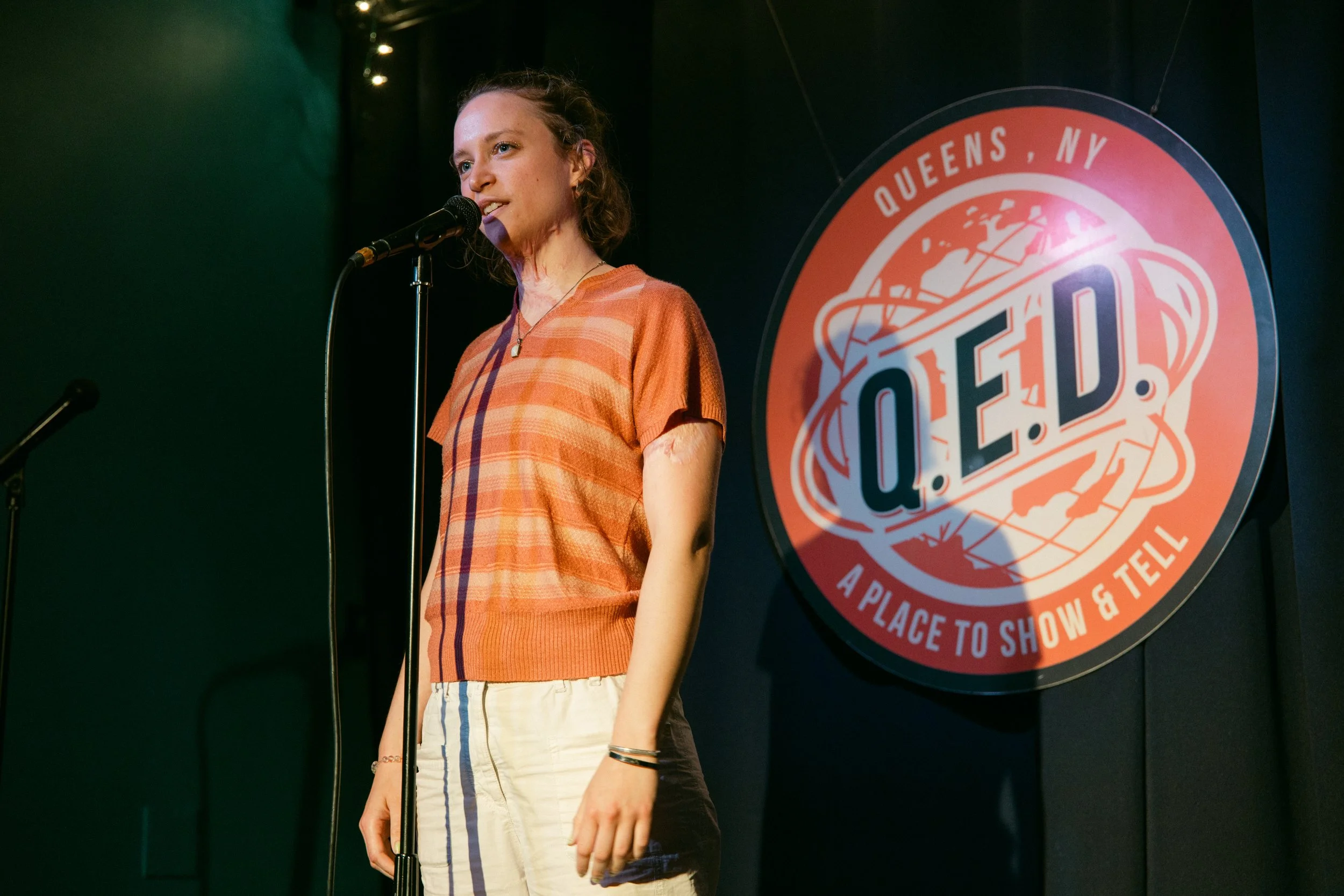
Emily Hespeler shares their story in May 2025 at QED Astoria in Queens, NY. Photo by Arin Sang-Urai.
My friends and family would try to tell me that it was okay, that it was normal to feel these things. I even sought out therapy for a month and the therapist was like, "Emily, try to focus on all that you can be and all that you might be. You're going back to work, you're seeing friends and family. Try to focus on those good things."
When I tried to do that, I still couldn't shake these feelings I was having, so I knew I needed something else to help me get through that time.
While I was searching for what that something would be, I was just going through these new motions as a burn survivor. I was putting lotion on the more than 30% of my body that was now burned to keep it from itching so much. Then someone who gets their calm and relaxation from going outside, I was now putting on loads of sunscreen and wearing these long sleeve, sun protective shirts to keep my skin from further damage from the sun and things like heat exhaustion.
For the first time in my life, I was getting used to strangers coming up to me and asking, “Hey, what happened to you?”
Around this time, I remember opening my closet door in my bedroom in Harlem and I saw these bandages. I took them out and held them in my hand. I was going through some outpatient surgeries after my stay in the hospital, so they were from that. But the bandages themselves reminded me of the bandage changes I did, like had to go through when I was in the hospital. And every day for two‑and‑a‑half months I would have these daily painful bandage changes in order to keep my skin clean and keep my wounds healing. It was so painful that not even potent pain medication, like fentanyl or morphine ever took away from the pain.
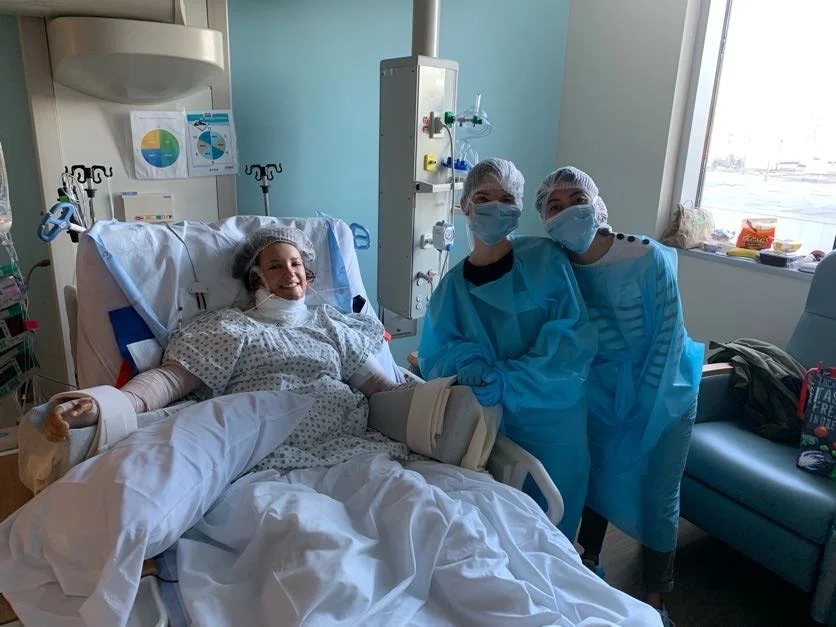
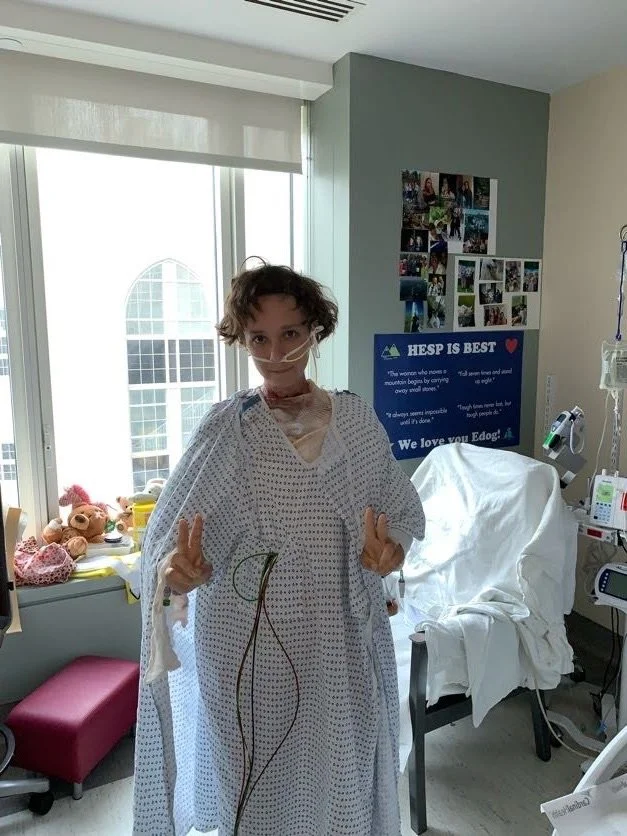
The nurses would try to be as nice as they could, slowly taking off the bandages, because the one‑two‑three‑rip method isn't really a thing. I tried to be a good patient in those moments, tried to not scream or beg them to stop, because I knew that getting these bandage changes was one step closer to me leaving the hospital. I knew in order to get through those bandage changes, I had to do something else.
So what I decided to do was take myself out of my physical body and all the pain that I was feeling in the hospital, put myself back into past happy memories. The memory I consistently put myself back into, I don't know why it just came into my head during that time, was during this party I had in college. There was just music playing, laughing friends, strangers, everyone having a good time.
At one point during the party, I'm like, "Guys, YOLO. You only live once. I've never crowd surfed before. I want to crowd surf."
And they're like, "All right, E‑Dog,” my nickname, "we'll make it happen for you."
So in my living room, in my college home, my friends, strangers, they all lift me up onto their hands. I'm reaching towards the ceiling, trying to be like, "Let's go, let's go." But, really, I look more like the wacky two men outside the car dealership, just like, yeah. You know the one, arms flailing all around?
But I make it from one end of the living room to the other, and they put me down. I'm just smiling ear to ear.
Putting myself back into those moments allowed me to get through those painful bandage changes.
But outside of the hospital, as I'm trying to get back to this new norm of a life, I don't know how these out‑of‑body experiences are going to help me. I don't know how they'll help me, until I decide to do this thing and sign up and start training for the New York City marathon. I wanted to test my strength and didn't want to be defined by my accident.
The race day itself was going to be about a year and one month or so after my accident, but I had to start training in the months leading up to it. Up until this point, I didn't run more than three miles before, maybe the occasional five mile Turkey Trot on Thanksgiving. As I'm going out for my first training run, I'm just going to see how far I can go. At this point, I'm still going through physical therapy, occupational therapy, and some outpatient surgery. So I'm just giving myself some grace here.
It's the early morning in Harlem as I go out for this training run and I see other runners. I'm like, “Okay. Cool. There's going to be some other people joining me along this journey.”
Then I hit Central Park and there's even more runners of all ages, all ability levels, just out there running alongside each other.
And if you all don't know Central Park, there's some hills, okay? So I hit my first hill and I'm like, “No big deal. I got this.” I'm running up the hill.
Then I hit the middle and I start to hesitate and slow down a little bit. I just hit this wall where I'm like, “I don't have to do this. I can just walk here, walk home, take the subway, whatever.”
But then this thing starts to happen. I'm like, “Who's a baddie? I'm a baddie. Who's a baddie? I'm a baddie. Who's a baddie? I'm a baddie.” And as I'm repeating this mantra that my roommate taught me after my accident, I closed my eyes on that hill in Central Park. As best as I can, I take my soul out of my physical body. I try to put myself back into all the pain and discomfort I felt during those bandage changes in the hospital.
And as I open my eyes on that hill in Central Park, I take a deep breath in, and I exhale. I feel my breath moving all throughout my body and I feel my heart beating. I feel my feet on the ground and I'm connected to myself, and I just keep running. I run that day eight miles, more than I ever have in my life before.
I continue the training for the marathon, a lot of it in the summer, before work, after work, on the weekends. One thing to know about burn survivors is all these areas you see scars, we can't sweat in those areas. It's kind of like my inner air conditioner is working at like 30% less capacity.
And imagine you're in a car on a hot summer day and your air conditioner is broken. You're sweating already, but you try to put the windows down to add a little breeze, maybe cool down a little bit. But you never really stop feeling hot until you get out of that car and find an air conditioned area, maybe a shady spot. That's how I felt on my runs. I felt like I was literally a car overheating, pushing through this fatigue, my mantra now working overtime to help me get through those runs.
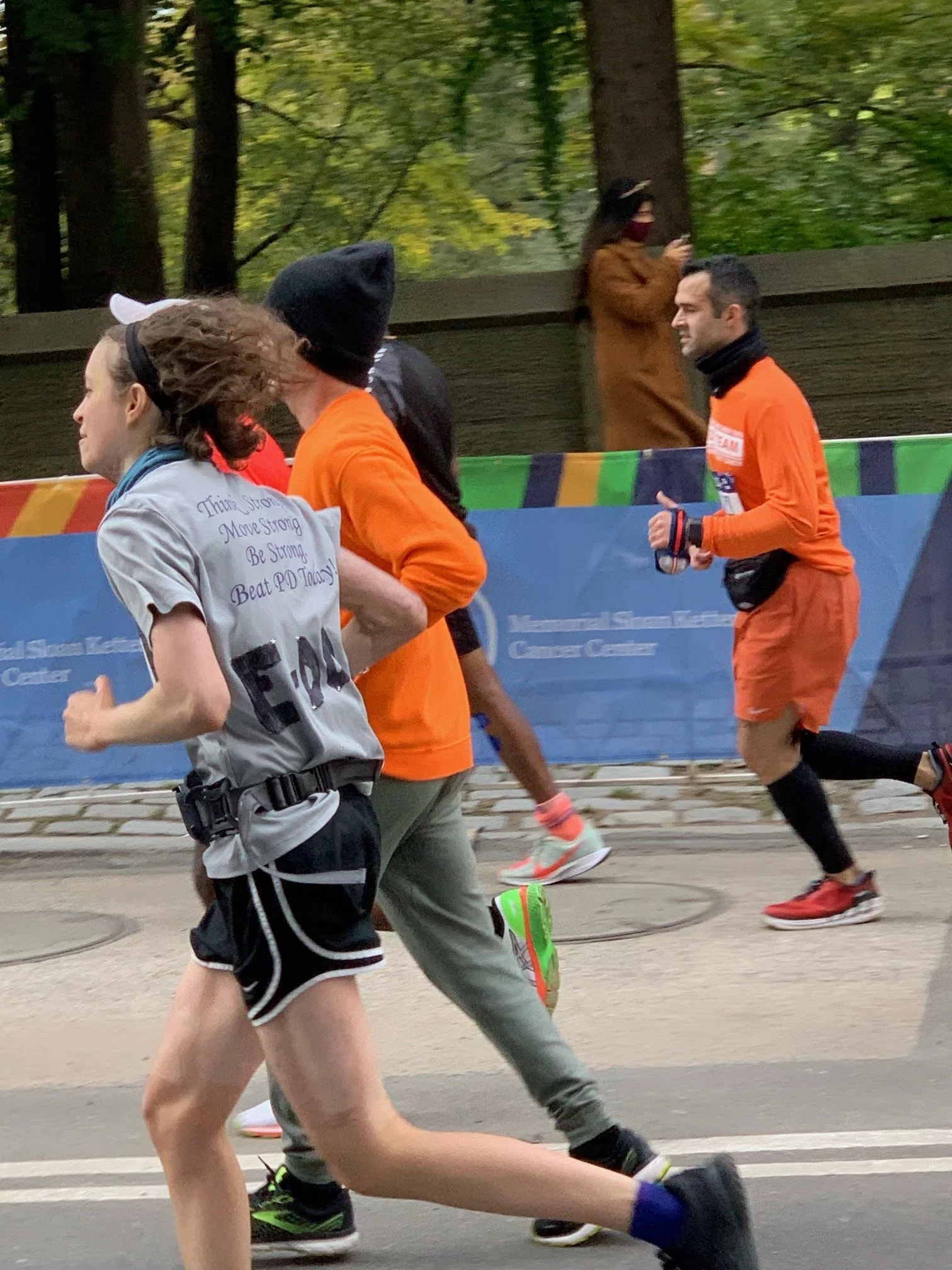
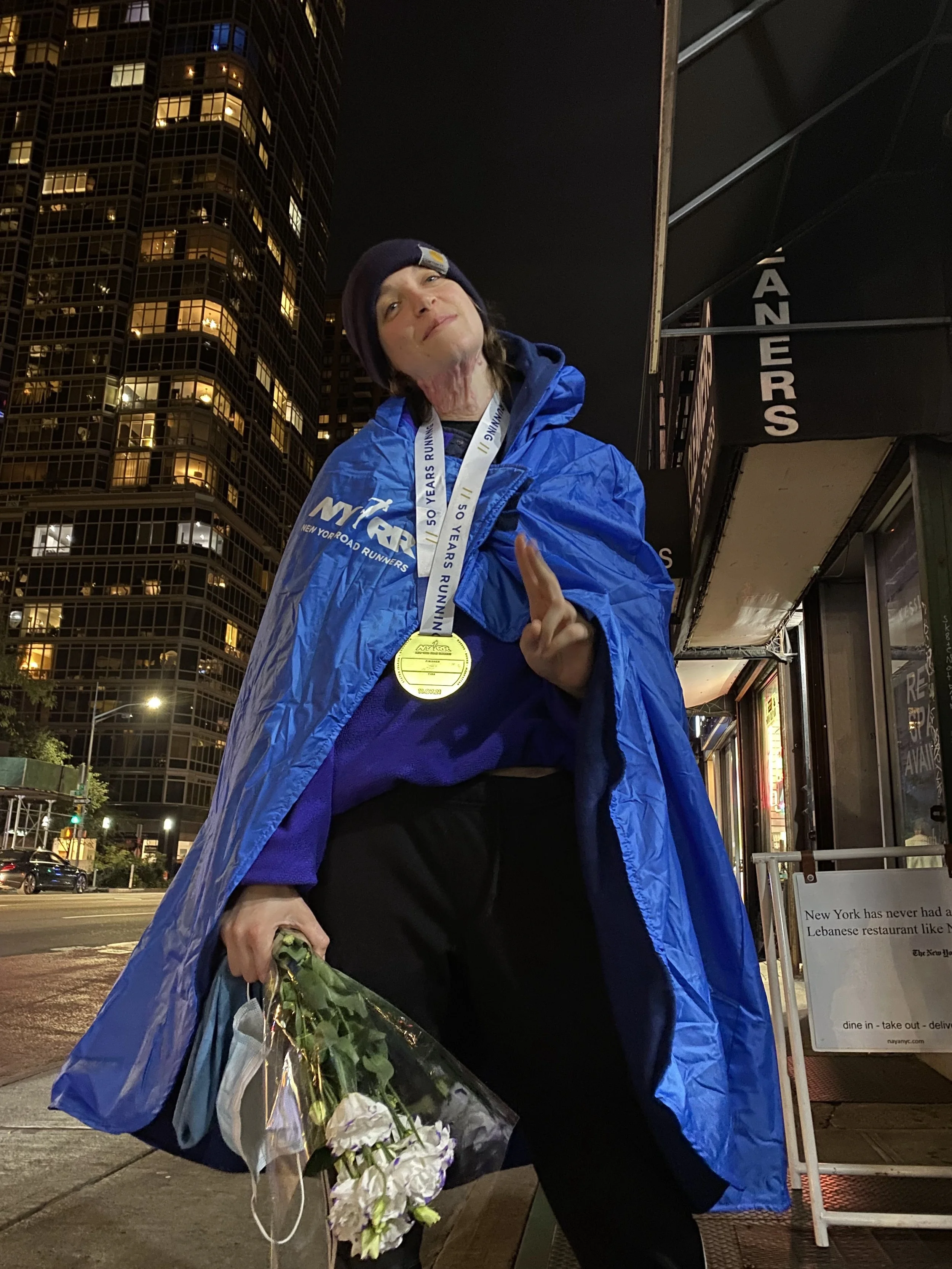
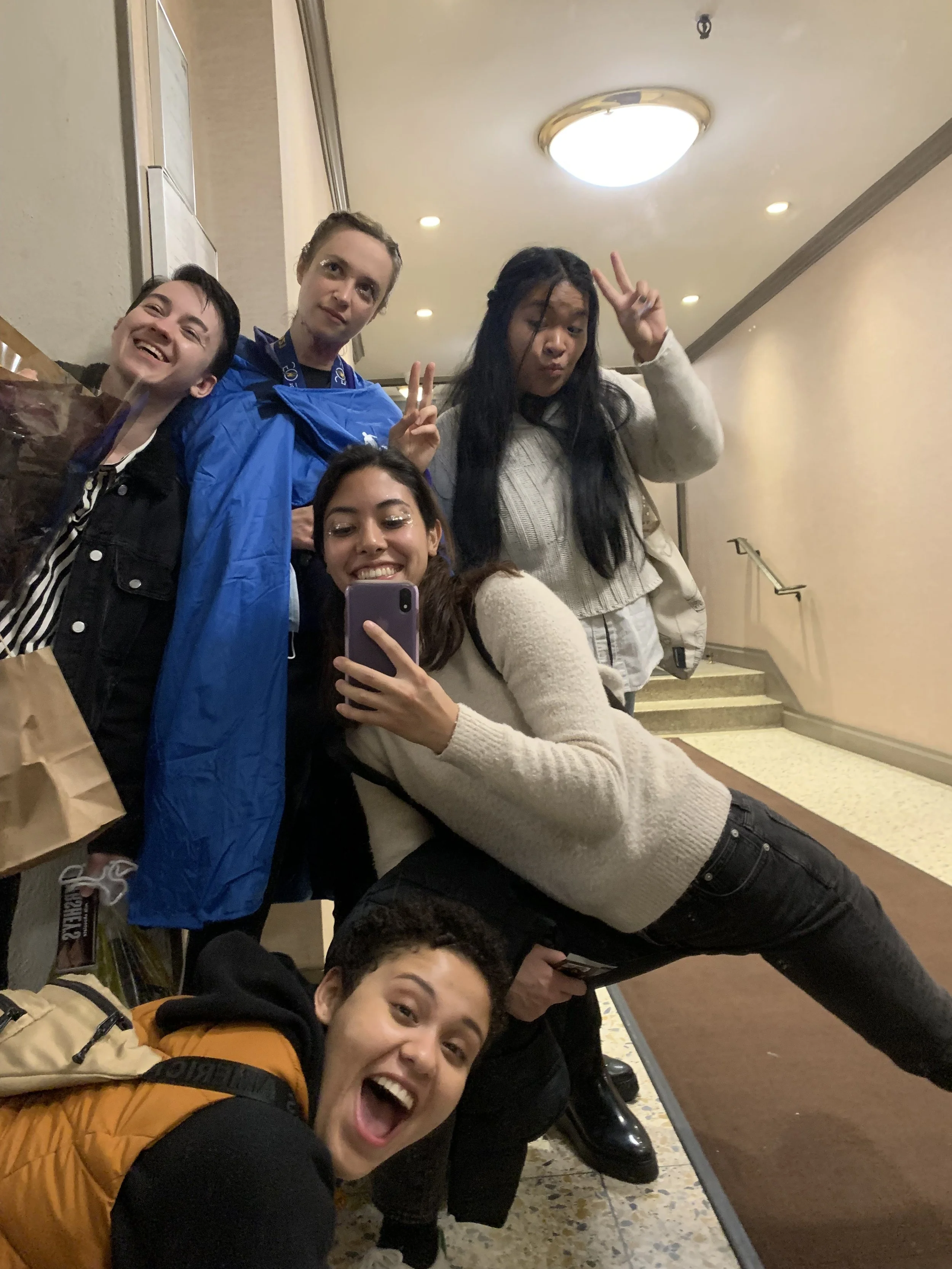
Eventually, I did make it. I crossed the finish line of the New York City 2021 marathon. You know, I was feeling good on the race, people cheering all around me, really good energy. I cross the finish line, there's a sea of people. I don't know. I just feel these tears slowly rolling down my face and just feeling the magnitude of everything I just did and everything I've been through in the past year.
I'm searching for my friends and family that I knew were cheering me along along the race, and finally I spot my mom and she sees me too. We start slowly walking towards one another. She's holding flowers for me. We meet each other and she holds her arms out. I just kind of burrow into her arms and she gives me a hug.
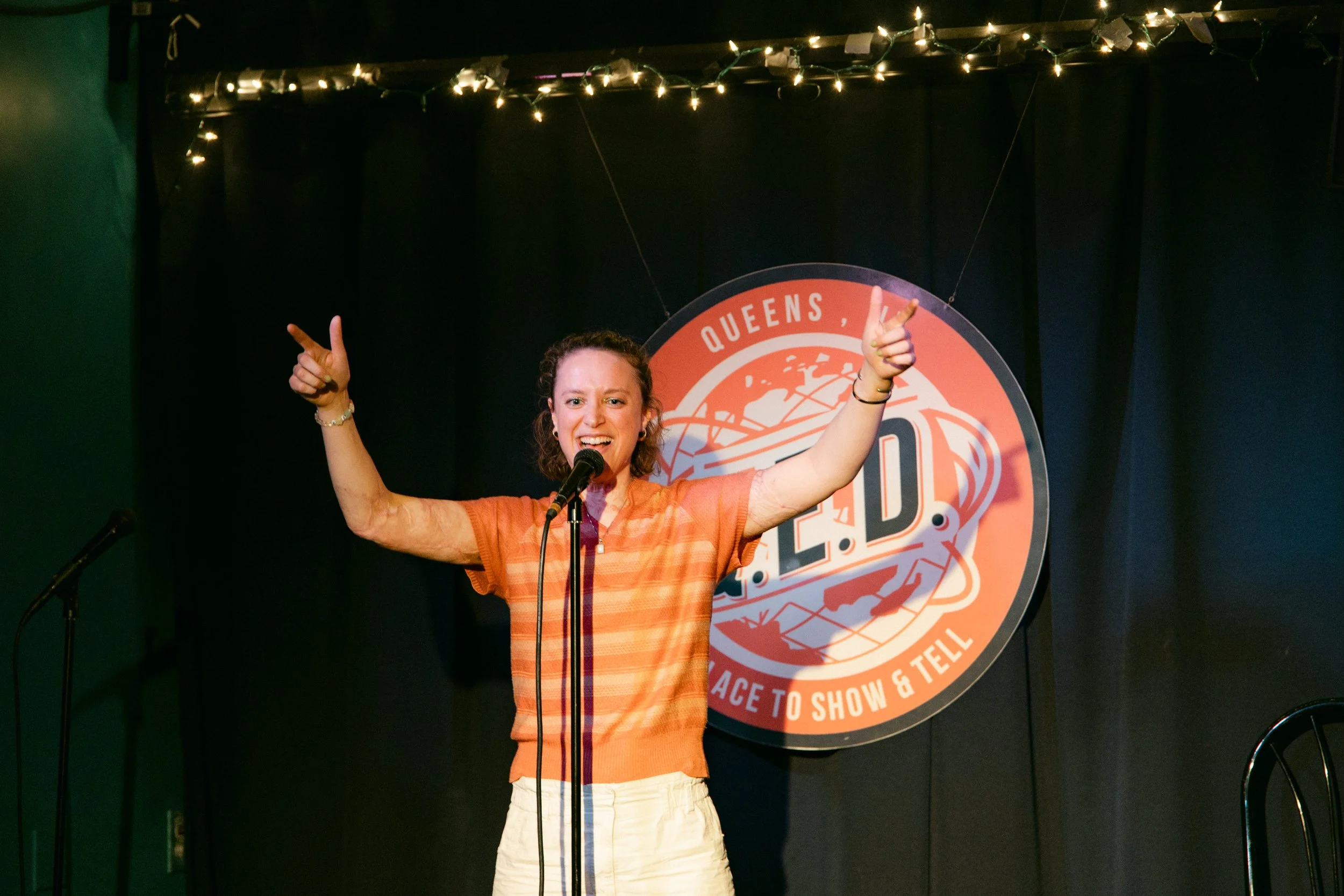
Emily Hespeler shares their story in May 2025 at QED Astoria in Queens, NY. Photo by Arin Sang-Urai.
She's like, “I love you, Emily, and I'm proud of you.” And in those moments, I knew that my “Who's a baddie” mantra could take me anywhere.
Presently, I still ask myself the same question before I leave wherever I'm living. I look at myself in the mirror and I say, "Who's a baddie?" Except, now, most days, I know I am.
I think we're all baddies here, right? So, I want to ask you all one question. I'm going to ask, "Who's a baddie?" I need you to repeat back, "I'm a baddie." You think you can do it? All right. Let's hear it.
Who's a baddie?
I'm a baddie.
Who's a baddie?
I'm a baddie.
Last time, loud as you can. Who's a baddie?
I'm a baddie.
Thank you.