Wildfires have become more frequent and more destructive in recent years, increasingly threatening communities on the edges of — and sometimes within — our cities. What was once considered a distant risk is now a reality for millions of people living in urban areas.
In this week’s episode, both of our storytellers share their experiences with wildfires and the ways those encounters impacted them.
Part 1: When wildfires erupt in Los Angeles, Tracy Drain’s work on the Europa Clipper mission is suddenly at risk.
Tracy Drain is a systems engineer who has helped to develop, test and operate a variety of robotic spacecraft over the past 25 years. A life-long learner, she loves encouraging people to nurture their curiosity and explore the wonders that surround us. She serves on the planning committee for the National Academy of Science’s Science and Entertainment Exchange and the advisory board for the University of Kentucky Mechanical and Aerospace Engineering department. As a National Geographic Explorer, she takes audiences on a tour of our universe in her National Geographic Live show "Cosmic Adventures." In her spare time, she enjoys reading, taking long walks, watching random shows (primarily sci-fi, documentaries and Korean dramas) and studying languages - Spanish and… Korean! (If you see her on the street, please don’t hesitate to teach her a joke in either of these languages.) Tracy works at NASA’s Jet Propulsion Laboratory where she is currently the Chief Engineer for the Europa Clipper mission.
Part 2: As a child, Victoria Dinov lives through a historic wildfire that stays with her long after the ashes settle.
Victoria Dinov is a graduate student at Stanford studying energy science and engineering. She is passionate about providing data-driven research promoting the expansion of clean energy technologies. Her experiences with climate change in her hometown of San Diego inspired her to pursue a career focused on promoting clean energy for a healthier future for all.
Episode Transcript
Part 1
Hello. I am Tracy Drain, chief engineer of NASA's Europa Clipper mission. When I first started working at the Jet Propulsion Laboratory as an aerospace systems engineer, I was motivated by the wonders of space and the challenges of solving thorny technical problems. Now, I'm living my dream to explore strange new worlds, to boldly send robotic spacecraft where no one has been before.
Europa Clipper launched in October 2024 and is on a five‑and‑a‑half year journey to Jupiter. Once there, it will study the moon Europa, in part because scientists think it has a huge ocean of liquid water beneath a shell of ice.
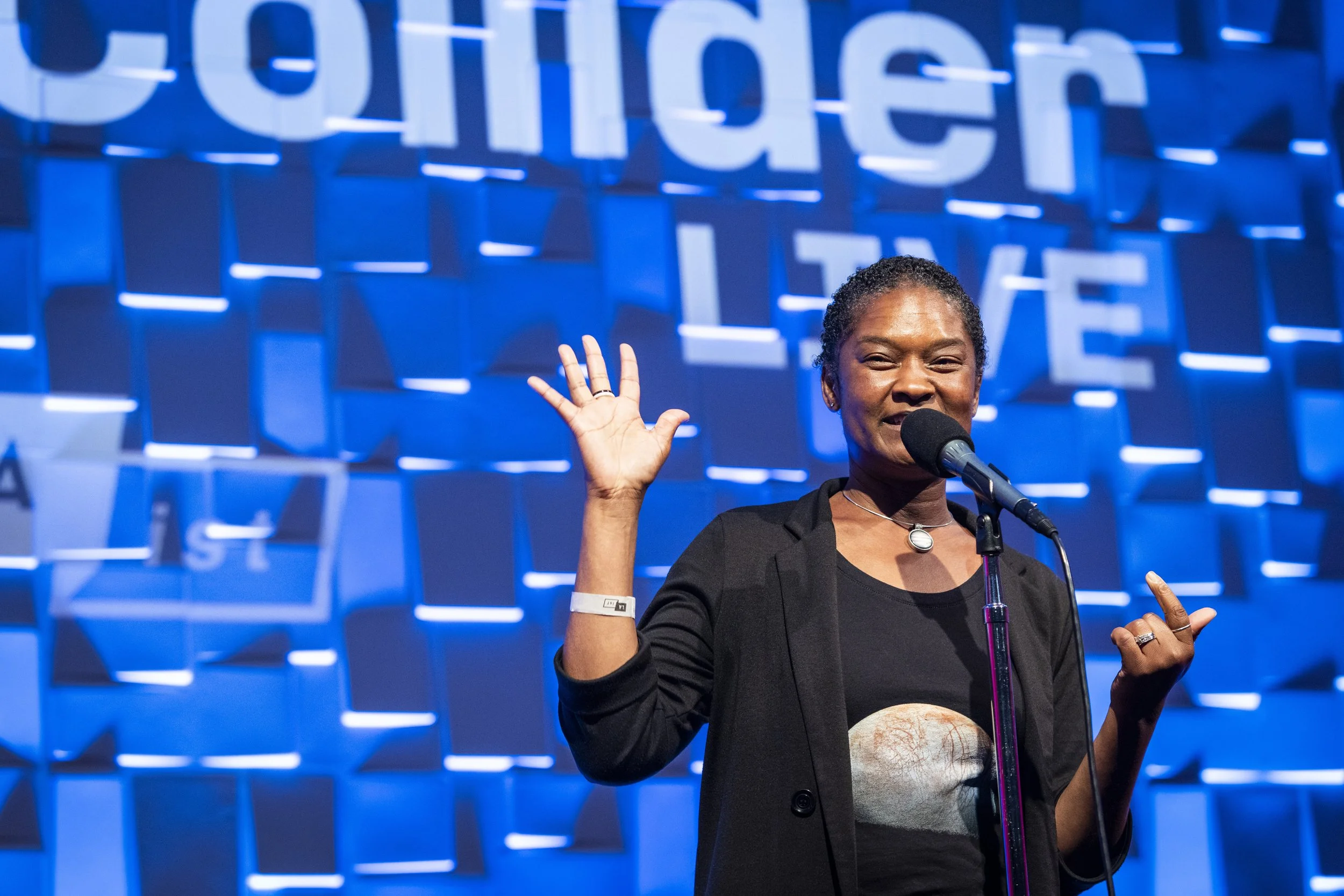
Tracy Drain shares her story at Crawford Family Forum in Los Angeles, CA at a show sponsored by LAist in July 2025. Photo by Unique Nicole.
Geordi La Forge, chief engineer on the Starship Enterprise on Star Trek, is one of my childhood heroes. My job is kind of like his. One, identify technical risks that could threaten the mission. Two, make sure they either can't happen or, if they do, we can do something about it. It's kind of like disaster planning in space.
Example, what if something went wrong with a telecommunication system on a robotic spacecraft and it couldn't receive a signal from the Earth? If it just sat there doing nothing forever, it would be game over.
So, as one safety net, Clipper is programmed to take action if it hasn't heard from the Earth in a certain adjustable amount of time. It'll go, “Hmm, something must be wrong with me,” and start resetting and swapping hardware in an escalating fashion. Which is great if there really is something to fix, but it can also leave a bit of a mess to clean up. And there's always a tiny chance there will be unexpected shenanigans. So we really don't want it to do that unless it actually has to, if there's something really to fix. So we really don't want to in case there is actually a problem.
This past January, Europa Clipper was only three months old and we were still checking it out. Operating flight activities almost every weekday in order to make sure everything on the spacecraft and the instruments was working properly.
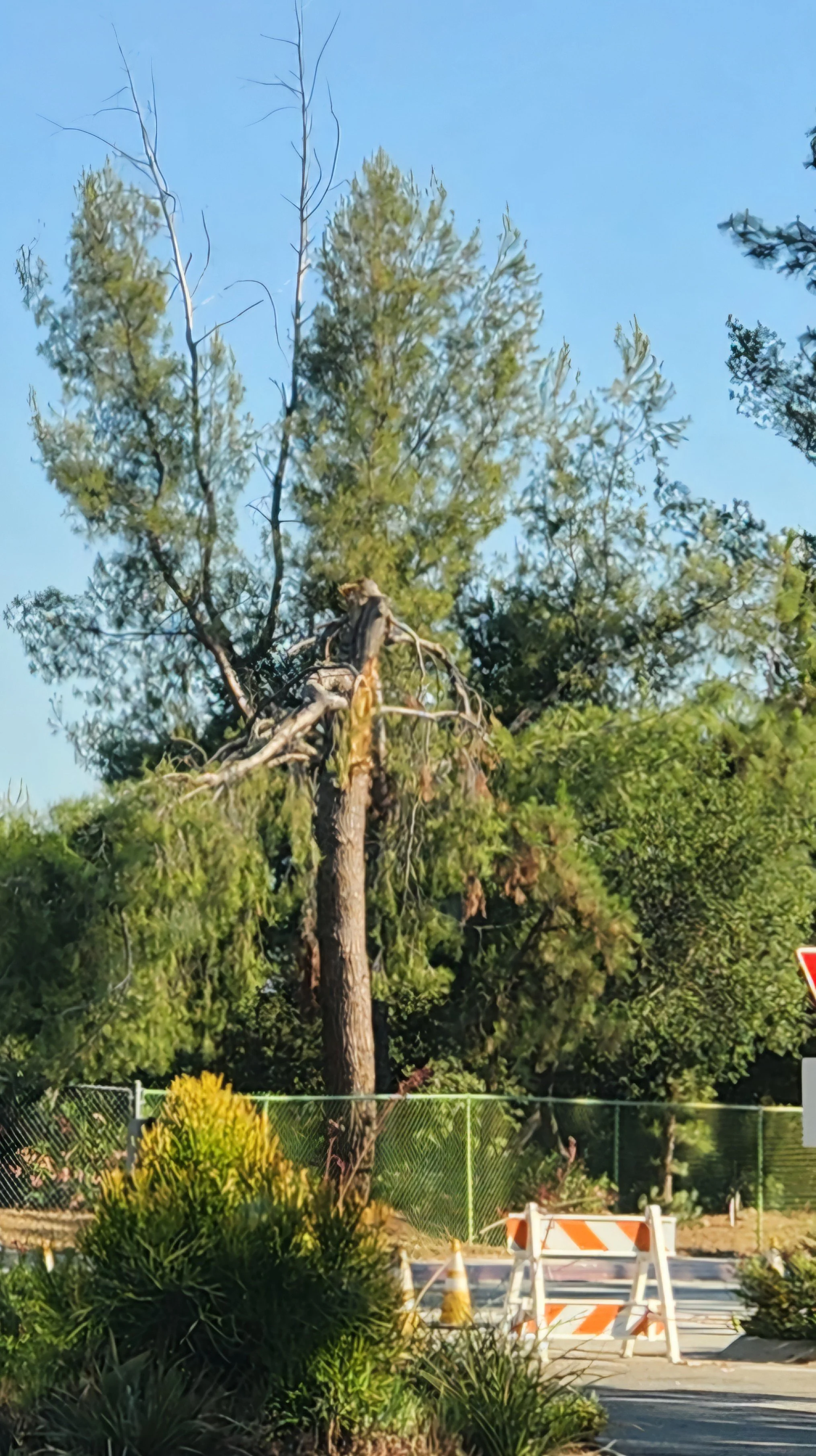
Tuesday morning, it was windy, really windy. It was the Santa Ana's. Driving into work, I could see bits of tree debris and hunks of cardboard blowing past in the wind. But I was still surprised when I got to the lab to see what looked like half a tree had come down and was blocking the main entrance. So I had to back up and drive all the way around to the east side. There I could see and hear the gritty soil on that side sandblasting my car as I gripped my steering wheel to stay in my lane against the gust.
But eventually, I joined the rest of the team trickling into the operations building. Like me, everyone seemed cautiously alert, but upbeat, ready to just get going with the day's activities.
Happily, everything went great with the activities that day. But we did hear that the winds were intended to peak the next morning, so we opted to shift the next day's start time to 1:00 PM to be on the safe side.
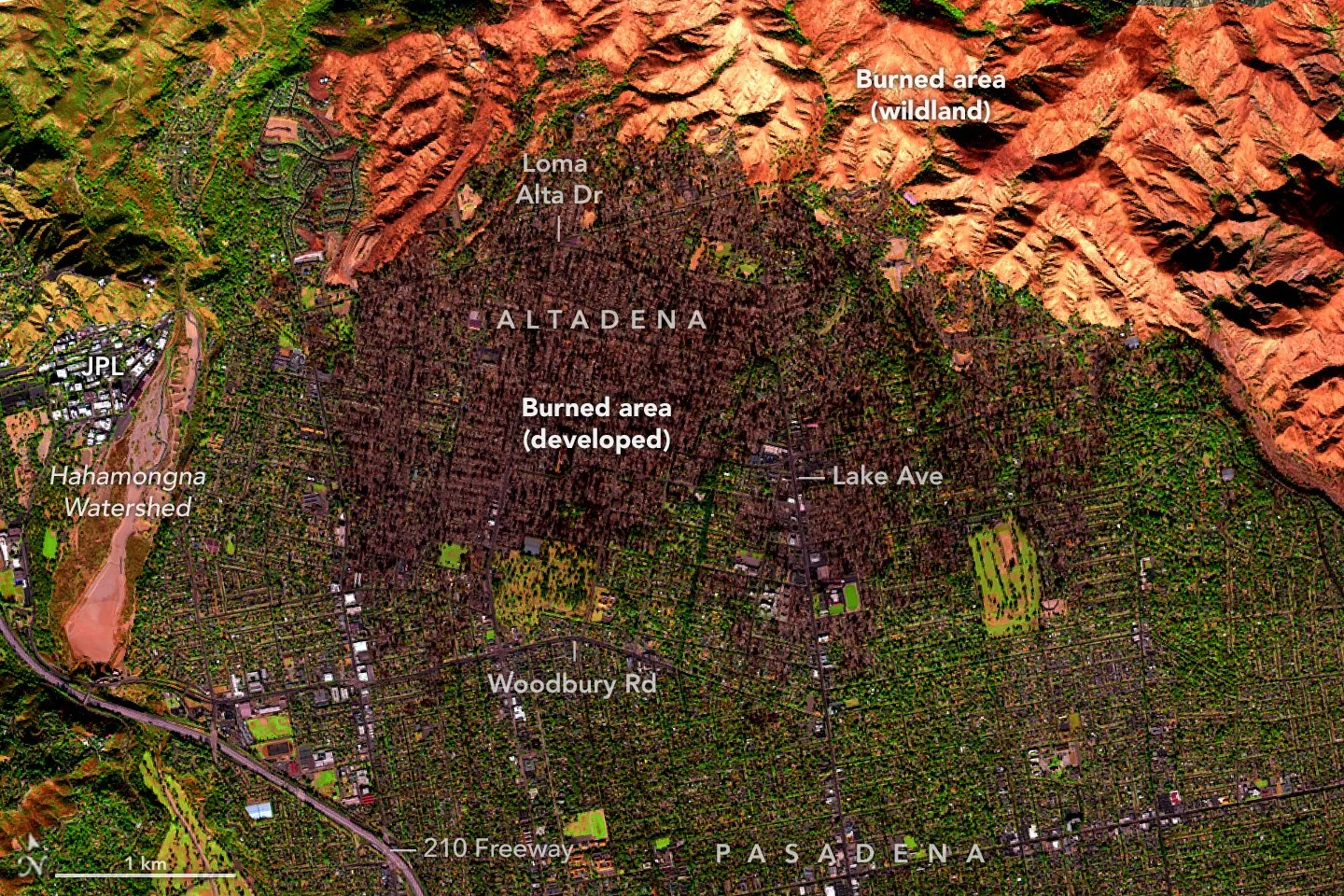
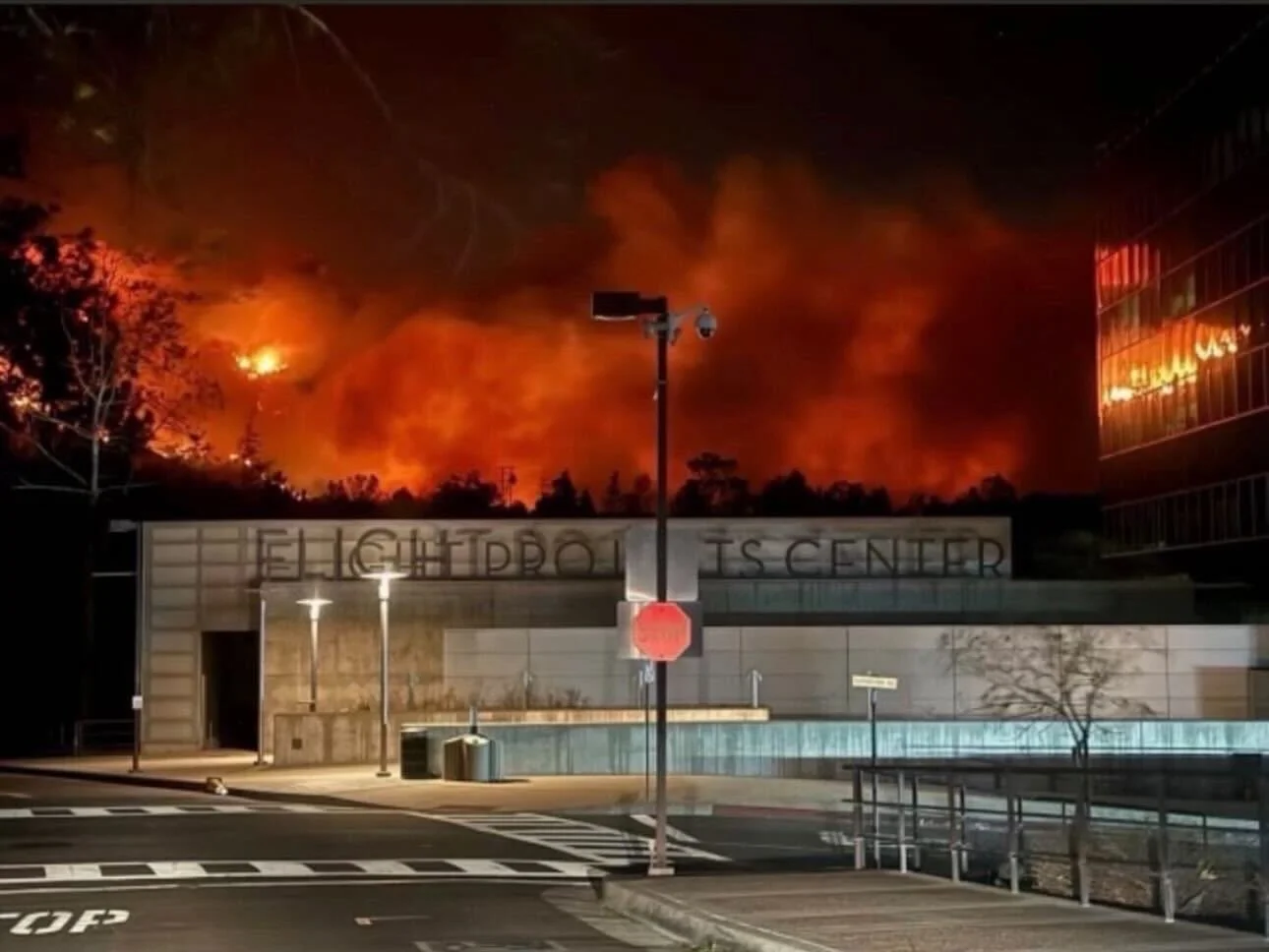
Now that night, an email went out to all JPL employees saying that fire had picked up in Eaton Canyon and, because of the high winds, could move fast, so no one should come into the work that day. It was much closer to the lab than the Pacific Palisades fire that had happened earlier that day.
So the Clipper mission manager immediately sent out an email to the entire Clipper operations team saying, “Clearly, we were waiving off the activities for that day and everyone should just take care of themselves and their family, stay safe.”
At my house, a little bit farther west in Glendale, we went to bed worried. The next morning, we woke up to a disaster in progress. The fire had spread much farther, much faster than anyone had anticipated. People had been and were being evacuated. We were getting little update emails from folks from their cafés or from the homes of friends and families.
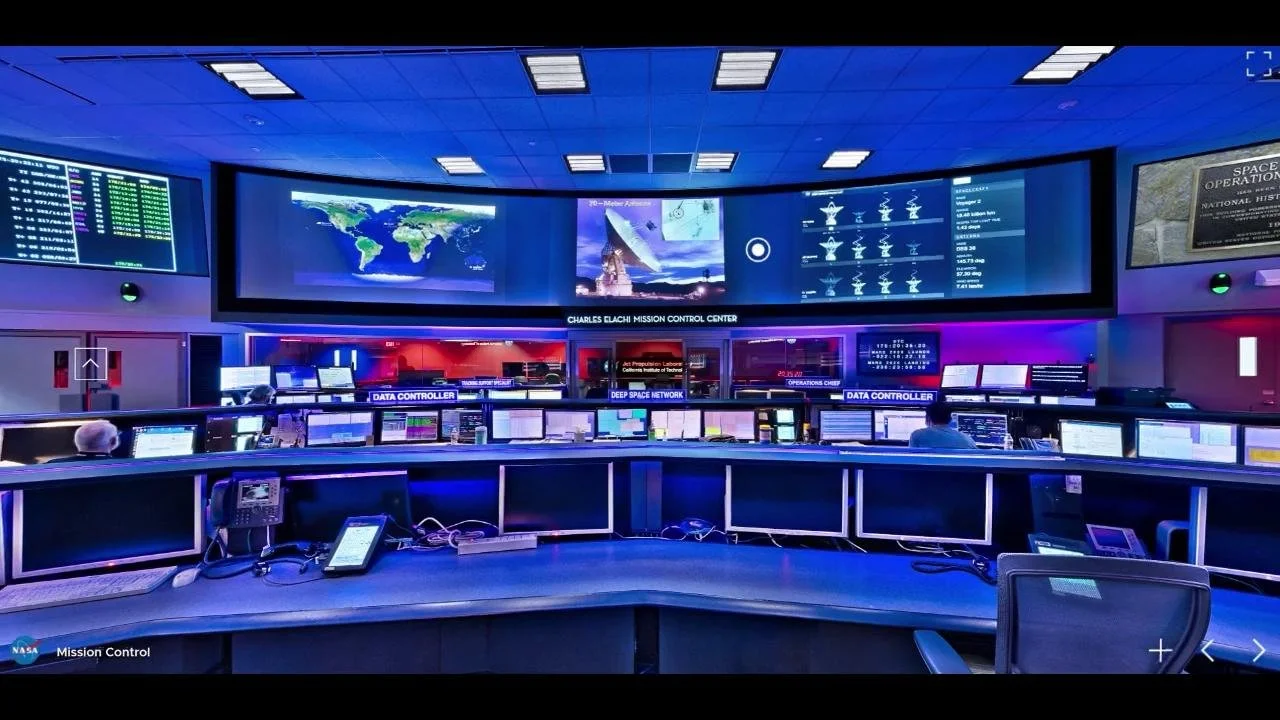
And then another email went out from the lab saying that not only was JPL closed, but it was being fully evacuated. Everything was being completely powered off. Even the operations facilities, they were not even being left on backup generator power.
Now, this had been practiced in drills but had never been done before in the entire history of the lab for real. I was stunned. I was like, “Wow, JPL is going dark.” And then I thought, “Oh, no, Europa.”
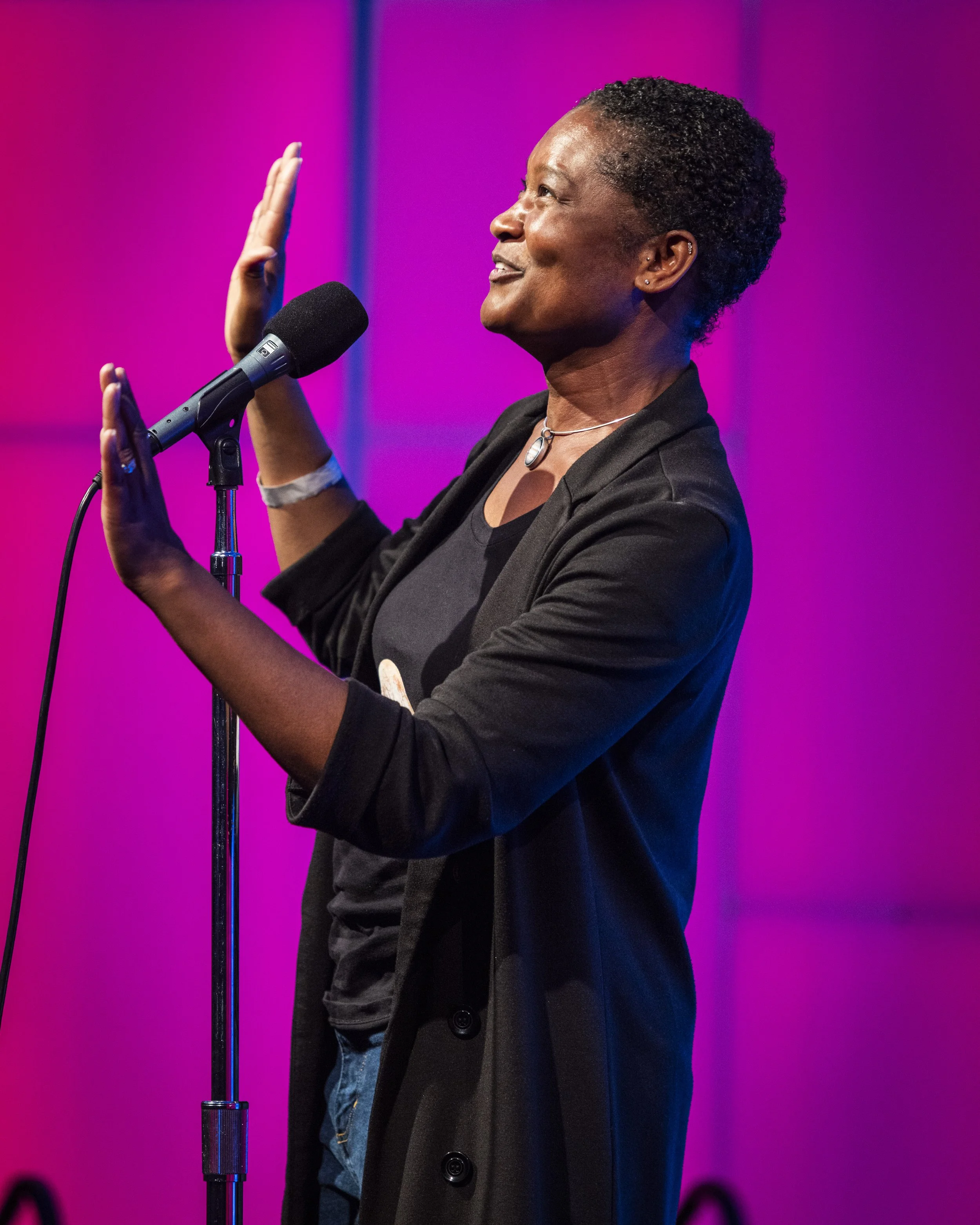
Tracy Drain shares her story at Crawford Family Forum in Los Angeles, CA at a show sponsored by LAist in July 2025. Photo by Unique Nicole.
Now, the JPL‑managed ground stations all around the world that handled the data coming down from spacecraft of all sorts of missions, including Europa, were still operational. It was still collecting and storing that data, which was great. But with JPL offline, that data wasn't being sent anywhere. And so our operations team, scattered as we were, could not remote log in and see it and check on the state of the spacecraft or communicate with it in any way. It was like we had turned off our end of the baby monitor in Clipper's crib, which was going to be a problem because we were going to have to get a message to her. In case we reset it, this baby spacecraft would start acting out, just as she was programmed to when her timer expired on Sunday morning at 8:24 AM.
Disaster planning. It's about priorities, knowing what is important and not, what is time critical and not, having a Plan E, a Plan B, and so on. So, priorities.
I was really proud of our Clipper leadership team that we immediately, unequivocally put our team and their safety as priority number one. We now waived off even all the virtual meetings on Wednesday and told everyone, “Just do what you got to do to stay safe.”
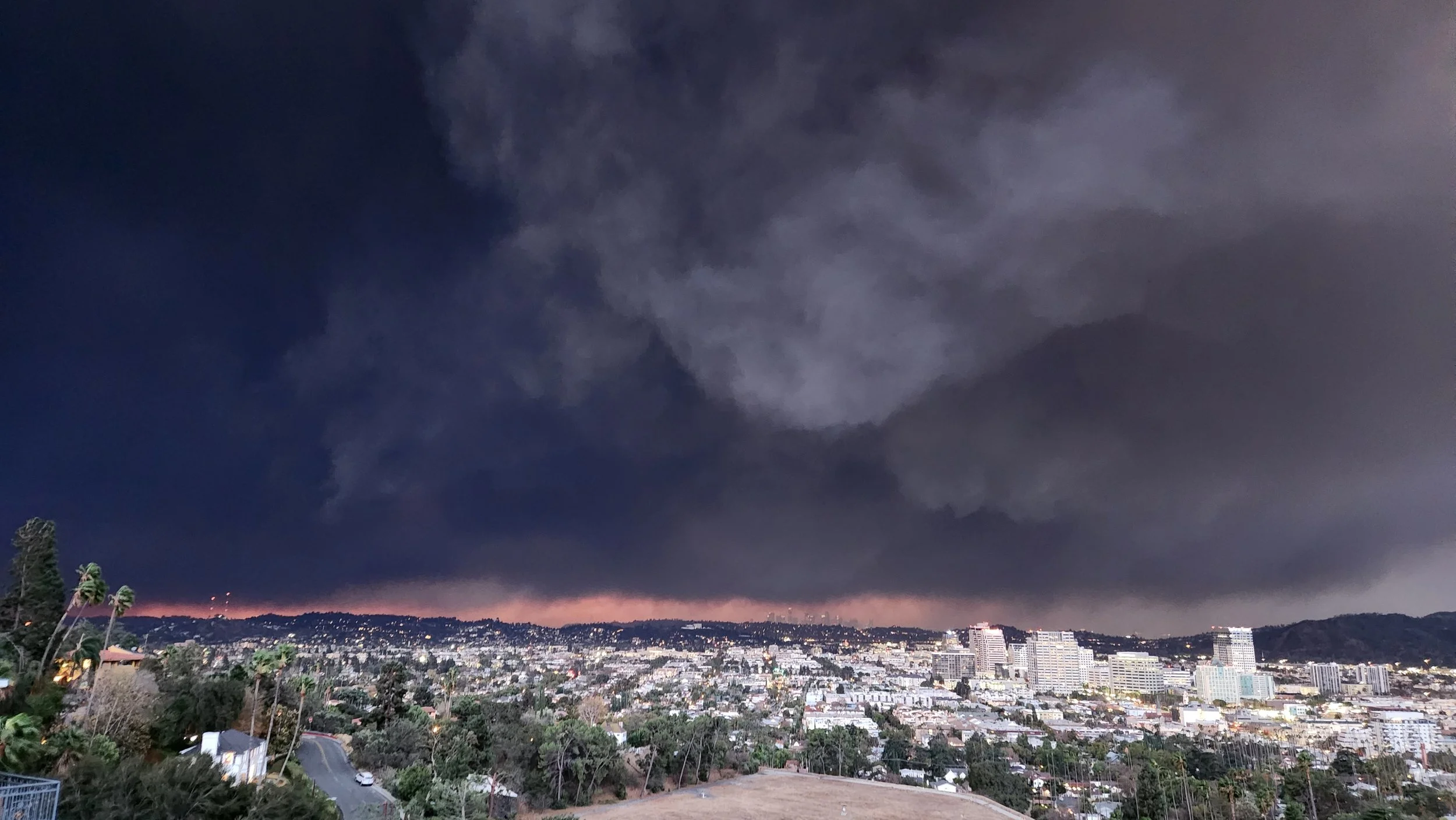
At my house in Glendale, we were lucky. We were not in immediate danger. But the sky overlooking our usually lovely view of downtown Glendale was pitch black with smoke. We downloaded the Watch Duty fire app. We turned on CNN. We packed go bags in case the situation changed dramatically.
Priority number two, figure out a path forward for the spacecraft. Plan A, send a command to Clipper.
We had a command built that would set the timer to 14 days, which is cushy, essentially telling her, “Hey, your parents are kind of busy down here. Please don't start doing all those things. Just chill out for a while. You're fine. It's not you. It's us.”
Plan B, be ready to deal with the fallout if we couldn't get the command sent in time.
Now, Plan A was complicated because it would mean you had to get the power up at the lab, check out all the ground equipment, make sure it was working, boot up the servers in the mission support area for Clipper, and then, finally, hit the button to send the command file through the ground stations across 25 million miles of space to the spacecraft.
Plan B is complicated because, if you needed it, it meant Clipper would have started doing that hardware swapping. So whenever you could get a command to her to stop that, you'd have to figure out what state she was in, see if any unexpected shenanigans had happened, and then, regardless, spend a couple of pretty intense days commanding her back into happy baby spacecraft mode.
I did not love Plan B.
Now, we had like over 90% of the necessary steps worked out from before launch, but you can never have every last detail of every contingency scenario ready to go before you need it. There's just too many possible permutations. And besides, whenever you're doing complicated activities, there's a small chance of an unexpected problem.
Now, this is our job. We literally do this for a living. But past experience has taught me to strongly prefer the simpler options. So, as complicated as that first option might have sounded to you guys, I was all, “Come on, Plan A.”
But because we couldn't be 100% sure that would pan out, we had to work both paths simultaneously.
After reaching out to our mission management via text and emails that afternoon in and around the chaos, I reached out to a set of folks who were still ready and able to work. We set up two teleconferences for early the next morning to start fleshing out the plans forward.
Then, I am now Geordi La Forge. I am answering the call from my captain, wrangling the engineering team, making sure everyone knew what to do in order to send them off to work out all the details.
Early the next morning, we had our telecoms and then everyone was off and running. And now I become a little bit like a spider in the web, keeping my fingers on the threads to sense what's going on, being ready to give guidance and advice as necessary. Over here, Plan A, I learned that the Clipper project manager had communicated with the JPL lab director. She understood our situation and people were going to work to try to accommodate our timeline. Okay.
Over here, Plan B, I learned that folks on our team had brushed off the What‑Exactly‑Would-Clipper‑Do‑When timeline and identified some actions to follow up on to make sure we were really ready to execute the necessary steps.
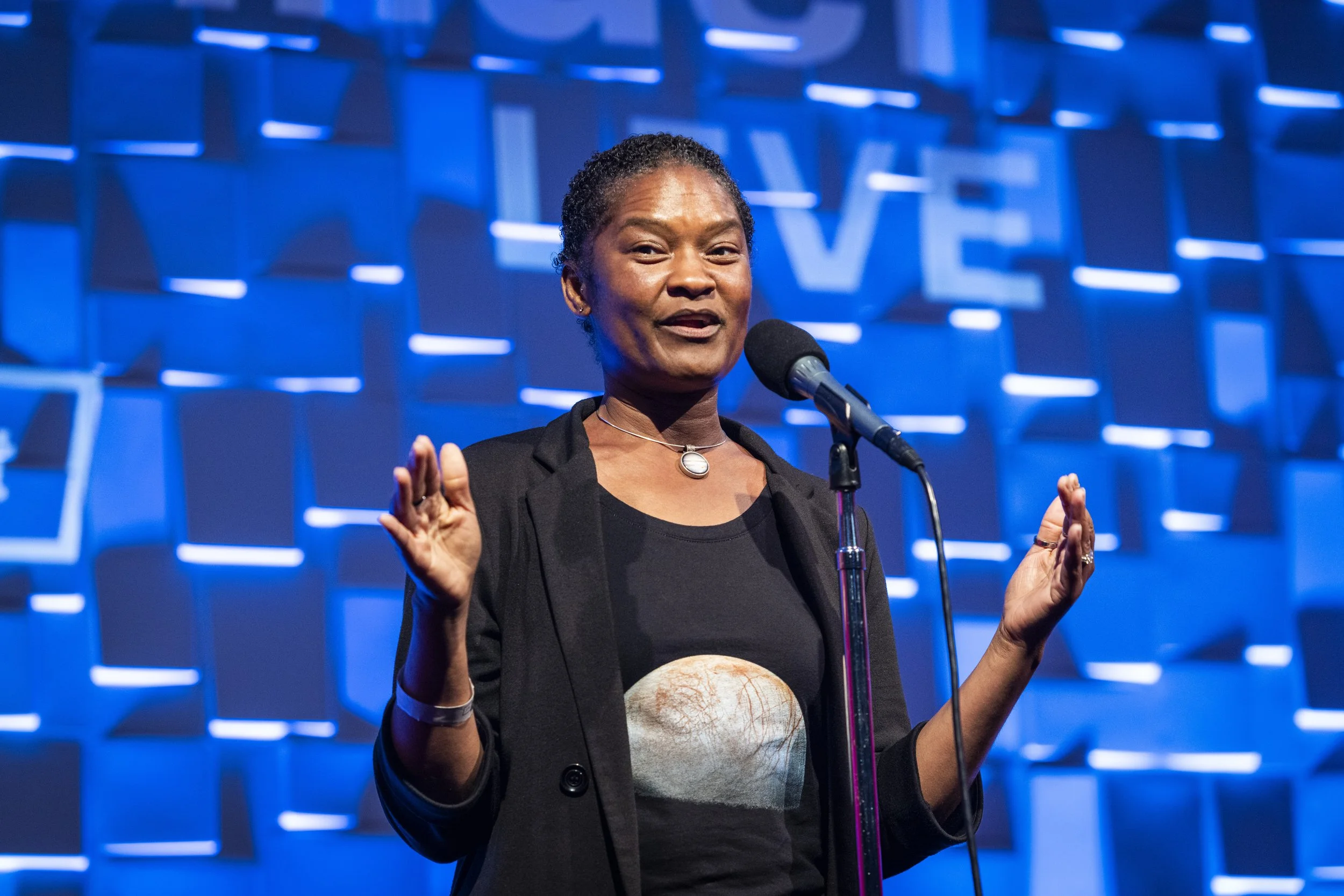
Tracy Drain shares her story at Crawford Family Forum in Los Angeles, CA at a show sponsored by LAist in July 2025. Photo by Unique Nicole.
And then over here, checking in on the people in general, we learned that this person had no power at their house and was working from a café. This person and their family were staying at the home of another team member. This person hadn't been heard from yet, and so on.
At my house, sky is still black, TV’s still on showing CNN with horrible images of the fire, and the western edge of the evacuation zone is creeping slowly towards our house. So that night, we set an alarm to wake ourselves up every two hours, just in case things change dramatically.
And on into the next day, over here, Plan A, we learned that brave, dedicated people were heading into the lab wearing respirators because of the terrible air quality. Good.
And then over here, Plan B, our folks had realized that we were missing a couple of command products, little prepackaged files for the spacecraft that we didn't have on the shelf and we needed to make. But we couldn't make them until the power was up and the servers were back on, so that was going to elongate the recovery timeline a little bit.
And then here, checking in on the people in general, now we started hearing terrible news of more and more JPLers confirmed to have lost their homes. But also, people were ground roots creating GoFundMe pages for them to already start trying to help them out. Priority number one, putting the people first.
And so on it went. Text mails, voicemails, emails, phone calls. Finally, we got a little bright spot of news. Over here, Plan A, we heard that the power was back up at JPL. Yes! So I kept my hand on that thread more and more.
As time continued to tick by, we learned that the ground equipment had been checked out and was working. Great. And then the servers were booted up in the mission control area. And then our people were able to remote log in and restart all the software. Finally, the command was sent. Clipper was set to just twiddle her toes for two weeks if necessary. Plan A for the win! Yay!
I had such a huge release of pent‑up tension and such deep gratitude for the folks who pulled together to pull this off in this insane time. I was still a bit shell‑shocked because of the damage the fire was still doing to the communities, and my heart was so warm for the support that people were already offering to the evacuees and the people who were now un‑homed.
When I first started working at the Jet Propulsion Laboratory as an aerospace systems engineer, I was motivated by the wonders of space and the challenges of solving thorny technical problems. But after all these years, the thing that has kept me doing this very demanding and sometimes incredibly stressful work has been the people, the dedicated, brilliant, warm, funny people who make it all worthwhile. This really brought that into sharp focus for me.
I cannot believe it has been only over half a year since that whole thing went down. The spacecraft is still fine, still on her way to Jupiter. We're still trying to take good care of our colleagues. We remind ourselves that even though the fire doesn't make the news very much anymore, it's still having a huge impact on people's lives. It's going to take years for the people and the communities that were hardest hit to fully recover.
Europa Clipper will arrive at Jupiter in April of 2030. That's a long way still to go. And the universe is going to continue throwing surprises at us, both in space and, clearly, also here on the ground. I personally hope that as we continue to face those obstacles, we do our best to keep putting the people, all of the people, first.
Thank you.
Part 2
It's just around lunch on October 21st, 2007, when my family and I hear the news that there's a fire. We heard the news from our neighborhood watch group, kind of like next door. Someone had posted and my parents saw that the fire is in the city called Ramona, which is around 30 miles from where we live.
My dad goes upstairs to grab this old Midland’s weather radio, and we're basically just monitoring it to hear about the latest news on the fire. Nothing seems too concerning initially, and our neighborhood watch says we're safe to stay indoors since the fire is still pretty far away.
We kind of continue our activities, but then around lunch, we eat pretty late so like 1:30, we get a call on the landline. I'm still pretty young, like five or six years old, but I get up to answer the call because it was making this kind of annoying sound.
When I answer the phone, it's this automated message telling everyone to evacuate. Obviously, I don't understand, so I look over at my parents and their eyes are big. They just kind of start running around in full panic mode.
My dad grabs me and runs to our car in the garage and starts grabbing a bunch of electronics and clothing. He also starts digging in the safe for what I now assume are our documents, like passports and birth certificates.
My mom, for some reason, is really focused on food and is like throwing all the food from our pantry into this big camping backpack and filling up dozens of water bottles.
My sister, who's 16, is calling all her friends and giggling. It feels kind of dichotomous because here are my parents pretty freaked out, and then there's my sister chatting to her friend like she's in a movie saying she's escaping a near‑death experience. And she has this kind of thrill in her voice. I think, “Maybe this isn't the end of the world anyways.”
I have this weird urge to grab some of my belongings, so I get up and decide to run to my room really quickly and grab some of my favorite toys. Even though I'm really young, something internally tells me that I won't be home for the night, and I know I need my dolphin and my ladybug animals with me.
So I sneak upstairs, both to avoid the chaos of my parents, who are still running around, and also because something tells me I probably should have stayed in the car. I find my dolphin pretty immediately and have this stark memory where the stone gray fur of the dolphin is painted in this light reddish tint. It's this really indescribable feeling because, obviously, I don't know exactly what that means, but it feels dangerous. My entire room actually is this kind of reddish haze and I sort of freeze staring at it.
My eyes blur and this thin veil of smoke is entering through my windowsill, and I sit there entranced. It almost matches the tone of the ambulances that are blaring in the background.
Something sort of snaps and I sprint downstairs again, like rushing into the car. I remember my dad getting in the driver's seat and saying, “Say your goodbyes just in case.” He chuckled, but no one else laughed, not even my sister.
So we drive 90 miles per hour down the freeway and are randomly taking exits and then getting back on. My parents are really intently listening to the Midland radio, and it's directing people from my area, telling us the coordinates and updated locations of the fire. I'm annoyed because we're constantly heading in what feels like random directions. Like, first we're headed south towards the beach, but then we hear of another fire from the east, so we're redirected west. And I can tell my parents are also getting frustrated because it's almost like we're getting boxed in. We keep getting siphoned into the southwestern direction until, eventually, it feels like there's nowhere left to go.
For context, the original fire is the Witch Creek Fire. This is the one that originated in Ramona. But then another fire in the east starts called the McCoy Fire. And lastly, this is pretty typical of these type of events in SoCal, there's another fire in the west called the Poomacha Fire. They all eventually merge into one massive wave of destruction, and it really feels like there's no escape from it.
An hour or so later, we're still headed pretty fast down the major highway in San Diego, the I‑15. At this point, we've been redirected so many times, we are basically only a few miles from my house. The trees around us, though, are singed, and I'm looking at all this blackened shrubbery and trees. They're all twisted and fallen down as we start to head more southeast from where we are at the time.
Most of the time, I'm clutching my dolphin and then holding my sister's hands. At this point, she is no longer super excited and I can tell she's kind of nervous. This part of my young brain is telling me, “Vicky, you have to be brave for her.” So I remember that I hold her hand thinking that it's making her feel better. In reality, she is thinking the same thing, and that she has a responsibility to protect me in some way as my older sister.
I keep looking back at where we're leaving from and feeling honestly shocked. This is the normal freeway. I've taken it a hundred of times to get to my swim practices, to my piano teacher's house, so it's really familiar. Normally, in true San Diego fashion, it's super green and kind of like chaparral shrubby with some scattered trees. But this time, it's a patchy version of that with charred trees everywhere. And the shrubs look so shriveled that the little patches of green that are remaining in the grass really stand out.
At some point, ash is swirling in the wind. I don't know what it is, but it feels like snow, like little snowflakes dripping from the sky and they're sticking to the windshield in a weird way and making it turn kind of a grayish black. It's super unnerving. My dad keeps trying to scrape them off with the windshield, but they really stick and they were resisting even when he was spraying it with water.
Most of the time, my mom is using the Midland and the neighborhood watch group to direct us. We now have a solid direction, which is southeast. We keep hurtling down the road in that direction.
At some point, we're engulfed by an army of helicopters and we're passing by this big lake a dozen or so miles away from us. The helicopters are nose diving into the lake and carrying buckets loaded with water in the direction of the fires.
My mom is calling friend after friend to see who lives in that direction or who we could stay with for a night or two. And, eventually, one of our Bulgarian friends, my parents are Bulgarian, offers to host us.
Their house is pretty far, like 50 miles away, so it takes us around 40 minutes to get there, but we're no longer being redirected and we eventually do get there. And even that far, the sky is still kind of ashy.
I run inside the house, pinching my nose and shielding my eyes as instructed by my mom, but I can smell this roasted, charred type of smell that's almost like a campfire but feels more ominous and wrong.
We end up sheltering with our friends for almost a week. And the two families, our two families, we just keep the windows closed because it's also like 95 degrees outside. And we're always drawing the curtains to avoid having to see what's going on. And, I don't know, it provided a sense of safety in some ways. It felt more ignorant.
Eventually, the neighborhood gossip, and watch, and our Midland tells us to go home, so we kind of crunch back to the car and drive back in silence past all the trees and charred land and the wreckage that fills the windows of the car until we get home.
When we pull into our neighborhood, most of the houses are intact, but we're driving deeper. We live kind of deep in the neighborhood and we keep seeing more and more broken down houses, burned bushes, the whole gambit.
When we pull into our cul‑de‑sac kind of at the end of the neighborhood, it's like this mourning of the dead. I mean, pieces of houses and roofs and garden decor are just everywhere on the streets. It looks like the mementos of a life pre‑fire just scattered. I turn around in a circle, my eyes are burning from the ashes, but realistically my tears. And when I see all the mounds of houses and fallen fences and what honestly looks like trash, the best way to describe how I feel is just shell‑shocked. All I could think was, “Please not my house. Not my room, not my kitchen, just, please, not us.”
In the circle of the five houses that make up my cul‑de‑sac, two lay like these shiny, tiny treasures among all the blackness. And the remnants of furniture, the smelted structural supports, the gray littered lawns covering the neighborhood are all around. Yet those two houses, although they do look a little singed themselves, remain standing.
Somehow, I don't really know how, by some stroke of luck, our house is one of the two. We're all silent until I just start crying, in a weird way of relief, but also because it feels like this fevered dream is finally over.
And my dad, weirdly enough, starts to clap and turns around and shouts at the sky in Bulgarian. It sounds angry, but he's really thanking the world for saving us. I really don't know what my family would do if our house was among the wreckage.
My parents are pretty quick to act. So they almost immediately start posting on the neighborhood watch to see how they could help out other families. And we spend a lot of days helping our neighbors dig through the ruins and salvage some of the mementos and the stuff that's maybe not fully gone.
The fire was all over the news. The Witch Creek, Guejito, Poomacha complex fire, they kept saying. I remember thinking, “Yeah, the fire that ruined my neighborhood's friends' lives.”
Many of them moved away. They left San Diego. And I'm pretty sure many of the families really, really struggled and may still be struggling to get back on their feet. It's awful.
Now, many years later, my life has really shaped itself around understanding and responding to these firestorms that happened in 2007 and since. After that initial fire, there have been dozens of other incidents in my community. The 2010 Easter Day earthquake, the 2014 Talega wildfires, extreme droughts, I mean, the list goes on.
And initially, these events were super triggering to me, but at some point, it was the norm. My neighbors started to carry emergency fire safety kits. My parents often monitor the storm and data information about incoming weather events. We did emergency drills even more than normal at school for fires and earthquakes. To me, it was pretty much the norm to think about fires all the time and have an emergency kit under my bed in the case of a quick evacuation.
Natural disasters have tripled in frequency since the 1980s, and will likely continue to exponentially increase. It makes me sad to think about all of the kids that will have to experience the terror that I did and how many more families and communities will be negatively impacted.
A big part of why I began climate activism in high school was in response to these events. I was part of the Sunrise Movement and organized marches, rallies, protests, alongside advocating for a lot of climate‑forward government policies. Since then, I've wanted to focus more on those experiences as a child, and I knew I wanted to work in a climate and clean energy focused space.
It took me a while in college to find that niche, but eventually I found energy engineering and realized that I could do work that directly addressed the increasing amounts of extreme weather events. Currently, I'm a graduate student and a large part of my research actually focuses on building resilience of our grid infrastructure and power systems and how we can evaluate that.
The definition of resilience in power systems quite literally discusses how the power grid can withstand, respond to, and adapt from these high impact, low probability events. And although I'm approaching this from a very technical standpoint, I also focus on how we can make sure to protect the people who can't just pay their way out of these disasters.
Every day, I talk to system operators and scientists at National Lab who say, “We're screwed and we can't afford to have any setbacks to changing the way we approach climate change adaptation and emissions reductions.” It honestly hurts my soul that we're experiencing so many setbacks now, especially since it's the people with less resources that will bear the burden of this. The people who can't afford the exorbitant power prices. The people who live near plants emitting thousands of tons of emissions. The people who will continue to be disproportionately impacted.
My family was really, really lucky. If our house had burned down, I don't think we would have been able to build back up. My parents are immigrants to the US, and we had no one to rely on or bail us out of these emergencies. We initially thought that this first fire was a one‑off experience, but every time future fires or earthquakes or weather events happen in my community, I could see the effects on my parents and how stressed they would get.
I think for many people, it's so easy to separate themselves from the effects of climate change. This was not the case for me, and it has really impacted how I thought about the future of our world and how it would affect myself and the people I love. There's not a lot that we can do alone as individuals about our current situation, but I hope that we can, as a collective, work towards a future in which the people experiencing the effects of climate change are kept safe. Our society owes it to each other to make sure people aren't left houseless or in extreme amounts of debt after these events.