In this week’s episode, both of our storytellers uncover cracks in the education system that prove harder to ignore than they expected.
Part 1: While teaching a summer school math class in Texas, Justine Ang Fonte realizes that many of her students have never received even the most basic sex education.
Justine Ang Fonte, M.Ed, MPH is the child of Philippine immigrants and an award-winning sex educator, international keynote speaker, and professor based in New York City. She received her Master’s in Education in Teaching from the University of Hawai’i and her Master’s in Public Health in Sexuality from Columbia University. She has been featured in The New York Times, NPR, Glamour, and the BBC and Hulu docuseries, Planet Sex. Justine is the author and voice of the Audible Original, How to Talk to Your Kids About Sex and is the co-editor of the award-winning book, Fundamental Concepts and Critical Developments in Sex Education.
Part 2: Guilherme Lichand uncovers a flaw in Brazil’s education system that leaves thousands of children with invisible disabilities unidentified and unsupported.
Guilherme is proudly Brazilian. His research focuses on the sources of educational inequities in the global South and on solutions with the potential to overturn them. He is co-director at the Stanford Lemann Center and a faculty affiliate at the Stanford King Center on Global Development and at the Stanford Center on Early Childhood. He holds a PhD in Political Economy and Government from Harvard University. He was previously the UNICEF Professor of Child Well-being and Development at the University of Zurich. Guilherme is also a co-founder of Brazilian EdTech Movva, a student success management system supporting vulnerable students graduate college. He was acknowledged by the Schwab Foundation as top-10 Brazilian social entrepreneur in 2020 (post-Covid legacy) and by MIT Technology Review as the top under-35 Brazilian innovator in 2014. His research has been published in numerous scientific journals, including the Proceedings of the National Academy of Sciences (PNAS) and Nature Human Behavior, and campaigns featuring his work won multiple awards, including two lions at the Cannes Lions International Festival of Creativity.
Episode Transcript
Part 1
I am Justine Ang Fonte, and I am, in fact, a career sex educator. But tonight, I want to share a story with you about the very first mathematics class I taught. I was 22 years old, which puts us at the year 2008. As a result of being my women's tennis captain of my college team, an organization thought that that would mean I would be the next Michelle Pfeiffer in Dangerous Minds and put me in a hard‑to‑place public school.

Justine Ang Fonte shares her story at Under St. Marks Theater in New York, NY in February 2026. Photo by Arin Sang-Urai.
Now, before I was placed into my school, they needed to train me for six weeks in a boot camp. This was located in beautiful, humid Houston, Texas. It was May, and me and 500 other college grads of similar successful backgrounds and high egos that we would change the world in our classrooms were placed into these Title I schools. And Title I school means that at least half of the students of the school were taking advantage of a free or a reduced lunch.
Now, this boot camp first had us sheltered at the University of Houston, and they put us up in Moody Towers. And in Moody Towers, they had what they called bouches for us to sleep in, because they were literally couches that you could sleep on like a bed. The air conditioning was blasting so hard that when you would leave the building, your glasses would immediately fog up because of how hot it was in May. We were fed sloppy joes and chicken tenders for every lunch and dinner, and we were restlessly working and working, trying to be teachers, completely unqualified.
I had no social life, and I was completely off the grid for these six weeks, so the only chance that I got at a social life was calling my father every Friday to tell him how the last six days were going. It wasn't great. I told him that I had 14‑ to 16‑year‑olds who were in eighth grade, and they were 16 or 15 because they had failed eighth grade once, twice, even three times, and were now stuck in summer school to learn from me, a completely underqualified educator.
A quarter of the students were Bloods, a quarter were Crips, another quarter were from the La Primera gang, and another quarter were Southwest Cholos. So I had this mixture of gang members in my classroom who were not allowed to even bring backpacks because the school banned them. They thought that they would carry weapons in them. They didn't come with pencils or pens because they could turn those into weapons.
So when I was telling my dad about this, he said, “Well, you should provide them so they have something to write with.”
And I said, “Yeah, I think I'll try to go to Target this weekend.” But my principal told us, “At your own risk.”
I had two students who were Hurricane Katrina displacements, two students who were already parents, and two students who were pregnant at the time I was teaching them this summer.
There was a lot of public health cases in this classroom of 24, But what I realized was I was not ready for this, and yet they equated my career success in college to be career in education also being a success.
My first week was horrific. My second week was terrible. My third week was tolerable. And my fourth week, students called me Tila Tequila. I don't know if that was a compliment or an insult, but I knew that maybe I was connecting with them.
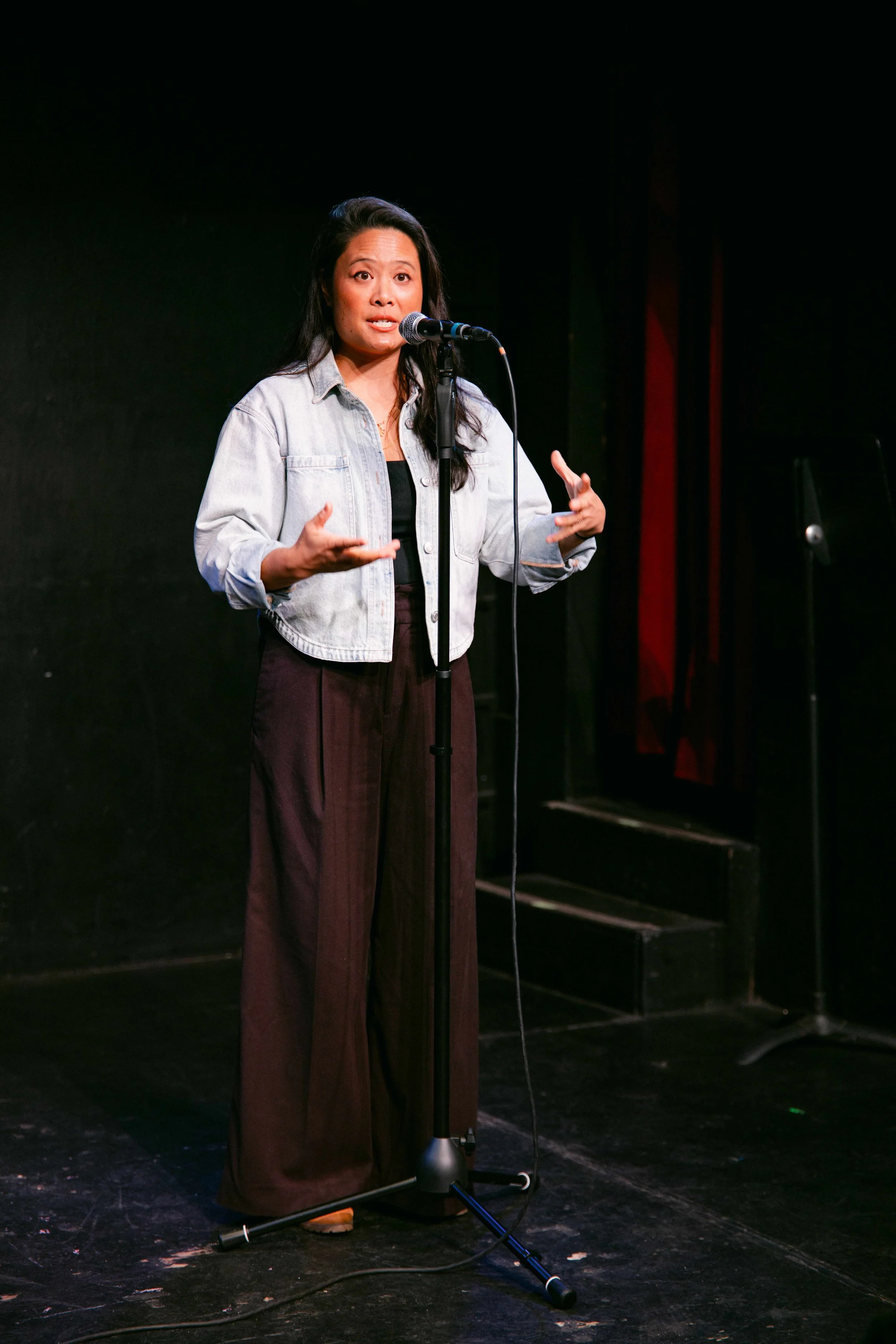
Justine Ang Fonte shares her story at Under St. Marks Theater in New York, NY in February 2026. Photo by Arin Sang-Urai.
We were taught to teach to the test. Our pedagogy, the assessments we were trained with, and the frameworks we were taught, all just taught us to teach them to drill and memorize, drill and memorize about eighth grade math. How many apples Johnny takes from the market on top of the denominator of the number of apples he started with. Not really relevant stuff for this population, but this is what I was forced to do and how to do it.
On week five, a student named Maria returned to the classroom. You see, she had been absent for the last two weeks and I had really struggled to get a hold of her or her family to see what was going on. So when the students were working on a problem set with the pens and pencils I had bought from Target, at my own risk, I took her aside and had a little chat with her.
“Hey, Maria, welcome back. Where have you been? I've been trying to get a hold of you.”
“Oh, I'm so sorry, miss. I was really sick, and so I just couldn't come to school.”
I said, “Oh, what happened?”
“Well, I was just bleeding a whole lot, and it really hurt, so I needed to stay home.”
I said, “Bleeding a lot? Where? Where were you bleeding a lot?”
And she looked down, kind of motioned her hands there, and said, “You know, down there.”
And I said, “Well, how long has this been happening?”
“Well, it happens every month since the sixth grade. And Miss, I don't know what's wrong with me.”
I told her, “It sounds like you're having a period. Do your parents know about this? Have you told anyone?”
“No, no, no. My parents are so busy. They're so stressed out. Both of them have two jobs. We don't have health insurance. I don't want us to get in trouble. I just stay home when it happens. It's a lot easier that way.”
I said, “Well, thank you for telling me. Why don't you go back and have a seat, work on your problem set? I'll come talk to you later.”
That lunch, I went to the principal's office. “You have a 16‑year‑old eighth grader who comes to school for half the year because she's on her period, but she doesn't know it.”
And the principal said, “Oh, you're talking about Maria.”
“Yeah, I'm talking about Maria.”
“Yeah, she's a tough case.”
“She's a tough case? Is there no sex ed at this school?”
“Oh, Justine, this is Texas. This is an abstinence‑only state. We don't teach sex ed.”
So I said, “So you don't teach science, biology, so that students know how their bodies work, at least?”
“Nah, it's a slippery slope.”
And that was the moment I knew that the only clear way to address this problem was to teach sex education in my math class.
So I told her, “I'm going to teach sex ed in this last week. They already took the Texas State exams. We're just waiting for the results. Let me use this time to teach them something relevant.”
She's like, “I hear you, I hear you, but hold on. If you do this, please do not say one of the following three words. Otherwise, the superintendent is going to come after me.”
“Okay, what are the words?”
“You cannot say the word abortion, you cannot say contraception, and you cannot say homosexuality.”
I said, “All right. That's fine. I got a thesaurus. I can do that.”
So for the last week, week six, I taught sex ed. I taught them their ratios, proportions, and percentages, like they were already learning from me for the last five weeks, but I put them in stories around STIs. And how many contract gonorrhea versus chlamydia versus herpes? One out of four, one out of six. And let's look at what that means and what these things are.
We compared these numbers to that of unplanned pregnancies and used the same proportions, ratios, and percentages. We did family planning lessons looking at budgets. What do you want to be when you grow up? An NBA player? What do they make? How many children can you afford with that income? What about if you're in this career or in this career?
So they started to learn about budgeting and using math, but now something relevant to them. I needed something that would connect to these students and their lives in a way that was relevant.
And they were engaged. I wish I started sooner because those first five weeks, they weren't connecting to Johnny and his apples in his basket. But that's what I was trained to do.
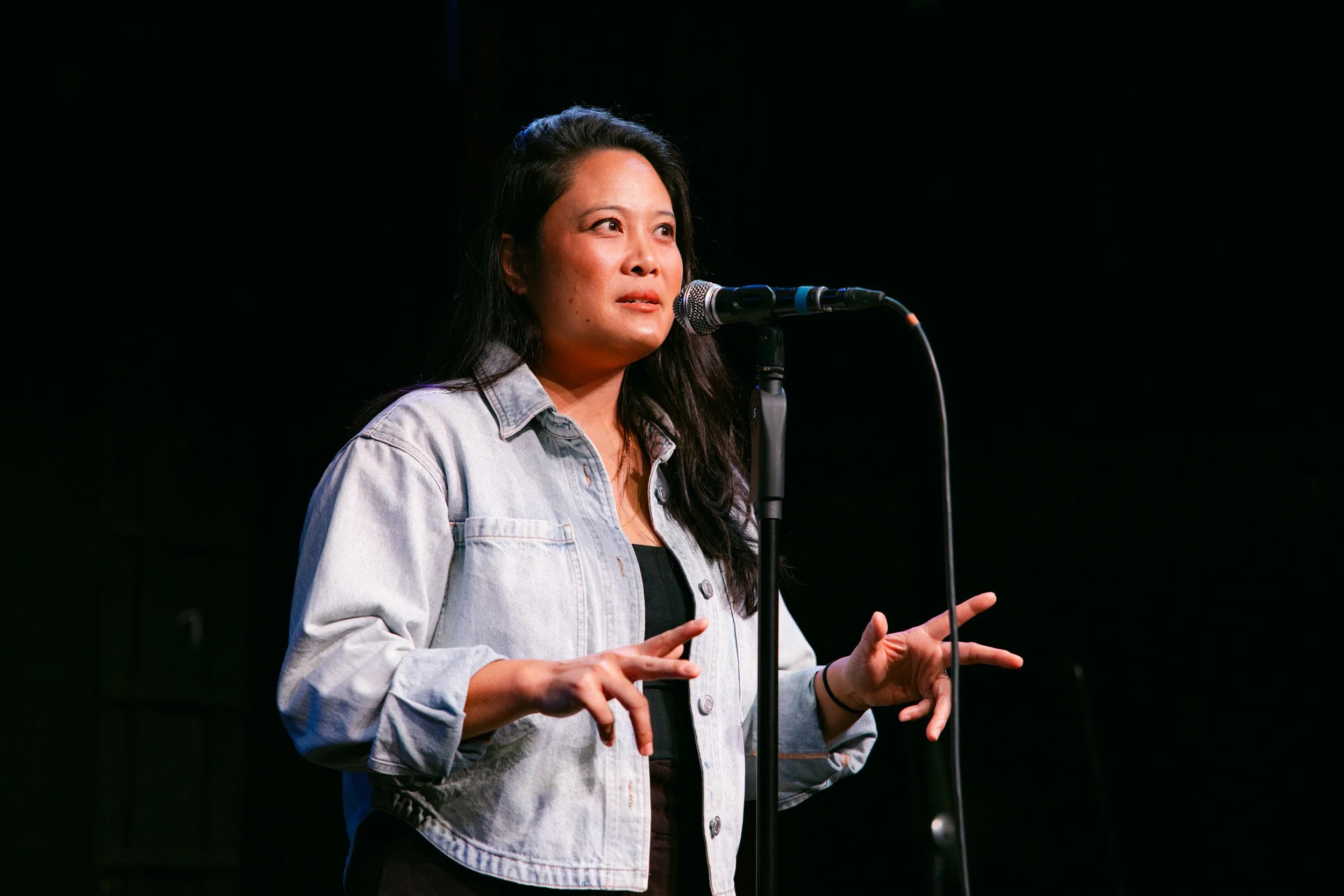
Justine Ang Fonte shares her story at Under St. Marks Theater in New York, NY in February 2026. Photo by Arin Sang-Urai.
Now, this was a speed bump that I overcame. They learned math and they got some sex ed. But I am on this hill that I'm still climbing. And I'm having to build bridges while I'm still walking.
And I don't know how Maria is doing. I don't know where she is. I don't know what's in store for her and what her future has been like since I left. But I do know that because of Maria, I have now led a career in sex education for more than 15 years, teaching young people how their body works, how to take care of it. And training the adults in their lives how to be askable and how to be safe people in their lives.
There's many other Marias out there. I just met one. But because of that Maria, I found my why.
Part 2
My brother Bruno was born different. His legs were turned inward, his vocal cords paralyzed. He was born with Klinefelter syndrome. It's a condition that includes severe cognitive developmental delays. And it took him seven years, lots of surgeries, physical and speech therapy before he was able to walk or talk.
I grew up watching Bruno put in 10 times more effort than I to achieve, at most, half of what I could. I remember one morning when I was five or six years old in swimming class, watching him in the water, wondering how much longer it would take for him to float while I was already able to do laps.
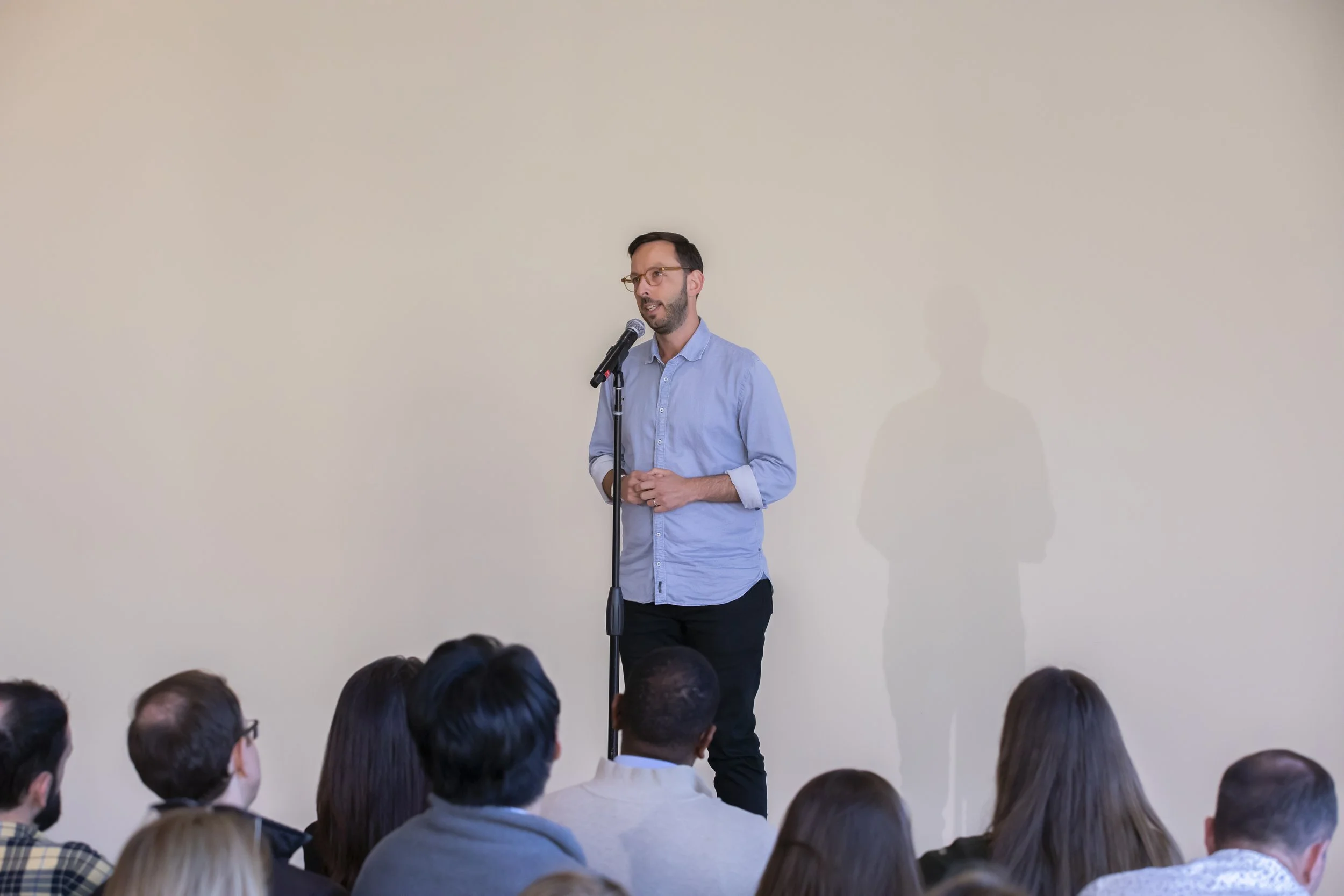
Guilherme Lichand shares his story at The Cantor Arts Center in Palo Alto, CA in April 2026. Photo by Christine Baker for Stanford Impact Labs.
Growing up in Brazil, I watched my family try to navigate a school system that was never designed to accommodate his needs nor to foster his potential. I remember how many times the school would call my mom to pick him up in the middle of the afternoon because his behavior was disrupting the classroom.
Bruno's experience growing up was not unique. Kids with disabilities in schools in Brazil receive additional resources to help them accommodate their specific needs, but their experiences continue to be subpar. Schools aspire to integrate, but it is often to the benefit of the typical kids and at the expense of the atypical ones.
I remember feeling incredibly frustrated by how schools only focus on his deficits but not his assets: his powerful memory, how focused he was while painting, his passion for music. The school always thought that tending to the atypical ways through which he expressed his aspirations and needs was not their problem. It was either show up school‑ready or get out.
Eventually, my mom decided to move my brother to a specialized school. But even in the regular school which I attended, many kids continued to struggle. I remember this kid who was always running around, distracted by something else. The teachers were so annoyed. He was a regular at the principal's office. But I knew this kid was sharp. We worked on several assignments together and he was always on point. But he was always distracted by the next thing and flunked many assessments because he was focused on something else.
It was a very competitive school. It tracked kids by GPA and the teachers handed the assignments back in front of everyone else. So it was very clear to everyone that nobody thought this kid was the sharpest tool in the shed. And that surprised me that this could happen even to a kid who did not look the part.
You know, researchers call all these conditions in the spectrum of learning differences — autism, dyslexia, attention deficit disorders— invisible disabilities, in the sense that, for many of these kids, just like for my brother, their deficits are very apparent, while their potential might continue to be misrepresented or misunderstood.
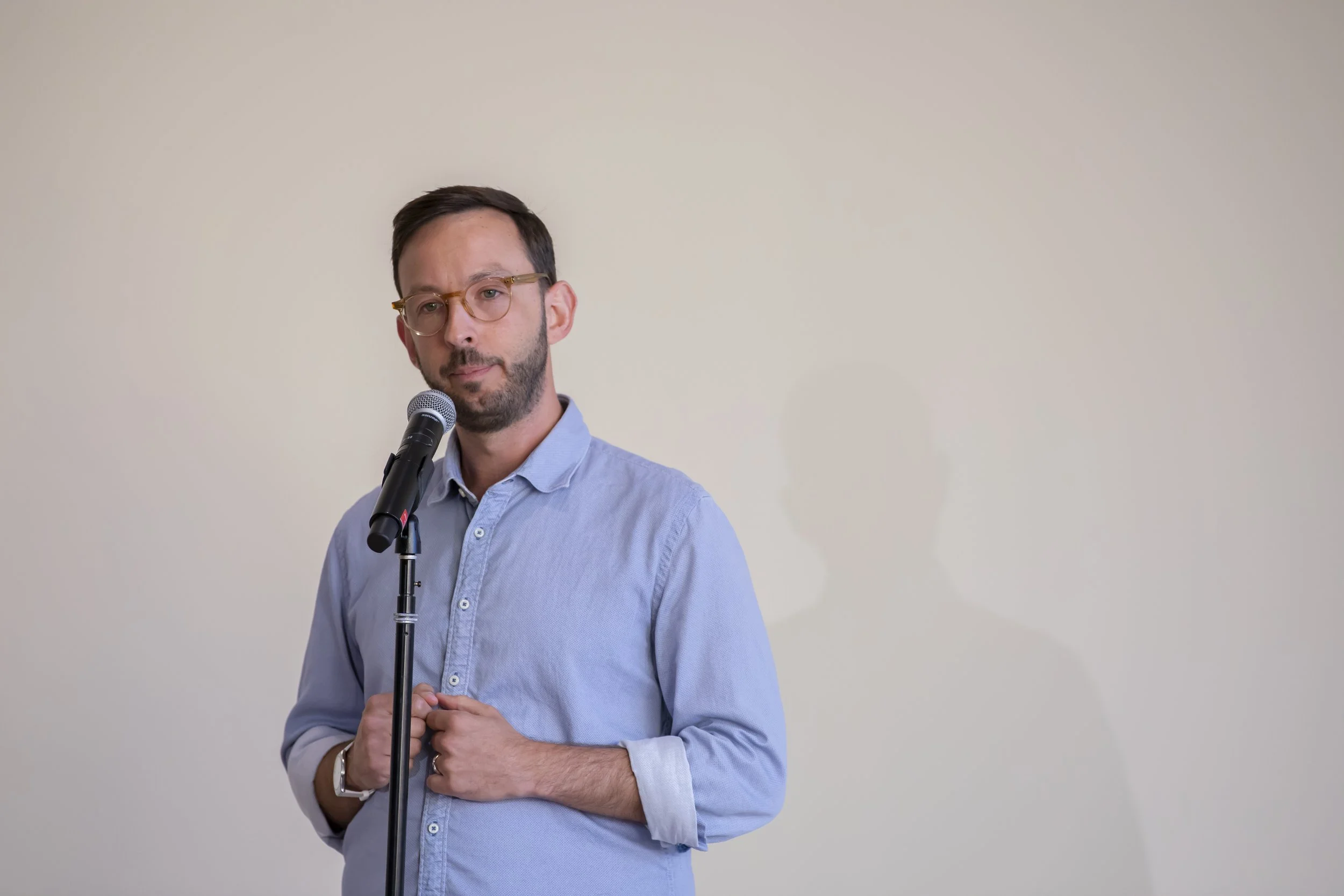
Guilherme Lichand shares his story at The Cantor Arts Center in Palo Alto, CA in April 2026. Photo by Christine Baker for Stanford Impact Labs.
This idea of invisibility sat with me because of something else, but also deeply personal. Many mornings when my wife Allie wakes up, she calls for my help to find her glasses. When she has her glasses on, she's perfectly capable, but without her glasses, she's basically blind. Then one morning when I'm handing her her glasses, I'm wondering, “Could it be that also in schools, there are kids who cannot see without glasses, but maybe nobody knows? They maybe cannot hear or cannot carry a pencil or a pen, but people are unaware?” If they exist in the absence of a medical report, these functional disabilities and the students behind these experiences are also invisible.
And it struck me that invisibility might lead to a double burden. First, these kids might not even get the resources, however imperfect, to support their specific needs in schools. But second, without being formally acknowledged, perhaps teachers and school staff will fill in the gaps with wrong assumptions about what might be behind, for instance, reading below grade level. So this double burden likely leaves these invisible students behind.
While I couldn't do much to alleviate my brother's school experience growing up back in the day, perhaps I could help these, presumably, millions of children still struggling in schools with invisible disabilities. But in order to do that, I first had to find them.
So I'm in my office thinking, “How could I find those kids? Where should I start? Perhaps, I guess, talking to the teachers and school staff.” So I'm thinking, “Maybe it'd be nice to have at least 10 schools all over Brazil. Let's get started.”
So I go into those schools. And in every case, I ask the teachers, “Do kids like this exist in your schools? Kids who cannot see, cannot hear, cannot carry a pen or a pencil?”
And in each and every case, they say, “Yeah, you know, these kids exist for sure. But I cannot note them in the system without a medical note.”
And I'm like, “Oh, that's a big problem. That's invisibility.”
And then in every case, after the bell rings, I'm talking to these teachers and I tell them a hypothetical story that goes something like this.
Robson is a fifth grader who is quite popular at school. Recently, he seems to be paying less attention to class. He moved to the first rows. He seems to be struggling copying what's on the board. He asks for his colleagues help to take some of these notes. Often complains of headaches after class. And his performance in reading and writing has been declining relative to his peers.
And I asked, “Do you see kids like this in your school? And what do you do about that?”
They say, “Sure, these kids are here.”
And I think they're going to tell me, “We help these kids in such and such ways,” but nope. They tell me that kids like Robson are a product of broken families. In the words of one of these teachers, they are orphans of living mothers. Can you believe it?
I'm shocked. The double burden was real. As much as I like to be right, this didn't really help me at all. I need to find these kids, right? And I'm thinking, perhaps because of invisibility, I'm not going to be able to find them at all. Or at least not by talking to teachers and school staff.
So I'm back in my office and I'm thinking, “What should I try next? Perhaps talk to the students directly?”
You know, it's embarrassing to admit, but we adults tend to think that when we ask kids, children and adolescents, about their race, their gender, their disability status, they're not going to understand. Or perhaps not as well as we adults do. But the truth is, as I told you, asking adults has its own problems because we have our own biases. So let's hear these kids up.
I'm in my office again. I'm thinking, “Well, if I want really good numbers, precise figures about this problem, I better have a big sample. 250 schools all over the country. I should hear at least 3,000 kids. Let's hear them up.”
So I'm entering one of these schools back in Sao Paulo, the state where Bruno and I grew up. It's a school that's very different from the one I attended growing up. The painting on the walls is cracked. I see a poster from the Ministry of Education about the importance of reading that's partially torn.
In the school, I met a kid named Jonas. Jonas used to love school until he didn't. In the beginning of middle school, his grades in Math and English started going down. And his parents started saying that his C's were a cry for attention. His teachers started saying that maybe he was not cut out for college, and he was starting to believe them.
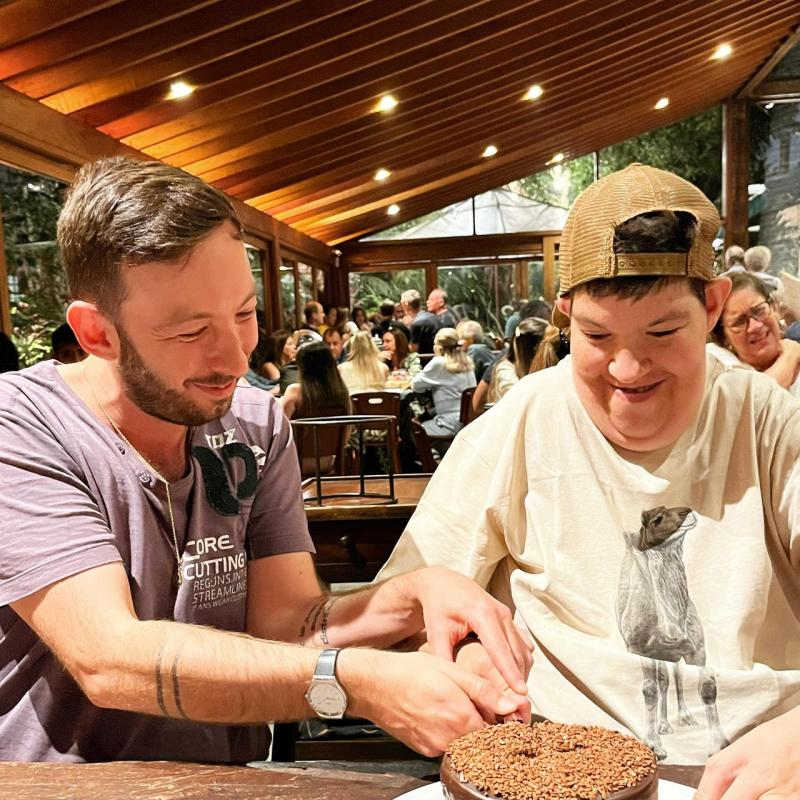
Guilherme and his Bruno on his birthday. Photo courtesy of Guilherme Lichand.
You see, asking a kid like Jonas about learning disabilities will be hard, especially in the absence of a medical report. But asking him if he struggled to see what's on the board, even when sitting up close, if he struggled to listen to what a teacher says, even when the classroom is quiet, if he struggled carrying a pen or a pencil, is something we could do. So by asking kids like Jonas, 3,000 kids like him, I learned that at least 5% of Brazilian K‑12 students really struggle to see. If I add up the hearing, and motor challenges, at least 10% of Brazilian students have one these functional disabilities that are so easily addressed—if only the districts knew.
Sit with this number for a second. One out of every 10 students in Brazil are invisible. They're struck by that double burden. They don't receive the resources that they would need and, presumably, they're stuck in this low‑aspirations trap as well.
So I'm thinking the data we collected didn't exist before, but I can only imagine it's always been like that. For middle‑income countries like Brazil, maybe that's just the way things are. Maybe they will never change.
A few months later, after we collected this data, Jonas finally took a vision test. He got the medical appointment he needed, and guess what? He couldn't make out the small letters in this poster. He got a prescription that was a minus 12 prescription. Can you believe it? God knows since when, maybe since the beginning of middle school.
Now that Jonas received eyeglasses, his performance in school picked up again. He's interested and he already sees a college degree down the line in a few years. In a sense, Jonas' experience is unique because, at the same time as he got his corrective eyeglasses, millions of students, based on our figures, remain unattended in the schools in Brazil and elsewhere. Even though it's so frustrating because these exams are cheap, corrective eyeglasses are relatively inexpensive relative to their impacts, but schools do not regularly run those tests and parents are uninformed about the issue. So that's frustrating.
But the truth is Jonas’s story doesn't have to be unique. Early last year, for a couple of months, a state senator from Sao Paulo visited Stanford. And while she was here, towards the end of her time, she learned about my study. So we sat together and talked about teachers' beliefs, students' stories.
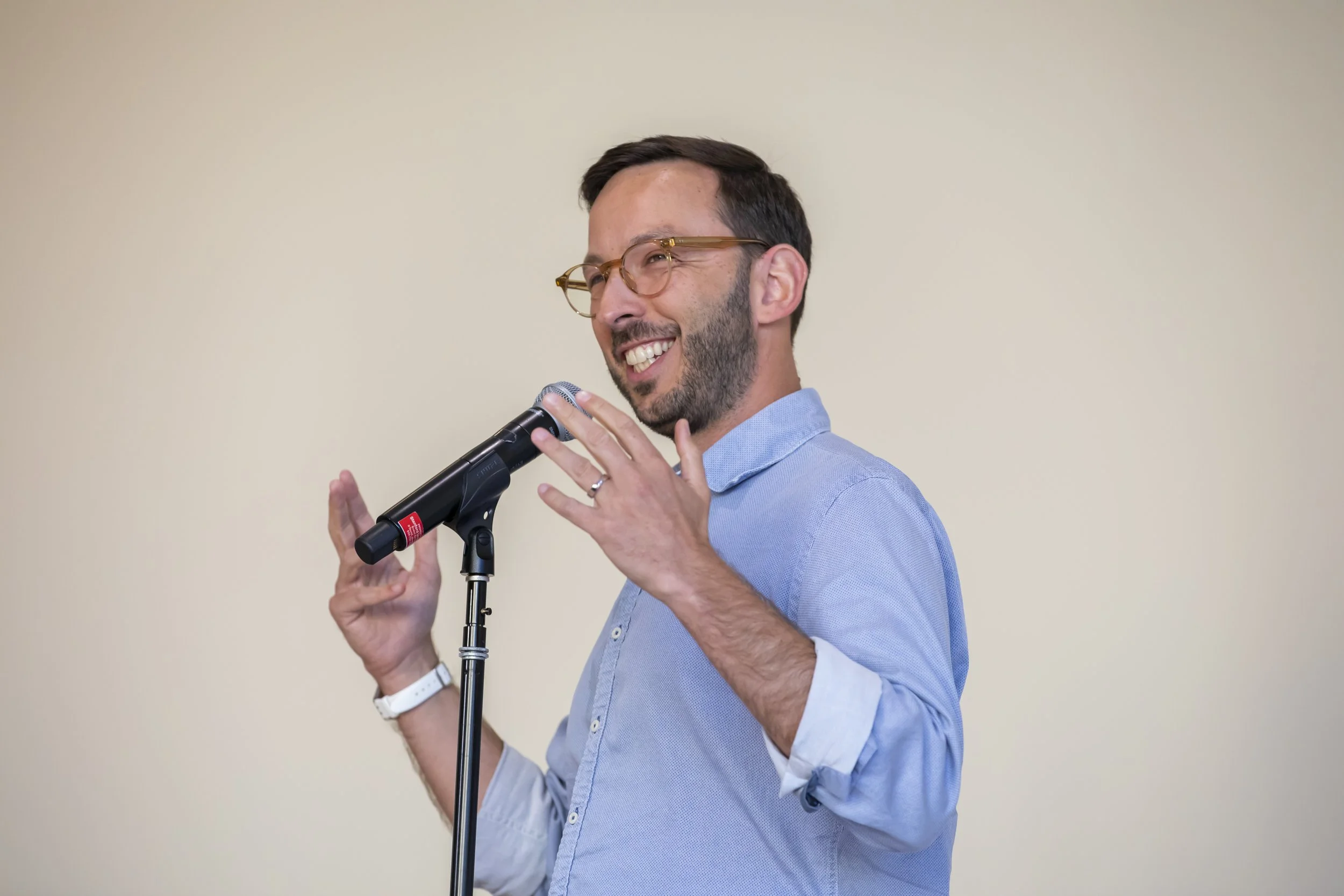
Guilherme Lichand shares his story at The Cantor Arts Center in Palo Alto, CA in April 2026. Photo by Christine Baker for Stanford Impact Labs.
She said, when it was about time for her to go back, that she was not just going to sit with what she learned. A few weeks into being back in the office, she passed a bill that sponsored vision tests for 113,000 students back in Sao Paulo, and Jonas was one of them. In 2026, the district committed to testing the vision for all its 2.4 million students and to provide eyeglasses for those who need them.
You see, my brother Bruno eventually grew up to not only walk with his reconstructed feet and ankles, but also to run, bike, and even roller skate. To not only talk with his diaphragm, imagine that, but even to yap and sing. He loves most Beatles songs. But he never learned how to read. His disability, very visible, kept him trapped in this low‑expectations trap, you know, the burden of invisible disability.
Jonas, unlike my brother, didn't have a permanent handicap that would prevent him from learning. But as long as his condition was invisible, he was also trapped in a low‑expectations trap. I imagined that, like for my brother, that double burden would accompany him for his whole educational trajectory; but I was wrong. Sometimes when the right data brings an addressable problem to light, things can change and, sometimes, pretty quickly. So I think Jonas's story tells us that being seen is a necessary condition for fully participating in society. It might not be enough, but it is the beginning.
Thank you.