In this week’s episode, both storytellers share stories that illustrate why empathy, kindness, and humanity are essential to healthcare.
Part 1: After feeling betrayed by the very systems meant to protect her, Karen McCaffrey chooses to become the advocate for survivors she once needed herself.
A native New Yorker, Karen McCaffrey has a BA in Economics from SUNY Oneonta and an MBA in Finance from St. John’s University. She spent her early career managing billion-dollar institutional portfolios for TIAA and later directed global treasury operations at Columbia University. She then left the world of finance to help survivors of domestic violence and sexual assault. This last mission is the investment she treasures most.
This story does include mentions of sexual assault and rape. In case you’d find them helpful, now or at any point in the future, we have some resources available on our website.
Part 2: In her twenties, Mary Cyn endures a string of gynecological problems, and the lack of compassion she encounters in medical settings motivates her into changing how medical students learn patient care.
Mary Cyn is a burlesque performer, storyteller, writer, and visual artist who lives in New York City. She would like to thank her vagina for financing these things.
Episode Transcript
Part 1
Healing begins when we believe our stories deserve to be told, when we find our own voice. Grace begins when we help others find theirs.
I spent five years as the director of the Sexual Assault Forensic Examiner Program in Suffolk County, New York. We had 20 nurses who would go out at any hour of the day or the night to attend to sexual assault patients at four area hospital emergency rooms. They provided emergency medical care and forensic evidence collection. They also would testify in court if needed.
Fewer than one‑tenth of 1% of nurses worldwide have this certification. This is for superheroes.
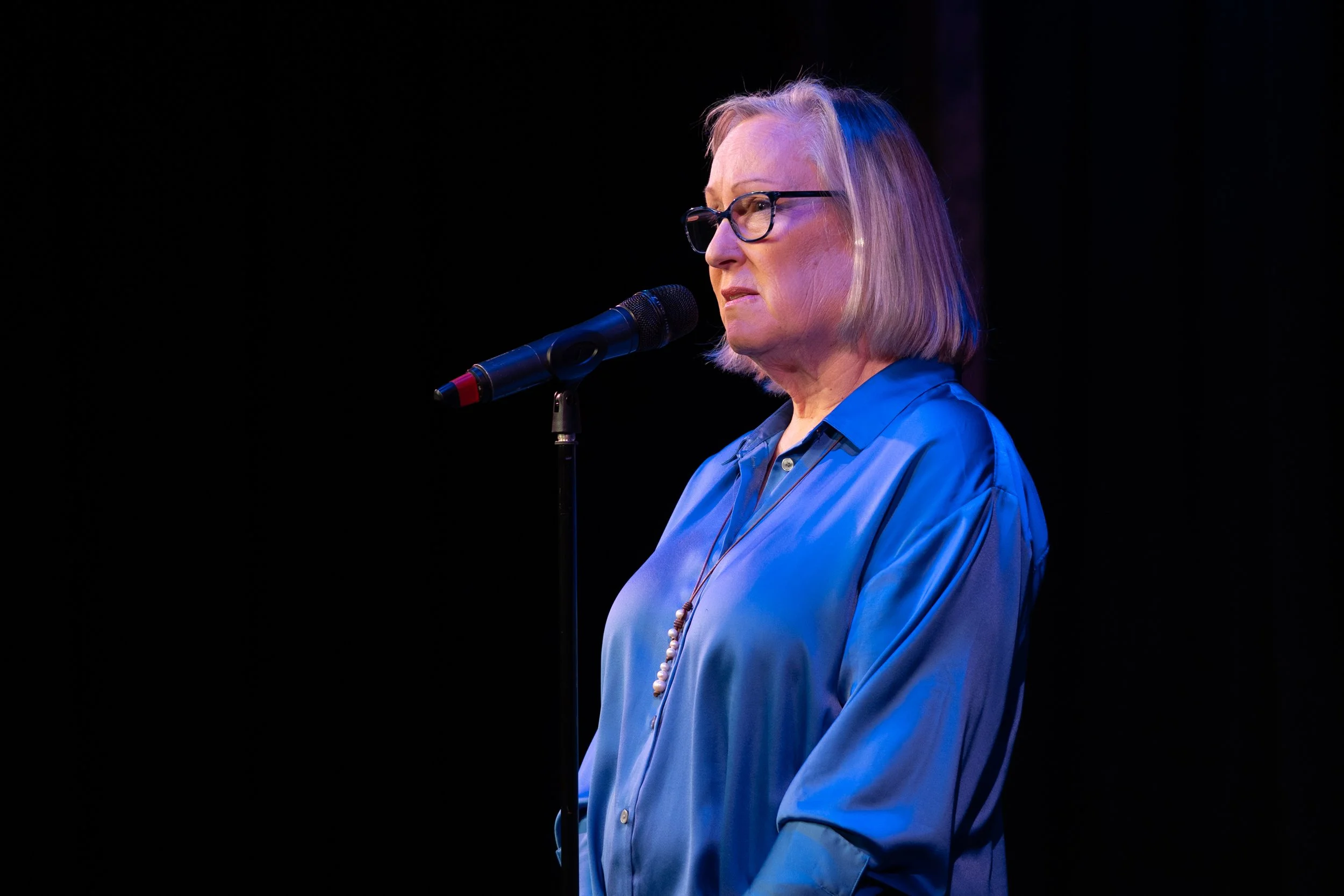
Karen McCaffrey shares her story at Caveat in New York, NY in December 2025. Photo by Zhen Qin.
I'll tell you there are some hard truths in this line of business. And I'm going to peer back the curtain so you can see why this work is so important.
First, a disclosure, I have no medical training whatsoever. I was hired to be the director of the program because I have business experience and leadership experience, and I have a tight connection to the mission. I'm a rape survivor.
My trauma happened decades ago, in the 1980s when I was 25 years old. It was the night before Thanksgiving. I had promised my parents I would bring a coconut custard pie that I would make to the festivities, and I had stopped at the supermarket after work. It was pitch dark.
And as I was putting my packages into my car, a man approached me from behind and put a knife to my throat. He told me if I made a sound, he would kill me.
I froze. He pushed me into the front seat. He climbed in beside me and locked the door. I found myself debating, “Will I have time to open the door, unlock the door, open it up, and get out before he stabs me?” I didn't think so.
Then I thought, “Well, okay, if he stabs me, could I survive it?” I also didn't think that. I pictured myself drowning in my own blood on the pavement next to the car and my parents having to come and claim my slashed up body. It was really horrendous.
Well, he demanded my money and jewelry. I handed over my cash and the ruby birthstone ring that my grandmother had given me for my 16th birthday. I was really mad and terrified.
Then he tied my hands to the steering wheel. I knew what was coming next, and I could not stop him. He took his knife, he cut through my clothes, and raped me. It was disgusting. It was horrific. It was deeply traumatizing. It's hard to explain how deeply a violation like that can reverberate in you. It is soul crushing.
When he finished, he told me to count to 100, or he'd come back and kill me. So as I was counting, I looked around. I couldn't see any people. I only saw headlights of cars passing my car. I got to about 25 and then I just leaned on the horn and beeped and beeped until someone came and cut me loose.
I wrapped my coat around me. I went into the store. This was before cell phones. The manager is now on the phone by the cashier, and he looks at me. And he says into the phone, “She's okay.”
I just said to him, “I am not okay.”
He called the ambulance, he called my boyfriend. So now we're outside on the street, and the EMTs are telling me to get in the back of the ambulance. They wouldn't let my boyfriend come with me, so I said, “I'm not going in there alone.”
They said, “You have to.”
I apologized to them, and I said no. I got in the car with my boyfriend, and we followed the ambulance to the hospital.
At the hospital, they did separate me from my boyfriend. They took my clothes and they left me on a gurney, naked, crying, covered by a sheet, behind some partition in the emergency room, to wait for the forensic specialist to come and do the special exam where they collect the evidence.
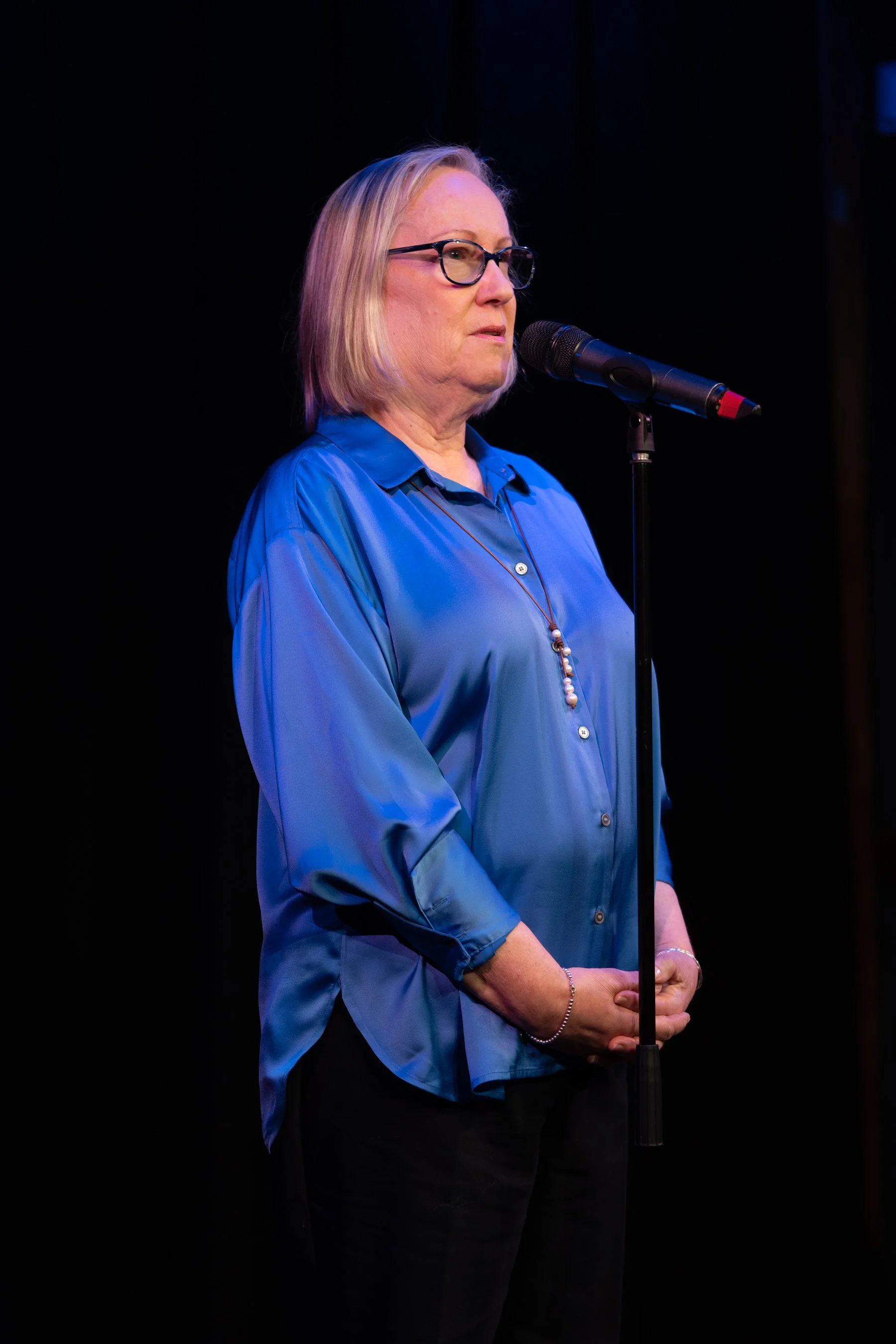
Karen McCaffrey shares her story at Caveat in New York, NY in December 2025. Photo by Zhen Qin.
I waited there a long time. While I was waiting, two men, two young guys approached me. They had white jackets and they were needling each other. They came over to the gurney and one of them told me he was going to give me an anal exam.
I said, “No, I'm not having that.”
And he said, “It's necessary.” But they never introduced themselves and they never explained why that was necessary.
I still protested. Despite that, he lifted the sheet, and before I knew it, he thrust his finger in my bottom, and then yanked it out. And the two of them walked away tittering to one another.
I went further into shock.
Moments later, the other character came back, the young guy, and he said he was going to do an anal exam. By now, I had caught on to what their game was. And I said, “If you touch me, I'm going to scream,” and he scurried away.
That was no medical exam. Predators prey on the vulnerable.
Eventually, the forensic examiner came and did the exam and then released me to the doctor who was the attending physician in the emergency room. I begged him to give me the medication that would prevent me from becoming pregnant. He told me no. He said there might be unpleasant side effects from that medication.
I said I didn't care. I could not be forced to conceive a child with this rapist.
He told me, “Look, if you get pregnant from the rapist, you just come back for an abortion.”
I said, “I cannot do that. That would be much too traumatic for me. I just want the medication.”
He refused. He told me that his decision was best for me. I was re‑traumatized all over again.
Now, I just wanted to go home, wash the ick off of me, and climb into bed. But the NYPD insisted that I come directly to the precinct.
I sat on a hard wooden chair while the detective grilled me and had me repeat over and over again what happened. We were surrounded by three or four other men who just seemed to be there to listen to the salacious details of my assault. I felt exposed and vulnerable. It was horrible.
The detective repeatedly referred to my “alleged” assault. I said to him, “Don't you see these abrasions on my wrists? What are you talking about?”
And he said to me, “You could have been role‑playing.”
I said, “Really? With a stranger who robbed me with my groceries in the car?” I was incredulous.
Then they repeatedly referred to the perpetrator as a gentleman, as in, “What did the gentleman do next?”
I lost it. I said, “Stop calling him a gentleman. This man raped me. He's a criminal.” They ignored me. Then they told me how lucky I was.
Now, I know they mean because I had not been murdered, but to tell someone who's been brutalized to look on the bright side of their rape, is not compassionate or helpful at all.
Finally, they were finished. I went home, scrubbed myself off and tried to get a few hours of sleep.
The next day was Thanksgiving. I got up. I made the pie. I'm the oldest daughter. When I brought the pie to my parents' house, I knew that I would not be telling them what happened to me over the prior 18 hours. I did not want to ruin Thanksgiving for my parents or my five siblings.
Some days after that, I did disclose to them what happened, and to my friends in a very cursory way. It was decades, though, before I really came to terms with the assault at the hospital.
However, weeks after the assault, I called the police to find out any updates on my case. The update was that the detective had been promoted. He had moved on to other things. No one was working my case and the evidence would not be sent out for testing for the DNA of the perpetrator.
I felt betrayed by everyone I turned to. I had reached out in my hour of need and was met with predation, derision, and apathy. It was overwhelming.
This is why many decades later, when this position opened up to be the director of the Forensic Examiner Program, I thought, “I have something to offer these survivors, advocacy.”
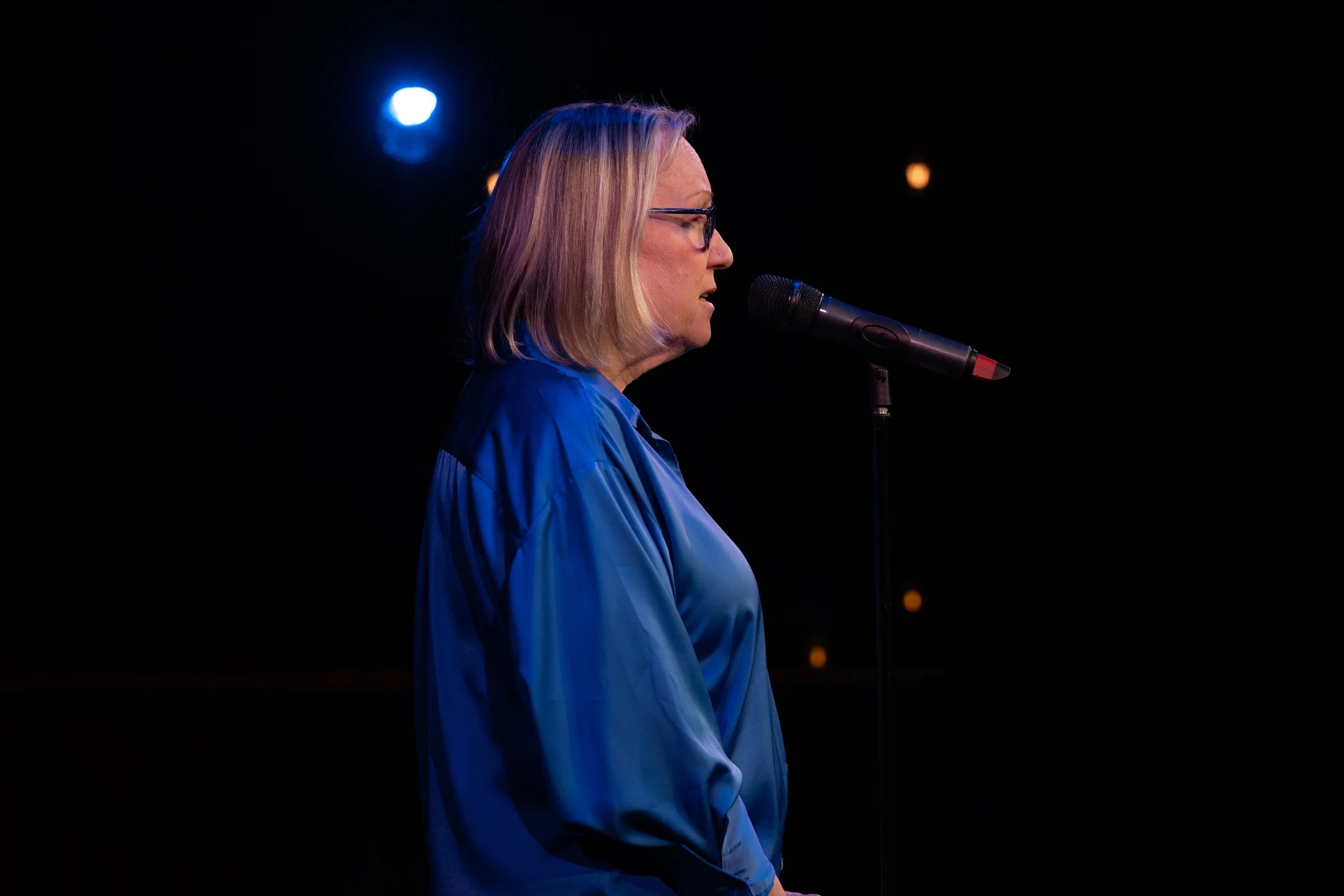
Karen McCaffrey shares her story at Caveat in New York, NY in December 2025. Photo by Zhen Qin.
I used my experience as well as the talents of the women I worked with to go to Albany and petition for victims' rights, to teach at hospital emergency rooms about trauma‑informed care, and to lecture at the Suffolk County Police Academy in conjunction with the forensic team and also the Suffolk County District Attorney's Office about protocols for handling sexual assault victims. I felt like I was part of a team that was doing something useful for this very neglected population.
This was further underscored, actually, when two of the nurses that I worked with asked me to present with them to the International Association of Forensic Nursing annual conference in Dallas in 2022. We did a presentation about how we had built our program, how we had recruited nurses and mentored them and developed helpful protocols. We wound up winning second place at the conference, which was really awesome. I'm very proud of it.
But that was just the icing on the cake. What really made me proud was the more than 1,000 patients that we helped during my five years' tenure with the program. That these people had maybe a slightly easier road than some of the people before them. And none of this would have been possible without the unbelievable team that I worked with. These nurses, the level of professionalism and grace that they bring to the job was inspiring. And I want to express my profound respect and deep gratitude to them. I know a number of them are listening tonight, and I'm sending my love. I just want to say it was a gift to work among you.
Thank you.
Part 2
So I am at a wedding, and the guy next to me asks what I do for a living. It's super loud, so I have to shout, “I teach medical students how to give breast and pelvic exams.”
Usually, people don't want to know any more than that. They'd kind of prefer to know less. But this guy is actually really interested, so I tell him a little bit more about what I do. I teach students the techniques to use that are the most comfortable and least disturbing on all of the levels that we've talked about today. And then I have them practice on my body while I give them feedback.
Now, I've worked really hard to make this description as clinical as possible, because I don't want to make people uncomfortable when I first meet them. There's plenty of time for that. But this is like a Burning Man type of crowd, and this guy has like a stuffed bird on his head. So I think he's cool.
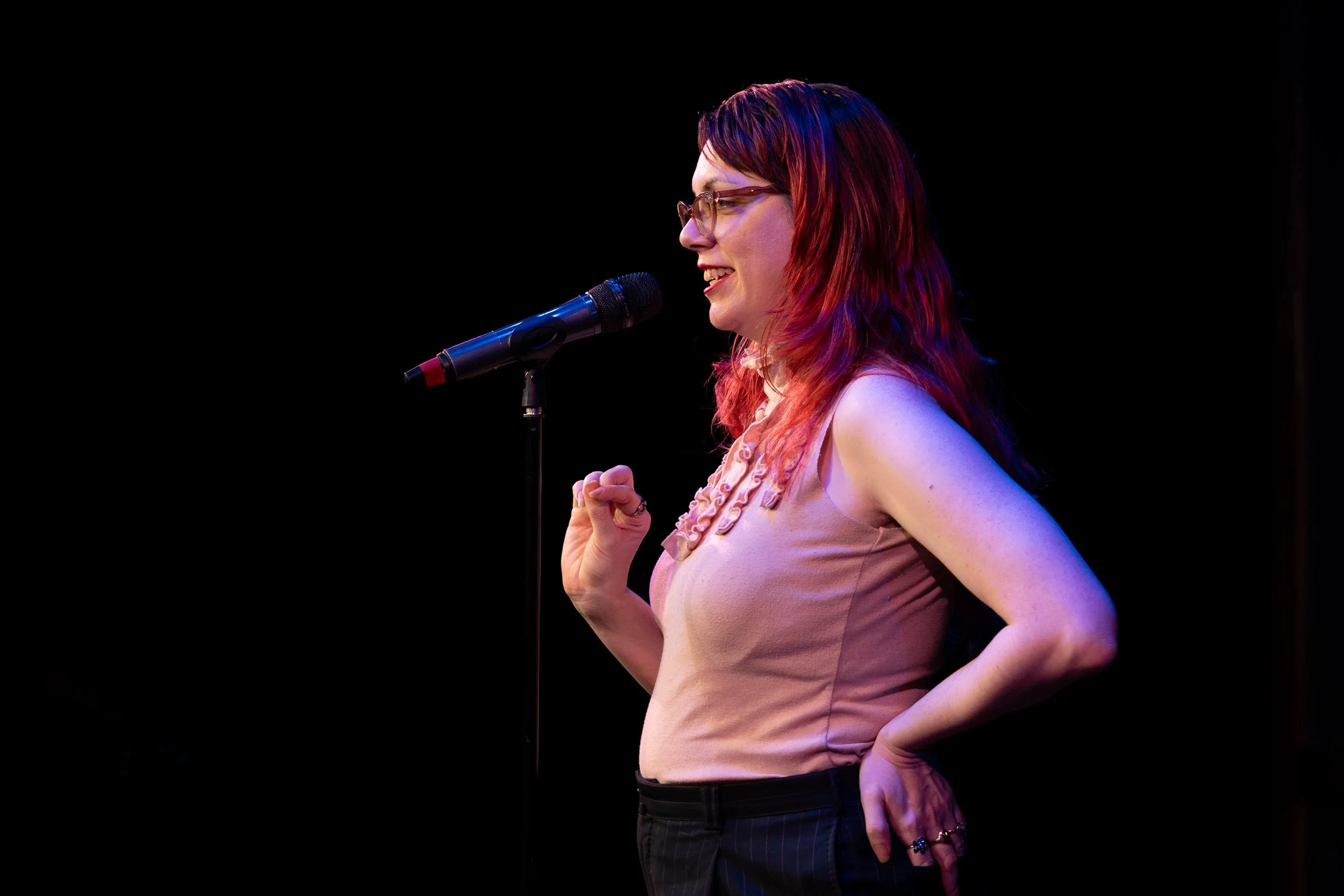
Mary Can shares her story at Caveat in New York, NY in December 2025. Photo by Zhen Qin.
So when my boyfriend comes back from the bathroom and asks what we're talking about, I just say, “My vagina job,” and the birdman is delighted.
So then his date comes back from the bathroom, and it's really loud so I can't really hear what he’s saying. But due to some hand gestures and the face that she's making, I'm pretty sure he's telling her what my job is. After a minute, she kind of leans over and goes, “Why on earth would you want to do that?”
And that is a fair question. The short answer is, because I'm okay with saying the word “vagina” in mixed company, and I want you to be too, because a vagina is a body part like any other. Sometimes things go wrong with them. And if we can't talk about them, how can we help them?
I guess the longer answer is when I was in my 20s, my vagina was really determined to be talked about. If I was going to the doctor, it was my vagina's fault. It was, you know, normally just like the usual UTIs, STD scares, yeast infections, things like that.
But one time was really, really bad, the worst time. I had green discharge, pain like you wouldn't fucking believe, and my labia swelled up to like four times their normal size, which is really fucking big. I was 21. I was fucking terrified and ashamed. And all I needed, almost more than medical care, was someone to just look me in the face and say, “I know this is scary, but I'm here to help and everything's going to be okay.”
Instead, I got someone who marched in, cold as the exam room, jammed a couple fingers into me, and then got annoyed when I yelled out in pain. She didn't tell me what was wrong with me. She didn't tell me she could fix it. She didn't tell me how to avoid it in the future. So, the five seconds it would take to say, “It's going to be okay,” was just far too frivolous. Instead, I just got a prescription and a kick out the door. I don't even know if she ever saw my face. Well, this face, anyways.
I later learned that people who don't learn off on people like me, we're called gynecological teaching associates or GTAs, the alternative is a plastic model, a corpse, or a patient who is still under anesthesia after surgery. When I found that out, I asked the person who told me, “Well, do those patients consent to that beforehand?”
And he shrugged and said, “I'm sure it's in the paperwork somewhere.”
What a fucked up thing to teach your students that a living breathing person is no different from a corpse or a piece of plastic, as long as they're unconscious. So that's why I never really saw a lot of empathy, or not often. Because why waste empathy on someone you've already been trained to dehumanize?
After all of this, you might think, hadn't my vagina been through enough? And the answer is yes. But consider this. I am also largely unemployable. I have ADHD and a theater degree. So there are like a million things I'm great at that no one will pay me to do.
So imagine those interviews. “Can you make change?”
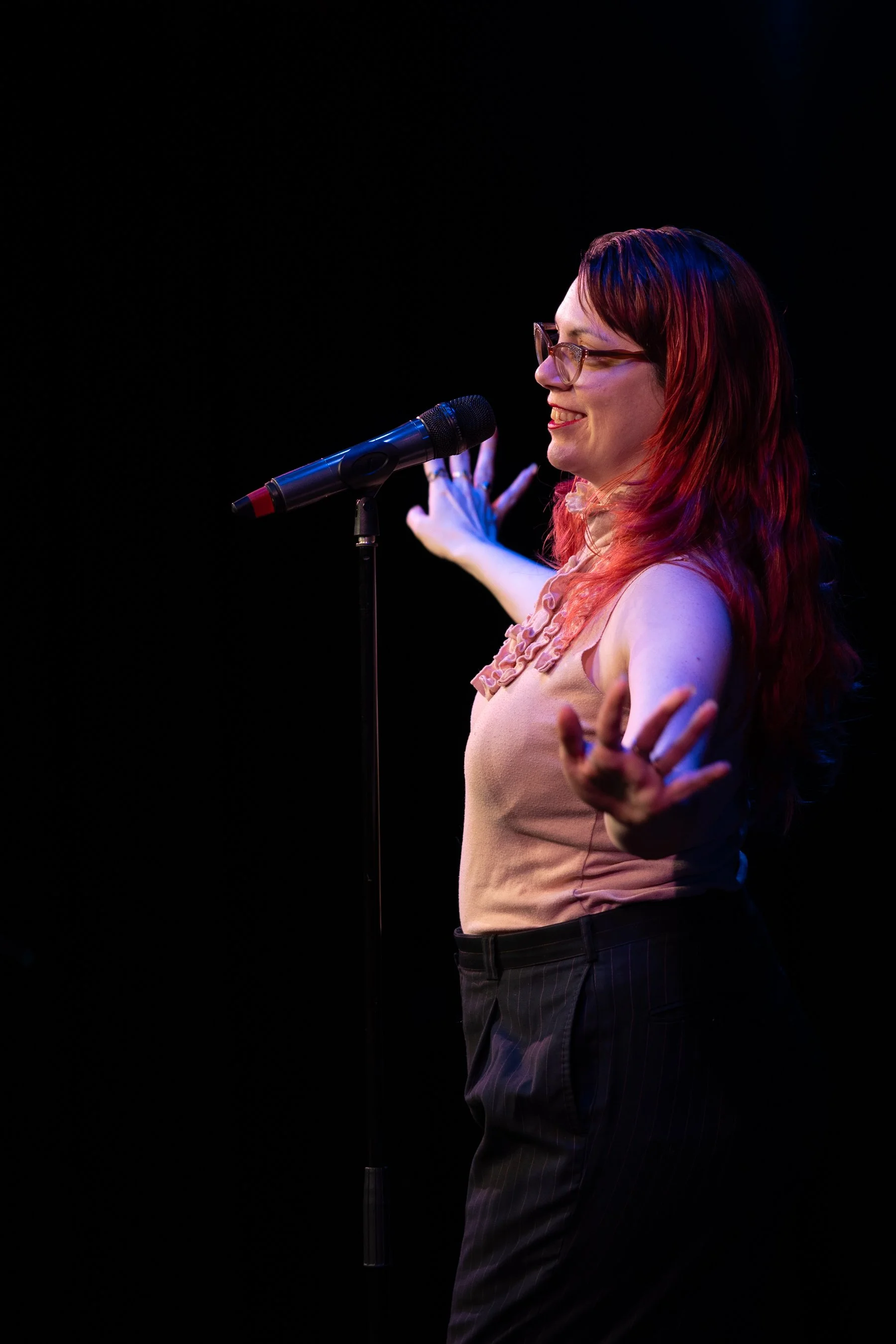
Mary Can shares her story at Caveat in New York, NY in December 2025. Photo by Zhen Qin.
“Oh, no, definitely not.”
“Do you have any office skills?”
“Not really.”
“Will you show up on time?”
“Almost never.”
But I am very kind and empathetic. If you need someone to be really vulnerable in front of a group of strangers, I will knock your socks off. Yeah, try putting that on LinkedIn. It doesn’t go well.
So most of the jobs I’ve had have been of the are‑you‑willing‑to‑do‑this variety. And GTA‑ing is kind of like the ultimate are‑you‑willing‑to‑do‑this job? I mean, public speaking and strangers touch your genitals, most people would rather go to grad school. I'm very proud of that one. Thank you.
But I am a weirdo, and I don't really care if people see me naked. I am fine with public speaking, and it's fine if people touch my genitals as long as I'd tell them to.
It turns out that I'm also really good at other things, like making people feel comfortable in awkward situations and showing people the kind of compassion and patience and empathy that I wished the doctors had shown me.
And let me tell you, these students, they need it because they are fucking terrified. It is not uncommon for students in GTA classes to pass out or throw up. It's only happened to me twice in like 13 years now. The first one was a young woman. And, luckily, somebody caught her pretty quickly. She came to relatively fast. She just had some water, went out and got some air, and eventually came back and got through the rest of the class like a champ.
But she stayed behind afterwards, ostensibly to thank me for the work I was doing. She admitted that she had only been to the gynecologist once when she was a teenager and it had hurt so much. She had never been back. And she was clearly very ashamed of this. She knew it was important for her health.
I wanted to help, so I offered her a speculum to take home and get used to and maybe use on herself so that she could see that it's not, when done correctly, it's not a painful procedure. She just kind of stopped me and said, “I can't. I've never touched myself down there. I was afraid of hurting myself the way the doctor did.”
That is the level of trauma that a doctor can inflict without even trying. And that is the kind of damage that can be done in a society where people are afraid to say the word “vagina”.
I was stunned and sorry. I wanted to hug her and tell her that vaginas are awesome and orgasms are awesomer, and I was going to tell her everything she needed to know. I would be the Auntie Mame of vaginas, and, “I would open doors for you, doors you never dreamed existed.”
But that would be a whole relationship mentorship thing and she wasn't asking for that. Instead, I kind of was trying to come up with some helpful information to give her about maybe not poking the urethra, because that usually hurts me.
And she stops me again and says, “I actually was outside when you told us what everything is. Um, could, could you show me?”
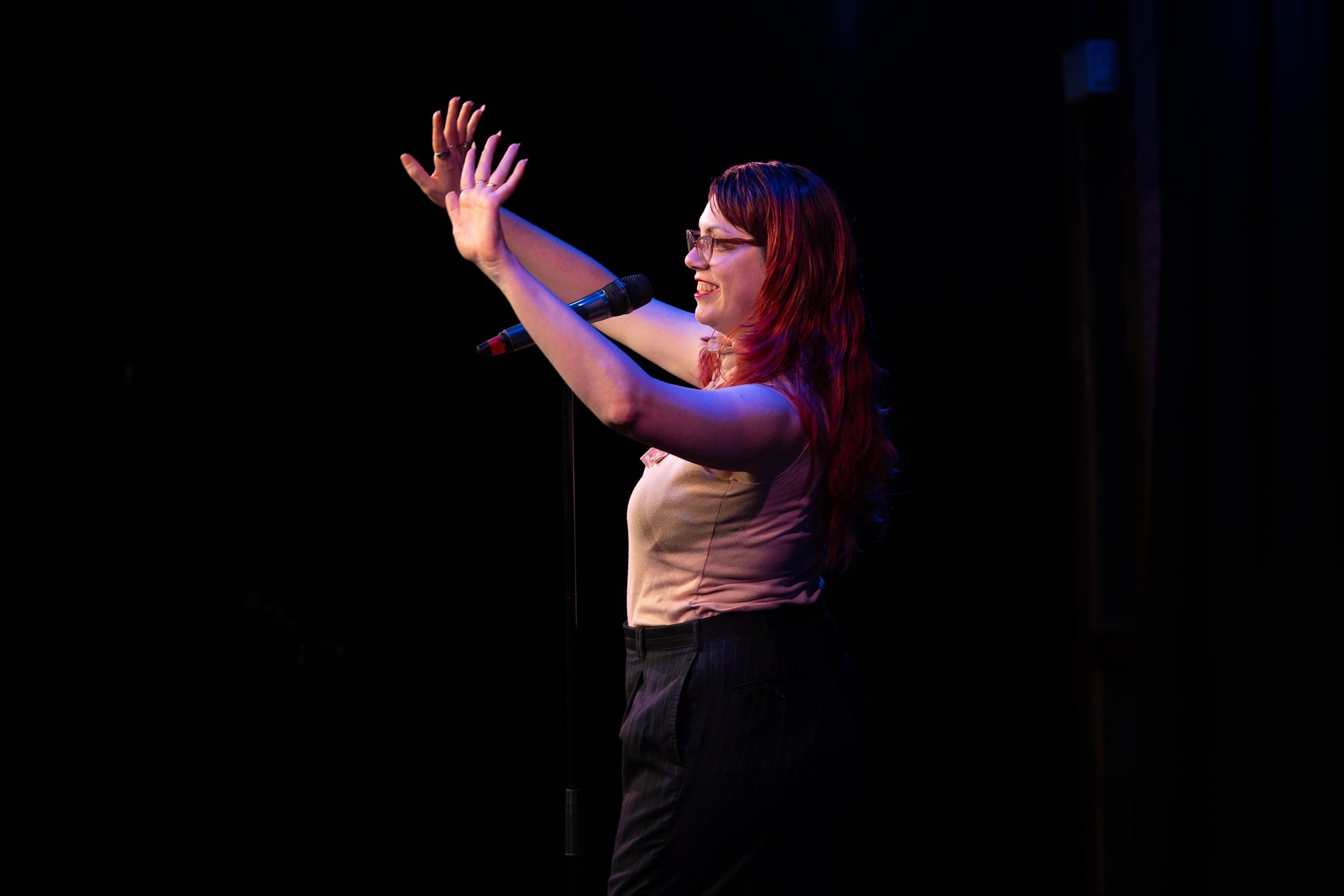
Mary Can shares her story at Caveat in New York, NY in December 2025. Photo by Zhen Qin.
And yes, I could fucking do that. Thank God. So I jumped up on the table and I showed her what everything was and told her what it did and what it was called. She was just so relieved just to see a vulva and have it explained to her like any other body part, because that's what it is.
And I told her she should maybe go home and spend some time with a mirror and get to know her body a little bit better. That's really all she needed from me. She needed someone to look her in the face and say, “I know this is scary, but I'm here to help you, and it's going to be okay.” That's really what all scared people need.
And when it comes to genitals, there are a lot of really scared people. There is so much fear around intimacy. Like it or not, patient care is an intimate thing. You see people at their most emotional, their most vulnerable, their most naked. And if you can't at least acknowledge that, I don't think you can do it correctly. But I can do this well.
The thing that I've always enjoyed about performing was creating intimacy, creating that connection, teaching people about themselves and about others, and feeling that discomfort that comes with vulnerability and just breathing into it and helping other people breathe into that. I am really good at this.
I am so happy to be in a job where all the things I thought were useless are now invaluable. I am kind. I am empathetic. And if you need someone to be vulnerable in front of a group of strangers, I will knock your fucking socks off.